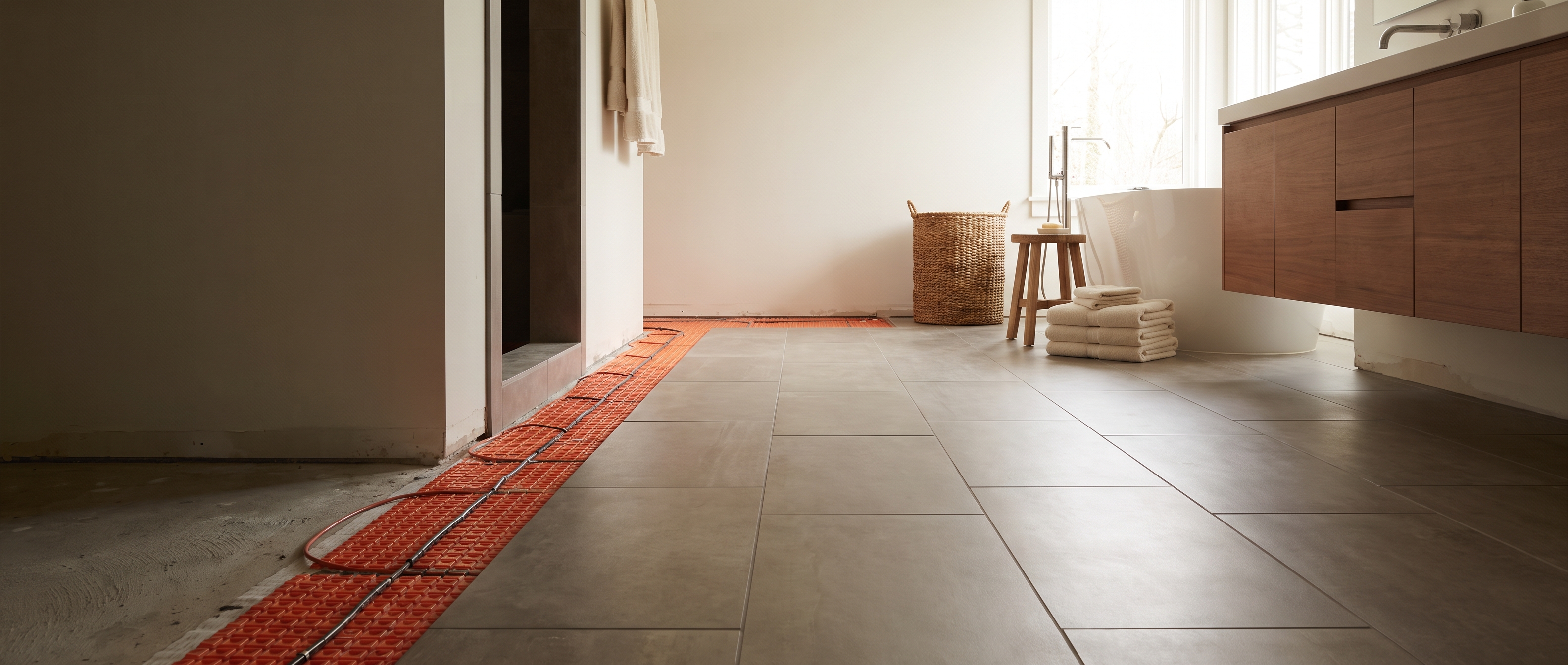
Most bathroom flooring in Pierce County runs between $350 for a basic sheet vinyl swap and $9,100 for heated natural stone. The sweet spot for a solid, waterproof bathroom floor lands at $1,100 to $2,600 installed for a standard 5x8 to 8x10 room. That covers luxury vinyl plank, one of the two best bathroom flooring options for our climate along with porcelain tile.
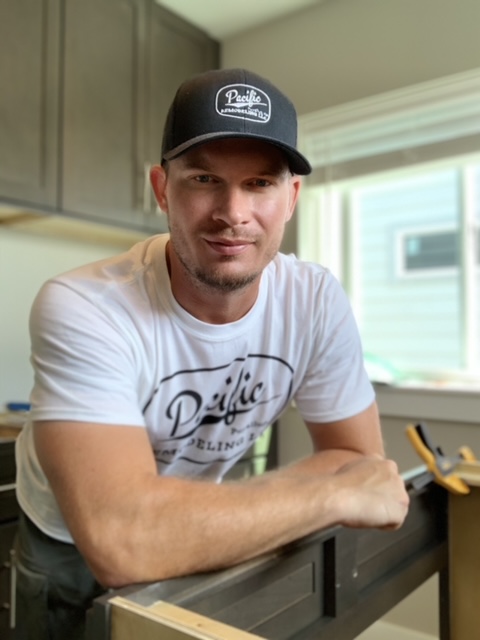
I’m Brad Zemke, owner of Pacific Remodeling in Puyallup. I’m a third-generation carpenter with 20+ years in the trades, and I’ve run this business in Pierce County since 2018. I’ve pulled up bathroom floors stacked three and four layers deep and found rot nobody knew was there. So the pricing below comes from real jobs, not a calculator.
This guide breaks down every bathroom flooring material, what it costs installed, and which one actually makes sense for a Puyallup home.
Bathroom Flooring Options and Costs at a Glance
Here’s the fast answer. These are installed prices, material plus labor, for a standard Pierce County bathroom in 2026 dollars.
| Flooring Type | Installed Cost (per sq ft) | Typical Full Bath Total | Best For |
|---|---|---|---|
| Sheet vinyl | $3 - $7 | $350 - $900 | Rentals, tight budgets, powder rooms |
| Luxury vinyl plank (LVP) | $11 - $17 | $1,100 - $2,600 | Most Pierce County remodels |
| SPC rigid core | $11 - $17 | $1,150 - $2,700 | Full baths, wet rooms |
| Porcelain/ceramic tile | $32 - $51 | $2,700 - $7,000 | Resale, heated floors, long-term |
| Natural stone | $32 - $51 | $3,800 - $9,100 | High-end master baths |
| True linoleum | $8 - $14 | $800 - $1,800 | Eco-conscious, older-home restorations |
A standard bathroom floor is small. We’re talking 35 to 60 square feet in most Puyallup homes. That’s the good news. Even a premium material lands at a total price that won’t wreck your budget, because you’re covering a tiny area.
The surprises come from what’s under the floor. More on that below.
Cost reality: The flooring material is rarely what blows a budget. Subfloor repair, leveling, and asbestos testing in older homes are the line items that catch homeowners off guard.
Luxury Vinyl Plank: The Floor I Recommend Most
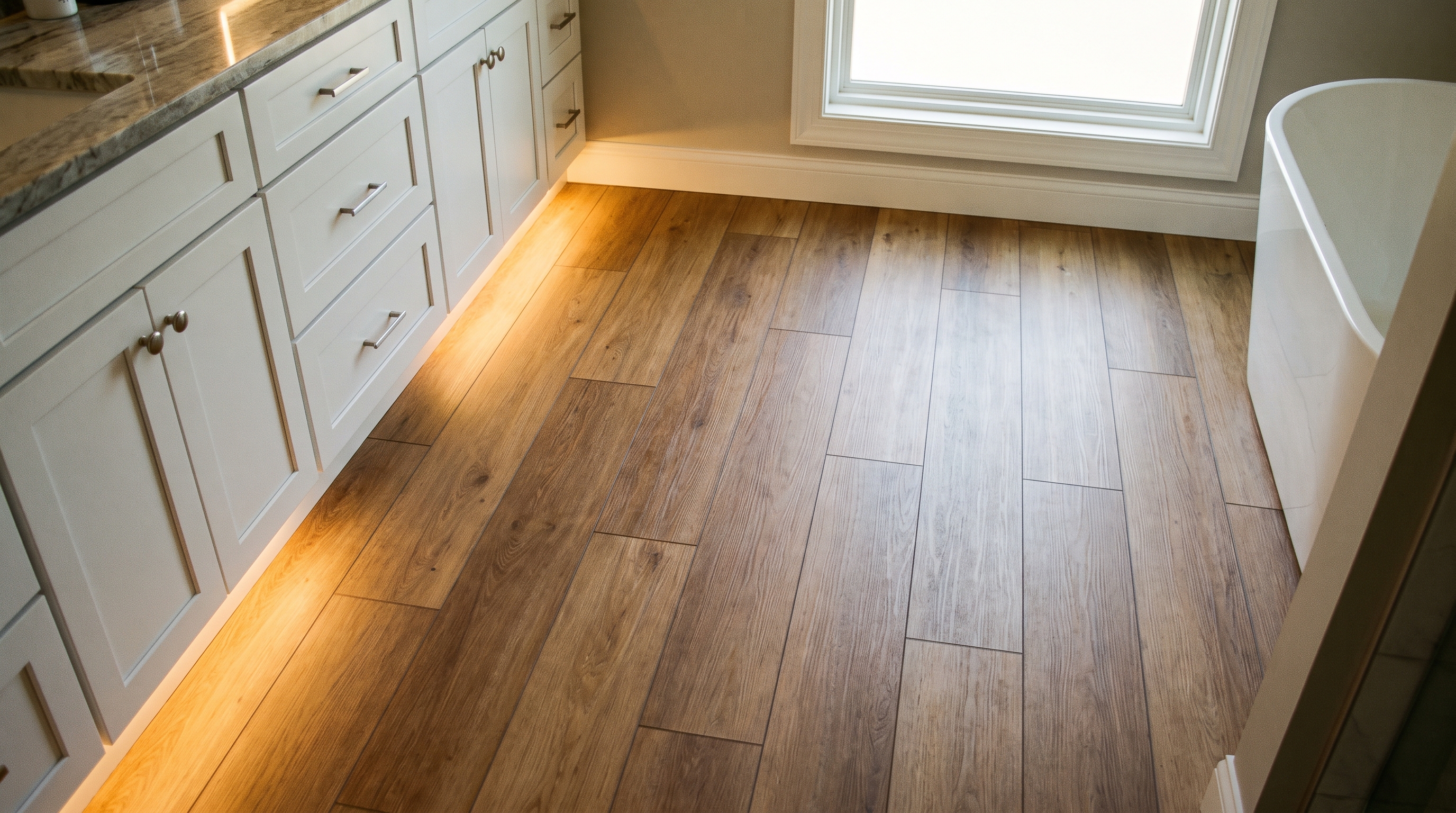
If you want one answer for most Pierce County bathrooms, it’s luxury vinyl plank. I install more LVP in bathrooms than anything else, and there’s a reason.
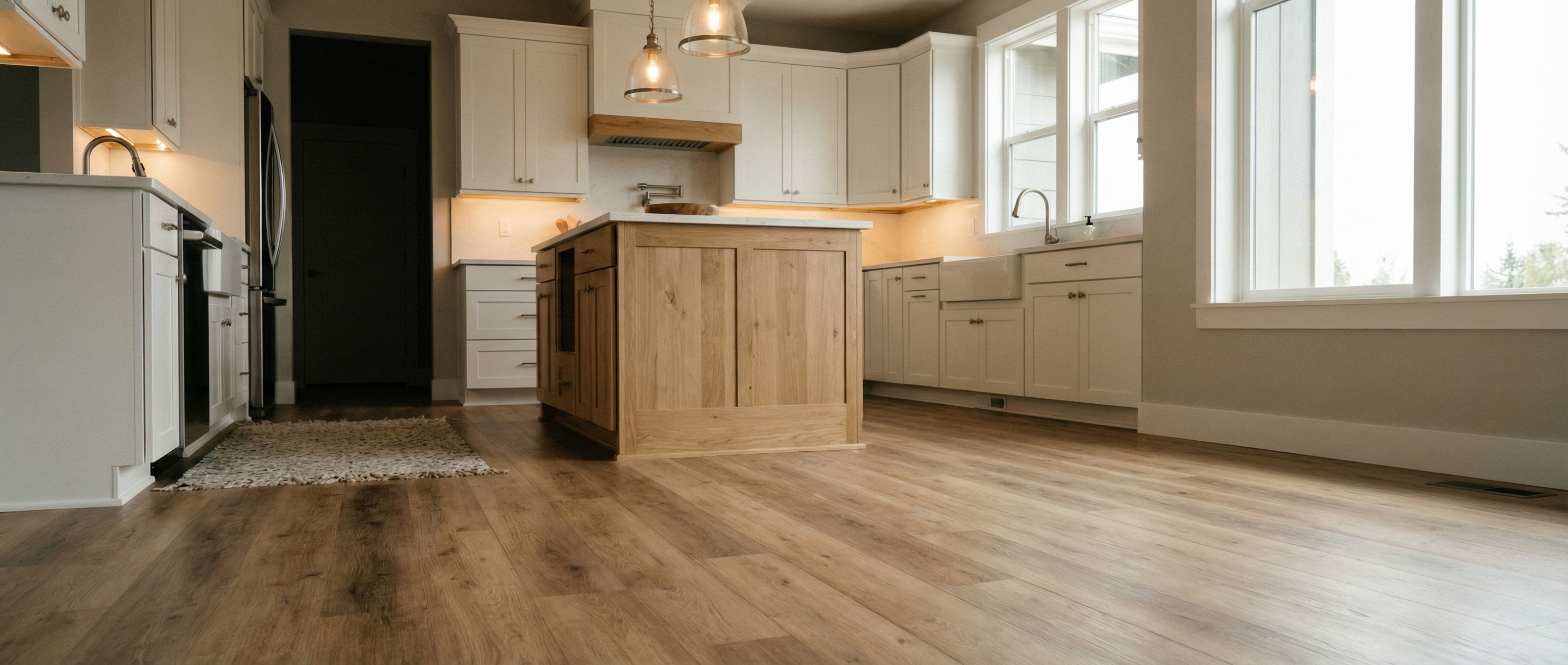
LVP runs $11 to $17 per square foot installed. For a typical 5x8 bathroom, that’s about $1,100 to $1,600 all in. It’s waterproof at the plank level, it’s warmer underfoot than tile, and it handles our seasonal humidity swings better than almost anything else.
Here’s what I like about it for our market:
- It tolerates subfloor movement. Pierce County homes swing between wet winters and dry summers. Wood subfloors expand and contract. A floating click-lock LVP floor rides that movement without cracking. Tile doesn’t.
- It’s warmer than tile. A huge share of Puyallup, Sumner, and Graham homes sit on vented crawlspaces. Tile over an uninsulated crawlspace feels cold on a January morning. LVP reads noticeably warmer.
- The install is fast. I can floor a standard bathroom in LVP in a day. Tile takes two to three days with cure time.
Watch the Core Type
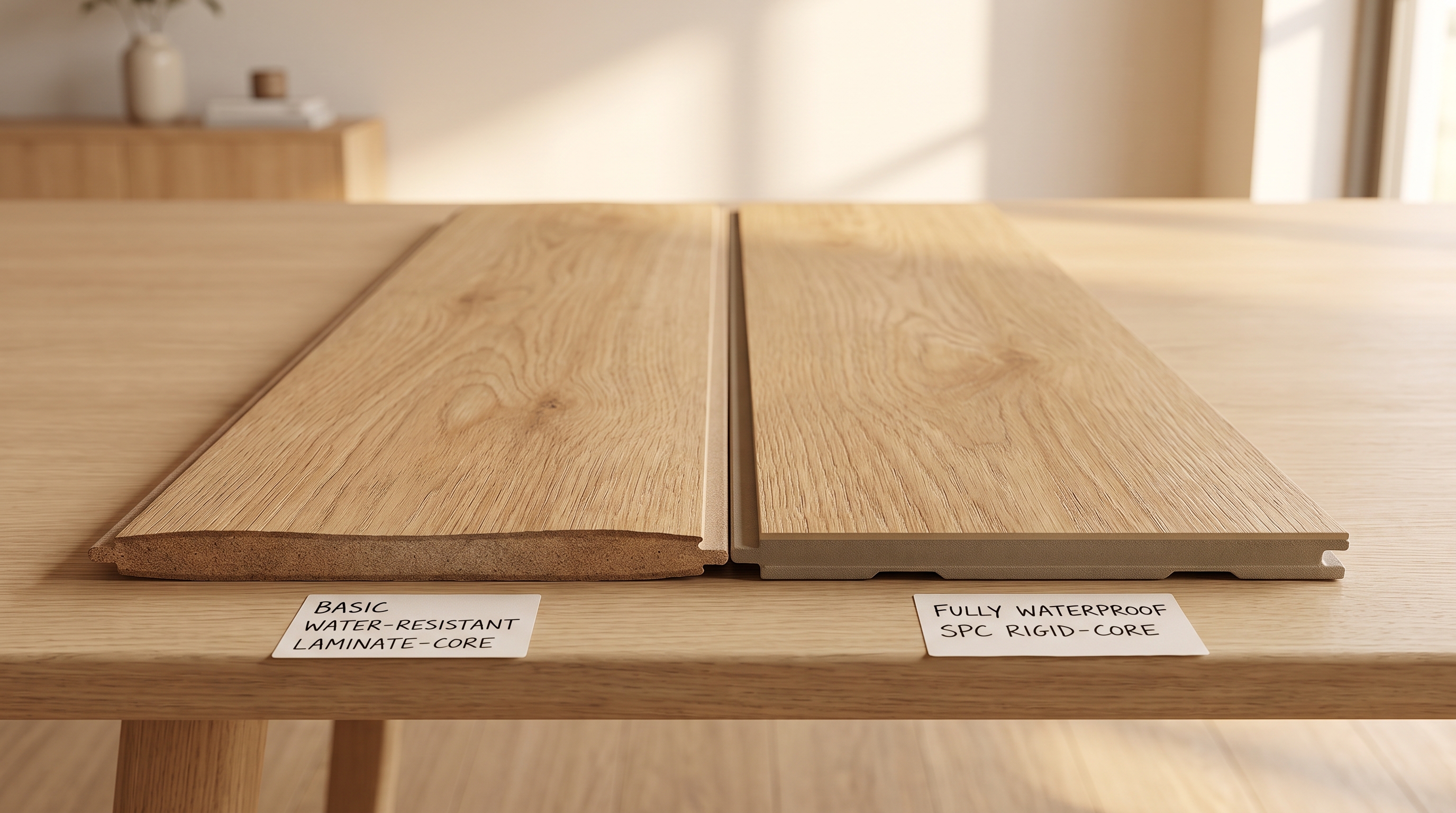
Not all “luxury vinyl” is the same. This trips people up.
Some budget product sold locally is a water-resistant laminate core, not a fully waterproof vinyl core. In a bathroom, that difference matters. I spec COREtec, Shaw Floorte, or Mohawk SolidTech on most jobs because they’re genuinely waterproof and Tacoma-area distributors stock them.
If you want the step up, SPC rigid core (stone plastic composite) runs $11 to $17 installed. Brands like NuCore and Cali Vinyl Pro hold their shape better under temperature and moisture changes. I steer full bathrooms toward SPC over standard LVP more often than not.
The weak point isn’t the plank. Waterproof vinyl fails at the seams. The toilet flange, the tub edge, the wall transitions. Seal those or water sneaks under a “waterproof” floor and rots the subfloor for years before you see it.
If you’re weighing vinyl against wood for the whole house, I wrote a full comparison here: LVP vs. Hardwood Flooring: Which Is Right for Your Kitchen and Bathroom?.
Porcelain and Ceramic Tile: The Long-Term Play
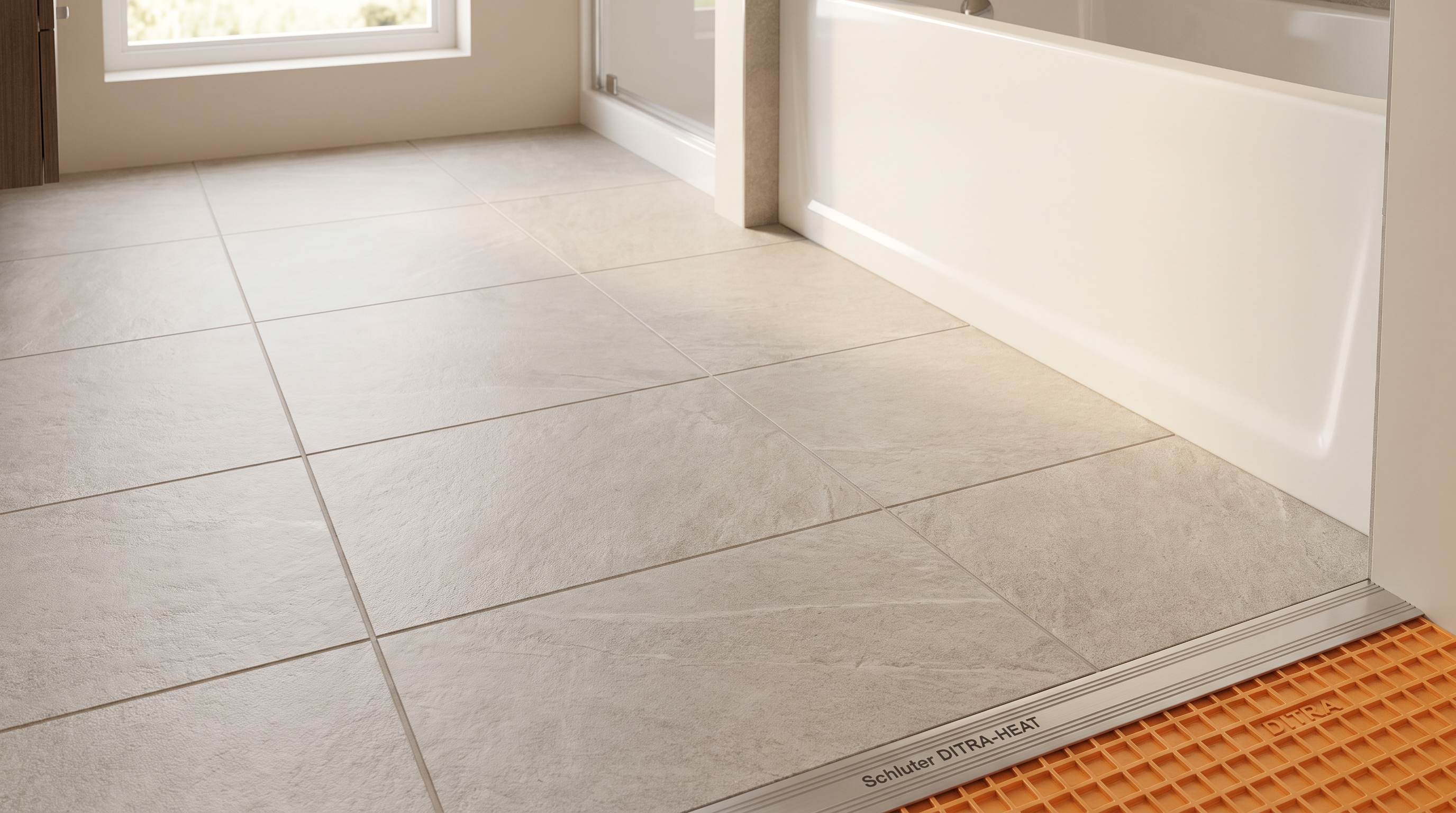
Tile is the floor that lasts. I’ve pulled out 40-year-old tile floors that were still structurally fine under a dated look. Done right, a tile floor outlives the rest of the remodel.
Porcelain or ceramic tile runs $32 to $51 per square foot installed for a bathroom floor. For a standard bath, that’s $2,700 to $7,000 once you factor in leveling. Natural stone like travertine or slate runs $32 to $51 installed, plus a sealing program you’ll repeat every year or two.
Why the wide range? Three things drive tile cost up:
- Substrate prep. Older Puyallup and South Hill homes settle. The floors aren’t flat. Large-format tile telegraphs every dip, so I budget self-leveling underlayment as a likely line item, not an optional one. That’s $400 to $900 for a typical bath.
- The uncoupling membrane. I install Schluter DITRA under tile floors in this region. It lets the subfloor move seasonally without cracking the tile above. Skipping it on an older home is how you get hairline cracks in year two.
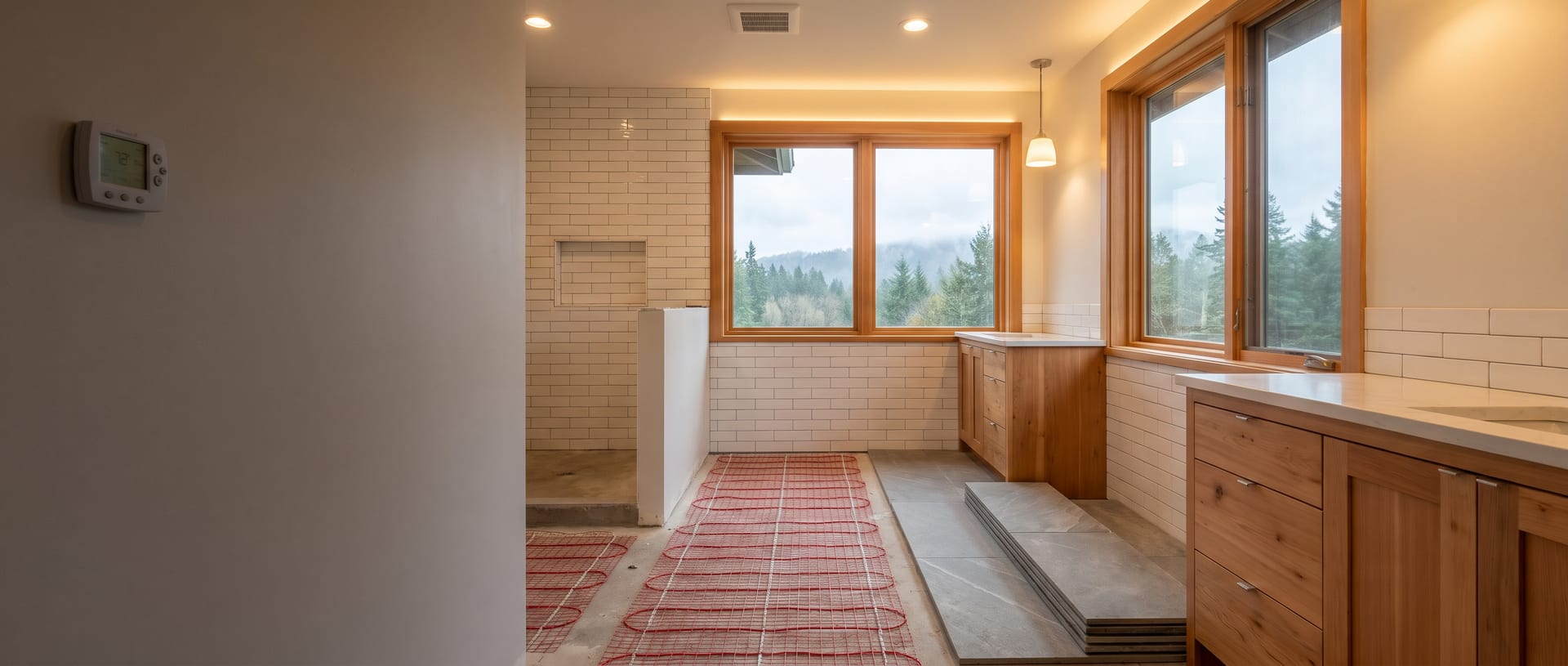
- Heated floor compatibility. Tile is the only flooring that reliably pairs with in-floor radiant heat. If you want warm floors, you want tile.
When Tile Is Worth It
Tile makes the most sense in a few cases:
- You’re adding heated floors (vinyl can’t take the heat, warranty-wise)
- You’re building for resale and want a premium finish
- The bathroom opens off a hallway with tile, and you want it to match
- You plan to stay in the home 15+ years
For floor tile selection and patterns that age well, my bathroom tile ideas 2026 post goes deeper on what’s trending and what reads dated fast.
Sheet Vinyl and Linoleum: The Budget and Niche Picks
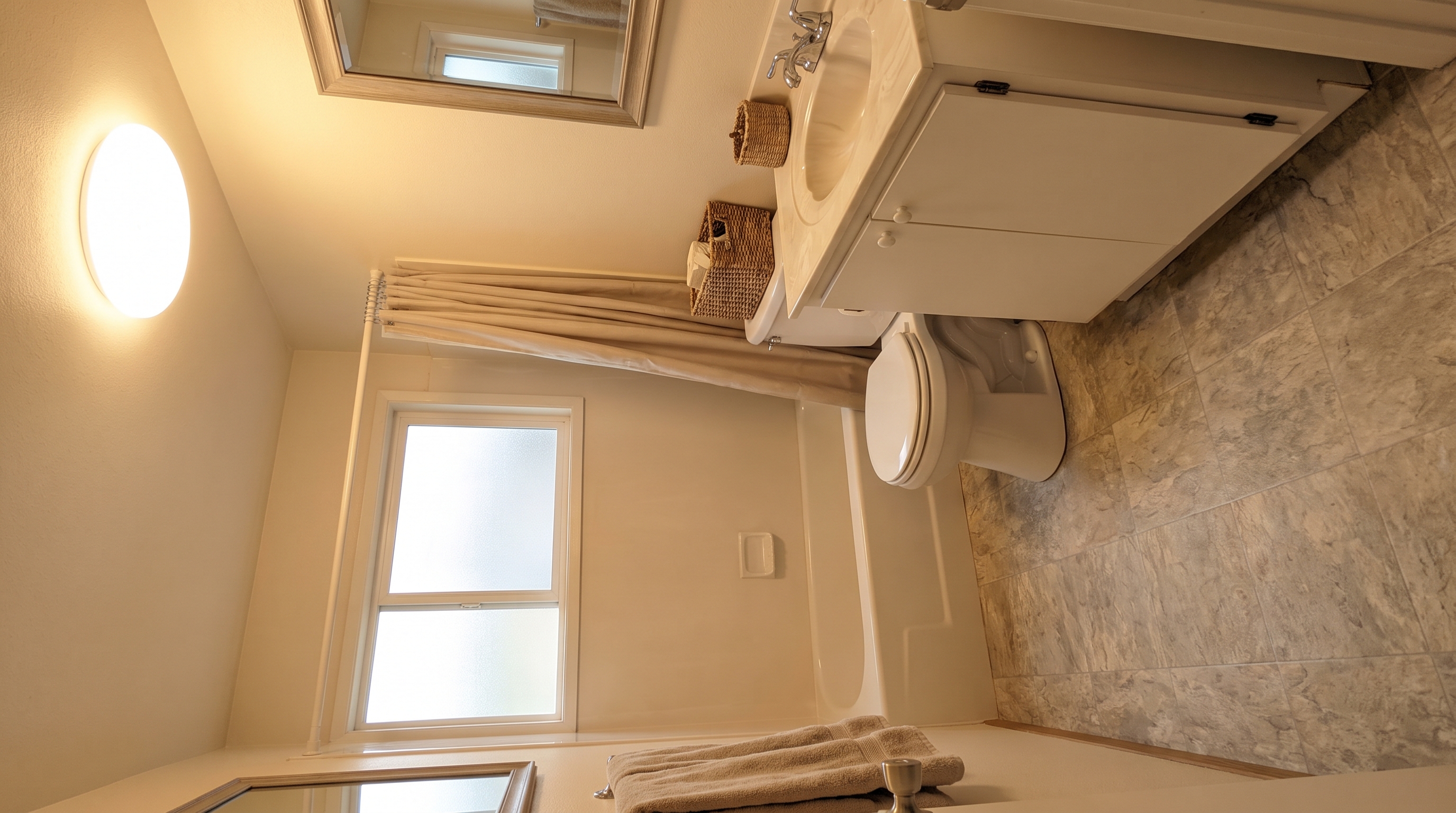
Sheet vinyl is the cheapest real option. Glue-down sheet vinyl runs $3 to $7 per square foot installed, so a small bathroom lands at $350 to $900. It’s still the most common builder-grade floor in Puyallup starter homes.
I don’t talk anyone out of sheet vinyl when the budget is tight or it’s a rental. It’s water-resistant, it’s cheap, and modern patterns look fine. It just won’t last like LVP or tile, and it’s harder to repair if it tears.
True linoleum is a different animal. Real linoleum, not vinyl, runs $8 to $14 installed. It’s made from natural materials, and I get requests for it from eco-conscious homeowners and folks restoring older homes. The catch is local installer availability. Fewer crews around here work with it, so lead times and labor run higher.
Good, fast, or cheap. Pick two. Sheet vinyl gets you fast and cheap. It won’t be the floor that lasts 25 years. That’s an honest trade, not a knock.
What Actually Drives Your Bathroom Flooring Cost
The material is the part everyone shops. The budget-killers hide underneath. A $900 vinyl job can turn into a $2,400 job the second the old floor comes up.
Here’s where the money really goes in Pierce County.
Subfloor Repair and Leveling
Pull up an old bathroom floor and you find out what you’re dealing with. Soft spots near the toilet. Rot at the tub edge. A subfloor that dips half an inch across the room.
Leveling a bathroom subfloor runs $400 to $900. Rot repair runs more, depending on how far it spread. In 1950s homes where water has leaked around the toilet flange for years, I often end up replacing entire sections of subfloor and sometimes a joist.
Asbestos in Pre-1980 Homes
This one is specific to flooring and specific to our housing stock. A big share of 1950s to 1970s Puyallup and South Hill homes have 9x9 vinyl floor tile or sheet vinyl mastic that can contain asbestos.
You do not want to rip that out yourself.
Testing costs $100 to $300. That’s cheap insurance. If it comes back positive, proper abatement and disposal adds $500 to $1,500 because Washington State L&I has specific rules. A good contractor tests before demo. A bad one rips it out and exposes your family to it.
Warning: If your bathroom floor is original to a pre-1980 home, test before anyone disturbs it. DIY demo on asbestos tile is a health risk and a legal one.
Crawlspace Conditions
Most older homes around here sit on vented crawlspaces. Two things matter down there before you pick a floor:
- Vapor barrier. A missing or torn crawlspace vapor barrier lets humidity wick up through subfloor seams. That’s a flooring-specific prerequisite I check before we commit to anything.
- Insulation. No crawlspace insulation means a cold tile floor. If you love tile but hate cold feet, we either add insulation below or add a heated mat above.
Here’s a Pre-Flooring Checklist
Before you lock in a material, walk through this with your contractor:
- Test suspect flooring for asbestos (pre-1980 homes)
- Check subfloor for soft spots, rot, and flatness
- Inspect the crawlspace vapor barrier and insulation
- Confirm the flooring core type is truly waterproof, not just water-resistant
- Plan transition sealing at the toilet flange and tub edge
- Decide on heated floors before material selection (tile only)
- Verify lead times on any special-order or large-format tile
What a Typical Older-Home Tile Floor Involves
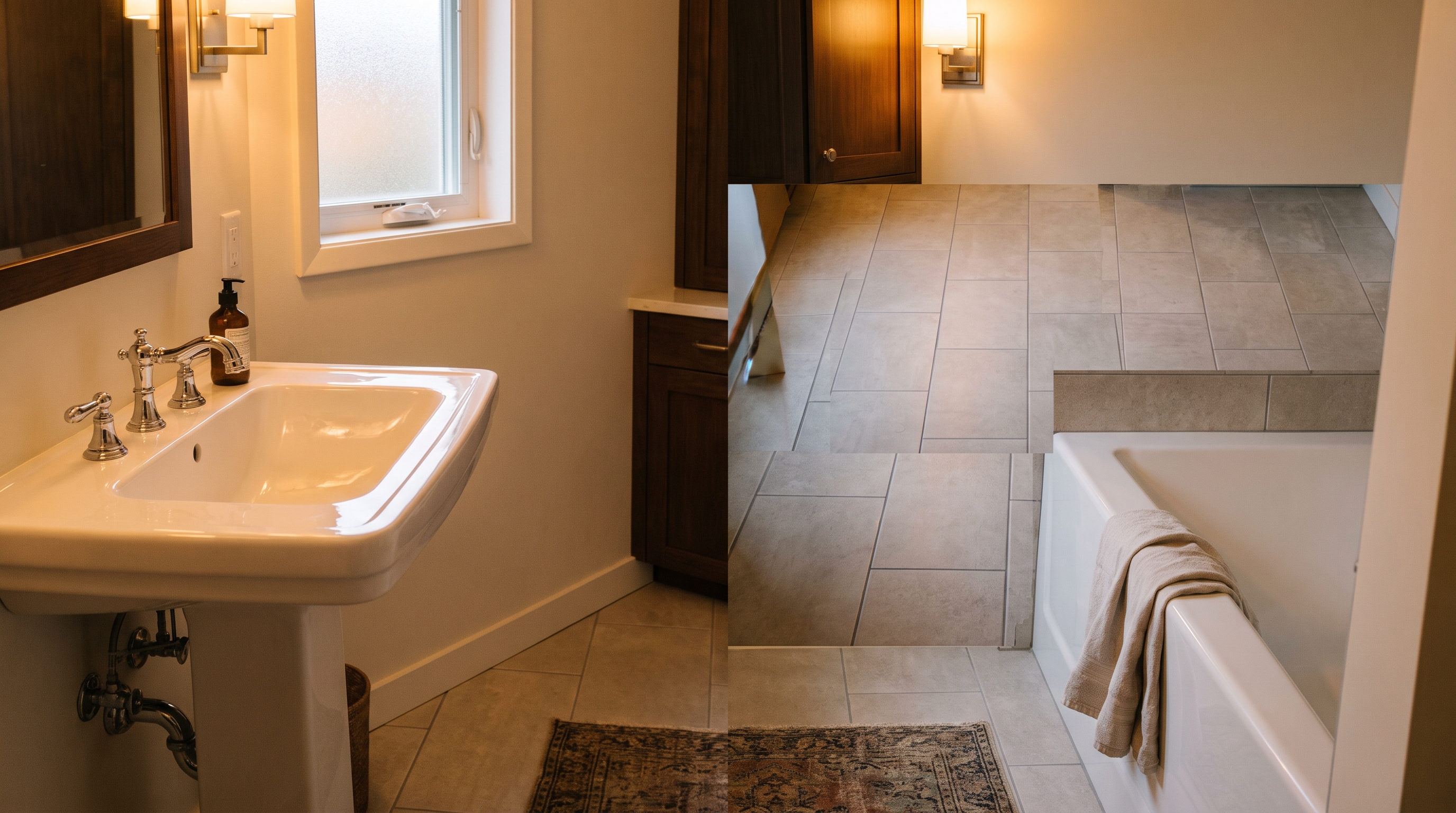
Here’s how a tile floor in an older home usually goes. Most 1960s hall bathrooms I work on have 45 to 50 square feet of floor, and plenty of homeowners come in wanting a large-format tile look they saw on Pinterest.
Here’s what that tends to involve once the work starts.
Pull the old floor and there are often two layers. Original vinyl tile on the subfloor, with sheet vinyl glued over it sometime in the 80s or 90s. If the original tile tests positive for asbestos, work stops, abatement comes in, and it gets disposed of properly. That typically adds $500 to $1,500 and a few days.
Under that, the subfloor commonly dips toward the tub, and there’s often minor rot at the flange. The fix is cutting out the bad section, sistering the subfloor, and pouring self-leveler.
Then comes Schluter DITRA, a 12x24 porcelain tile, and often a SunTouch heated mat, since the crawlspaces under these homes tend to run cold.
Here’s what those line items typically run:
| Line Item | Typical Cost |
|---|---|
| Asbestos testing + abatement | $600 - $1,800 |
| Subfloor repair + leveling | $400 - $1,200 |
| DITRA membrane + materials | $300 - $500 |
| Porcelain tile, installed | $1,440 - $2,550 |
| Heated floor mat + thermostat | $2,750 - $3,950 |
| Typical Total | $5,490 - $10,000 |
The tile is rarely the big number on the list. Homeowners often expect a $2,000 floor, and an older home with asbestos and a soft subfloor can push it past $5,000. I give that number before we start demo, not after. That’s the difference between a contractor you trust and one who change-orders you once you’re stuck.
Timeline: the tile work itself takes two to three days. Add abatement and subfloor repair, and plan on one to two weeks.
If you want the full picture on what a bathroom remodel runs around here, I break it all down in How Much Does a Bathroom Remodel Cost in Puyallup, WA?.
How to Choose the Right Bathroom Floor
So which one do you pick? Here’s how I walk clients through it.
Go LVP or SPC if you want the best balance of cost, warmth, and durability. This is the right call for most Pierce County bathrooms, especially over crawlspaces. It’s warmer, it’s faster to install, and it rides seasonal movement.
Go tile if you want heated floors, you’re building for resale, or you plan to stay 15+ years. It costs more and takes longer, but it’s the floor that outlives the remodel.
Go sheet vinyl if the budget is tight, it’s a rental, or it’s a low-use powder room. No shame in it. Fast and cheap, as long as you know the trade.
Go natural stone if it’s a high-end master bath and the design calls for it. Just plan for the sealing maintenance.
One more thing. If this is an aging-in-place or accessibility project, slip resistance matters more than style. For those jobs I check the tile’s slip rating and often steer toward textured LVP. I cover that in detail in my aging-in-place bathroom remodel guide.
For help picking materials across the whole project, not just the floor, see How to Choose the Right Materials for Your Remodel.
Frequently Asked Questions
Is luxury vinyl plank actually waterproof in a bathroom?
Most LVP and SPC products are genuinely waterproof at the plank level. The product spec is rarely the problem. The failure point is always the perimeter, the seams at the toilet flange, the tub, and the wall transitions. If those aren’t sealed during install, water gets underneath and rots the subfloor. So the real answer is this: the material is waterproof, but the installation is what keeps your floor dry. Confirm your contractor seals the transitions as a checked step, not an afterthought.
Can I put heated flooring under vinyl, or does it have to be tile?
It has to be tile, in almost every case. Most vinyl and LVP manufacturers cap warranty-safe temperatures well below what radiant floor systems put out. Push a heated mat under vinyl and you risk voiding the warranty and warping the planks. Tile is the only flooring type that reliably pairs with in-floor heat. If warm floors are a must-have, that decision drives you to tile before you pick anything else.
Will a tile floor be too cold in Puyallup winters?
It can be, and this is a real comfort issue here, not a sales pitch. Uninsulated tile over a vented crawlspace reads noticeably colder in our wet, cold winters than LVP does. A lot of local homes sit on exactly that kind of crawlspace. Two fixes work: insulate the crawlspace below, or add an electric heated mat above the subfloor. If neither is in the budget, LVP is simply warmer underfoot and a better pick for comfort.
Does my bathroom floor need to match the rest of the house?
Not always. It depends on the layout. If the bathroom opens directly off a hallway with the same flooring running right up to the door, matching looks cleaner. If it’s a fully enclosed bathroom, a contrasting floor reads as an intentional design choice and can look great. For resale, buyers care more about the floor being quality and in good shape than about it matching the hall.
Can I tile over my existing bathroom floor to save money?
I don’t recommend it in most cases. You can’t see what’s happening to the subfloor underneath, and any existing rot or soft spots get sealed in and keep spreading. Stacking tile also raises the floor height, which throws off the toilet flange, the door clearance, and the transitions. Pulling the old floor costs a little more up front and saves you from a bigger repair later.
Also Serving Pierce County
I install bathroom flooring throughout the South Sound. Beyond Puyallup, I’ve completed projects for homeowners in Tacoma, Sumner, Bonney Lake, Edgewood, and South Hill. If you’re nearby and don’t see your town listed, call and ask.
For flooring work beyond the bathroom, take a look at my flooring installation services in Puyallup.
Let’s Price Your Bathroom Floor the Honest Way
Your bathroom floor doesn’t have to break the bank, but you deserve a real number before demo day, not a surprise after. I’ll walk your bathroom, check the subfloor and crawlspace, test for asbestos if your home calls for it, and give you a straight estimate with no hidden change orders waiting.
If this was my mom’s house, that’s exactly how I’d want it done.
Call me at (253) 392-9266 or reach out through my contact page to book a free in-home consultation. I’ll give you an honest assessment and a clear price.
Brad Zemke, Owner Pacific Remodeling LLC Puyallup, WA