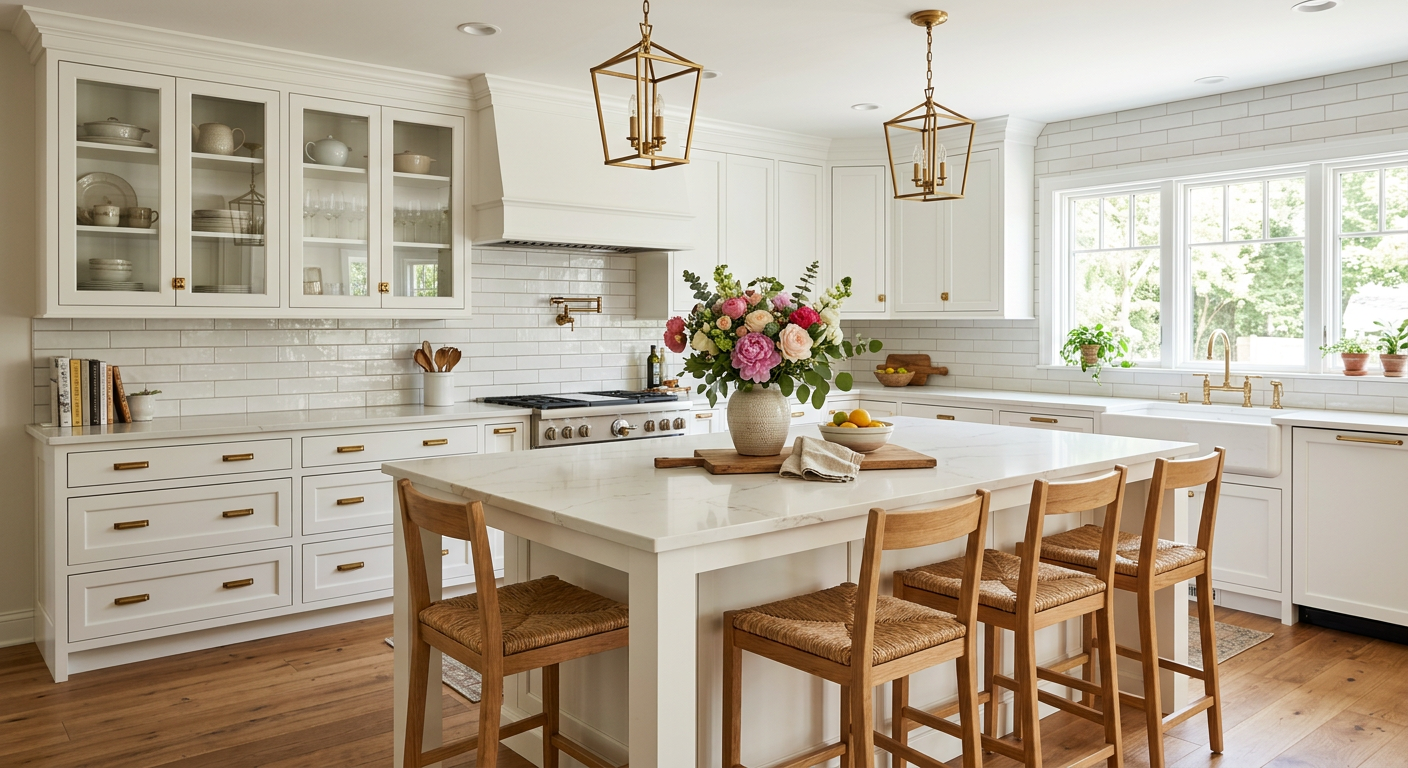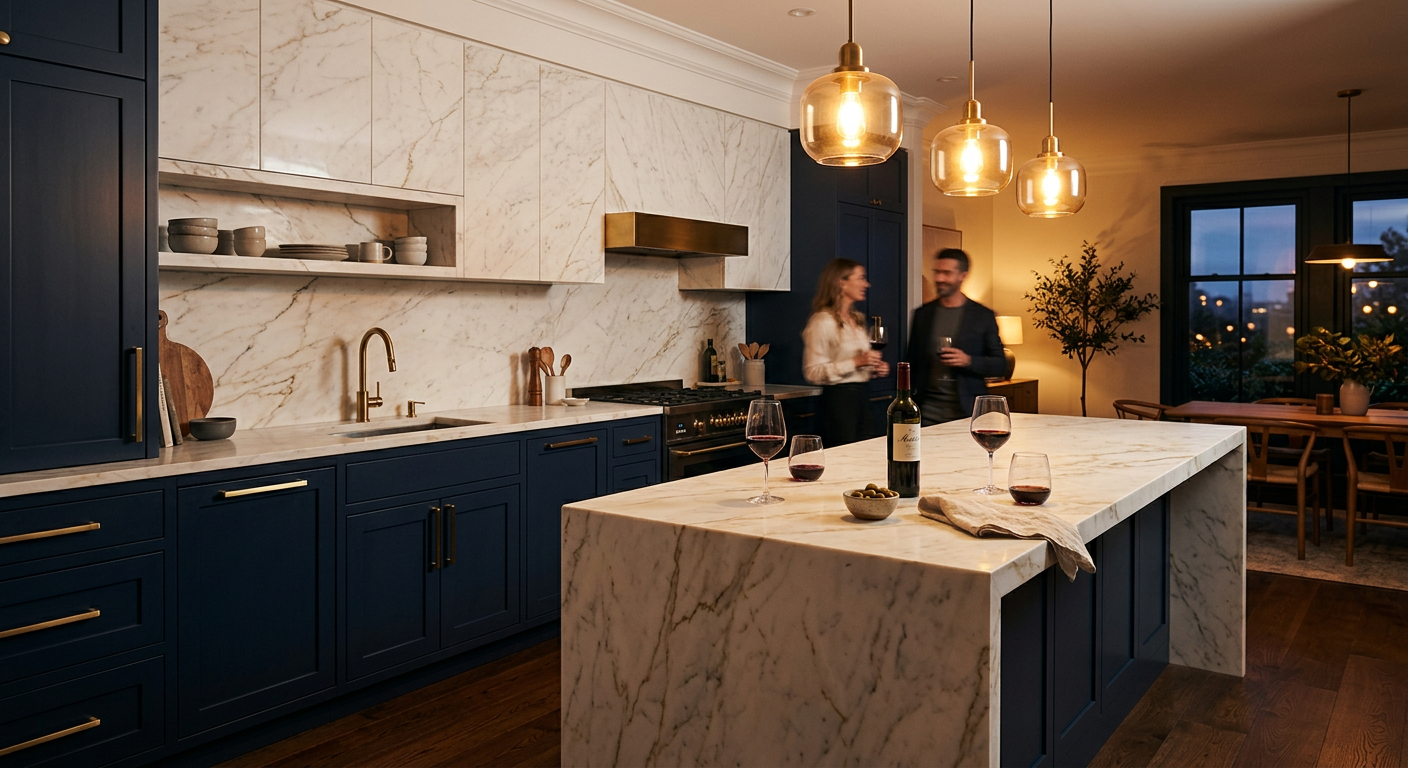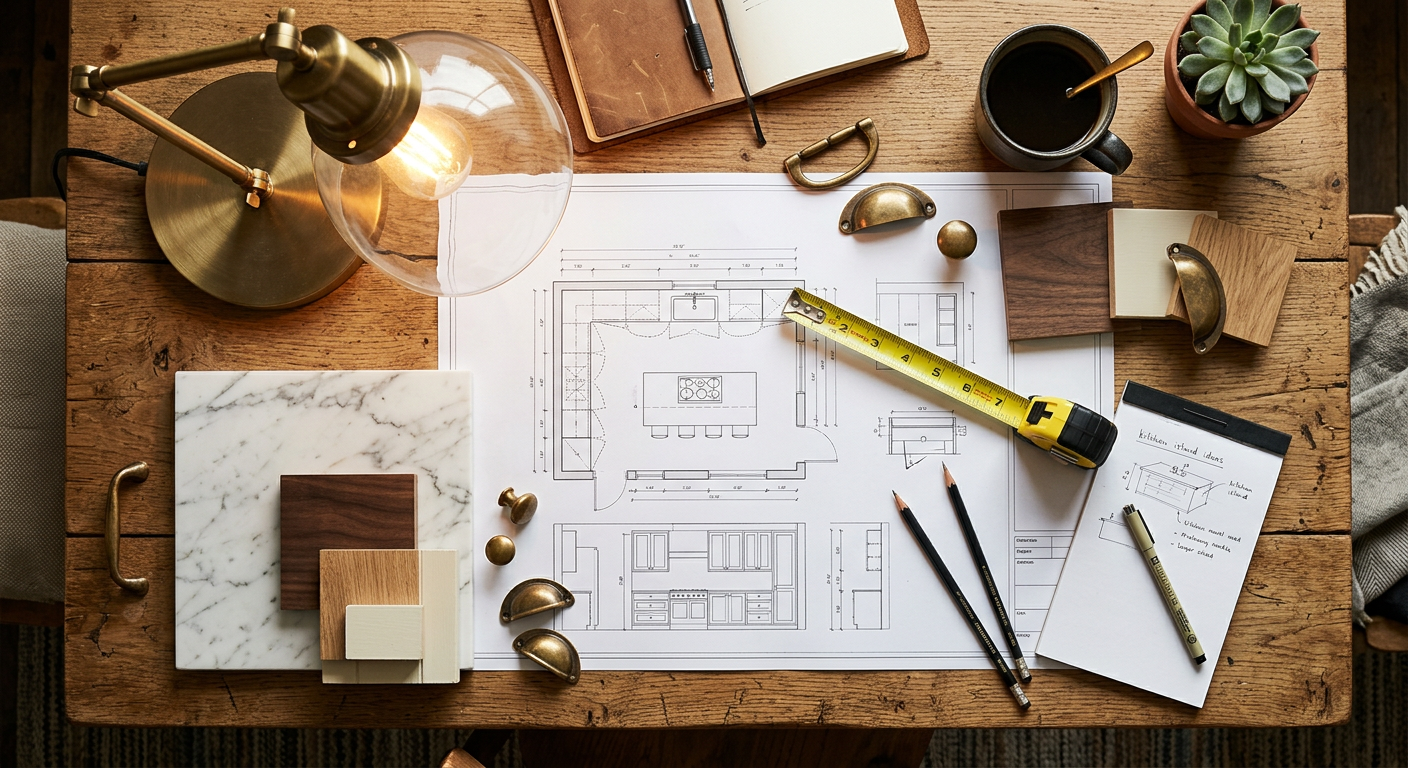
Last spring, I sat down at a kitchen table in a 1972 ranch on South Hill and watched a homeowner’s face go white. She had a Pinterest board full of kitchen islands she loved. Clean shaker base, quartz waterfall edge, prep sink, seating for four. “What would something like this cost?” she asked. I walked through the scope with her and gave the honest number: $18,000 to $24,000 installed, with plumbing and electrical, here in Pierce County. That was $10,000 more than she expected.
I get that reaction constantly. Most homeowners I sit down with have never priced out a kitchen island. They see the finished product on HGTV or Pinterest and assume a few thousand dollars covers it. The reality in 2026, in this part of Washington, looks different. A basic stock island with no plumbing starts around $3,500. A full-featured custom island with a sink, cooktop, and premium materials can push past $40,000. The spread is wide, and the details matter.
I told her what I tell every client: let me show you exactly where the money goes, line by line, so you can decide what fits your budget and your life. That’s what this guide does for you.
I’m Brad Zemke, owner of Pacific Remodeling here in Puyallup. Third-generation carpenter. I grew up helping my dad build homes and remodels, and he learned from his father before him. I spent 5 years in the Air Force as a B-52 crew chief, where cutting corners wasn’t an option. I’ve worked in the trades for over 20 years across Hawaii, Alaska, Colorado, Louisiana, and the Pacific Northwest. I started Pacific Remodeling in 2018 to serve Pierce County homeowners who want straight answers and work they can trust. Everything I share in this guide comes from building islands in homes across Puyallup, South Hill, Bonney Lake, Tacoma, Sumner, Edgewood, Graham, and the surrounding area.
What a Kitchen Island Actually Costs in Pierce County (2026)
Let me give you the honest numbers up front. Pierce County runs about 8 to 15 percent above national averages for remodeling labor. Higher wages, Washington state L&I insurance requirements, and steady demand through the Puget Sound corridor all push costs above what you’ll find on national estimating websites.
Here’s what you’re looking at in 2026:
| Scope | Pierce County Cost Range |
|---|---|
| Basic stock island (no plumbing, no electrical) | $3,500 - $6,000 |
| Mid-range island (stock or semi-custom cabinets, stone countertop, electrical outlets) | $6,000 - $14,000 |
| Custom island (custom cabinetry, premium countertop, plumbing + electrical) | $14,000 - $28,000 |
| High-end luxury island (waterfall edges, integrated appliances, structural changes) | $28,000 - $55,000+ |
Those ranges are wide because every project is different. A 4-foot island with laminate and no plumbing is a completely different job than an 8-foot custom piece with a prep sink, induction cooktop, and dishwasher drawer. The scope drives the cost, and I’ll break down every component so you can see exactly why.
If you’re also planning a broader kitchen remodel in Puyallup, these island costs fit within that larger budget. I wrote a detailed breakdown of full kitchen remodel costs worth reading alongside this one.
Where Your Money Goes: Component-by-Component Breakdown
I’m going to walk you through every major cost category so you can see how the numbers add up. No vague percentages. Real dollar amounts for Pierce County in 2026.
Cabinetry: The Foundation of Your Island
The base cabinets are the biggest single line item on most island projects.
Stock cabinets ($800 - $2,500 for the island base): These come in fixed sizes, usually 36, 48, or 60 inches wide. Hampton Bay from Home Depot, Diamond NOW from Lowe’s, and IKEA SEKTION all fall in this range. They work for a simple island, but your size, finish, and storage options are limited. What you see on the showroom floor is what you get.
Semi-custom cabinets ($2,500 - $6,000): KraftMaid, Thomasville, and Bellmont Cabinet Co. out of Sumner, WA, are popular choices I install regularly. Bellmont runs its operation right here in Pierce County, which means shorter lead times and local support. Semi-custom gives you more finish options, 3-inch size increments, and better interior storage like soft-close drawers and pull-out organizers.
Custom cabinets ($6,000 - $15,000+): Built to your exact dimensions with full control over materials, finish, and interior layout. Dura Supreme, Woodland Cabinetry, and local custom shops all handle this level of work. If your kitchen has an unusual footprint or you want features like a built-in wine rack, spice drawers, or an integrated appliance garage, custom is the path.
One thing I tell every client: don’t put expensive countertops on cheap cabinets. I’ve watched particleboard stock cabinets sag under heavy quartz slabs within two years. If you’re going with stone on top, make sure the cabinet boxes use plywood construction at minimum. The cabinets carry the weight of everything above them, and skimping on the base to splurge on the surface is a recipe for problems down the road.
Countertops: What Goes on Top
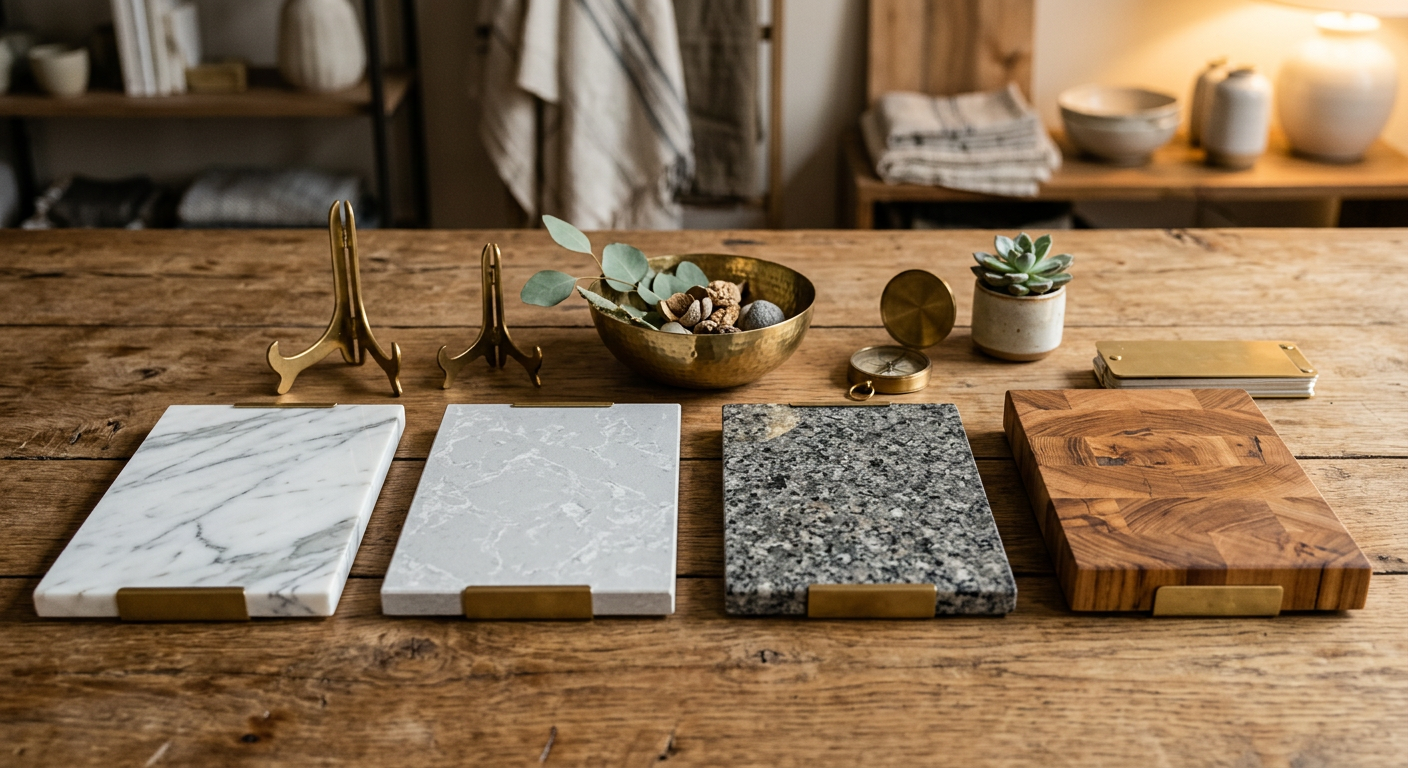
Your countertop choice affects both the look and the long-term maintenance of your island. Here’s how the most common materials compare for Pierce County installs:
| Material | Installed Cost per Sq Ft | Durability | Moisture Resistance | PNW Performance | Maintenance |
|---|---|---|---|---|---|
| Laminate | $15 - $40 | Low to Medium | Good | OK | Low |
| Butcher Block | $40 - $80 | Medium | Poor | Use caution | High |
| Quartz | $60 - $120 | High | Excellent | Excellent | Very Low |
| Granite | $50 - $100 | High | Good (if sealed) | Good | Medium |
| Marble | $75 - $150 | Low to Medium | Fair | Indoor only | High |
A typical island countertop runs 20 to 30 square feet, so your total countertop cost falls between $900 for laminate and $4,500 for premium quartz or marble. Add a waterfall edge, where the countertop cascades down one or both sides of the island, and you’re adding another 8 to 15 square feet of material plus the fabrication cost for the mitered seam.
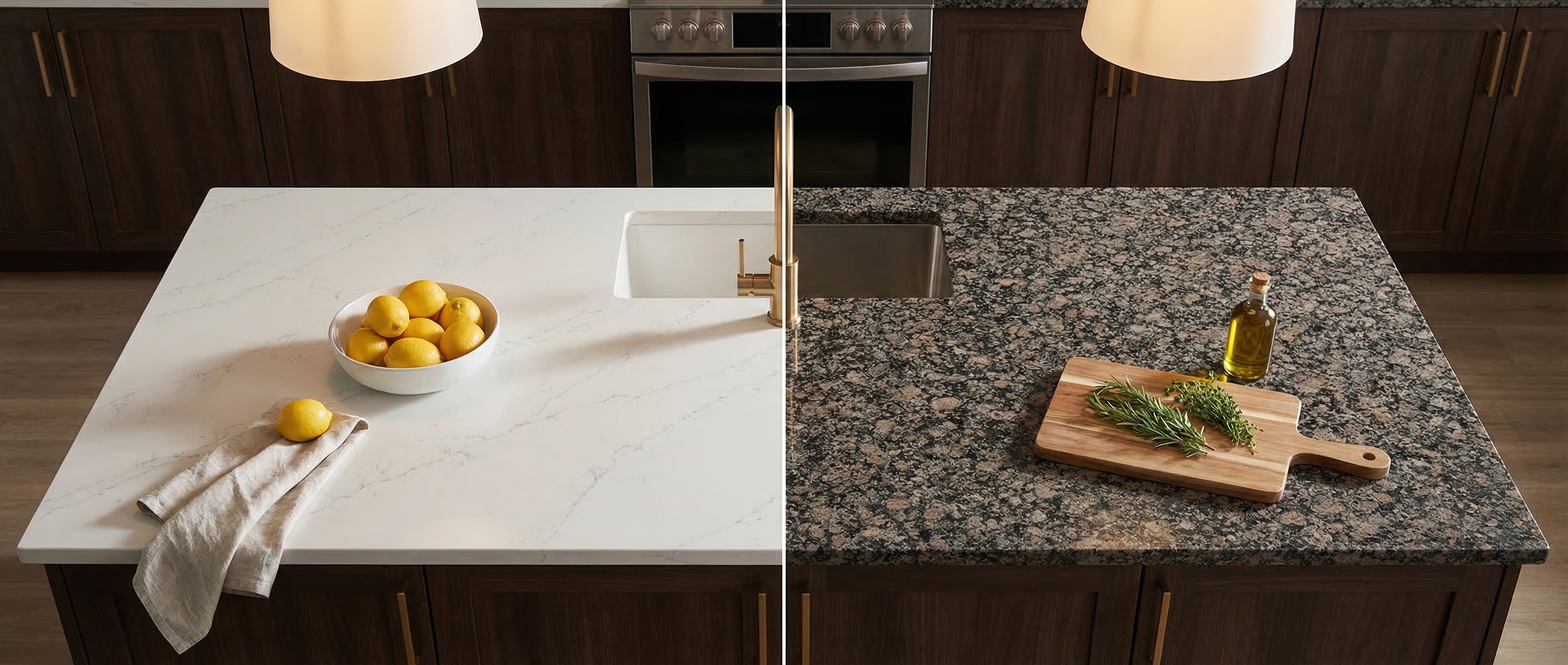
I install more quartz than anything else in Pierce County. Caesarstone, Cambria, and Silestone are the brands I work with most. Quartz handles PNW moisture without sealing, resists stains, and comes in finishes that convincingly mimic marble or concrete without the maintenance headaches. For most of my clients, quartz is the right call.
Butcher block looks beautiful, but I always warn clients about it in the Pacific Northwest. Our humidity swings between dry summers and wet winters, and that cycle forces wood to expand and contract. If you go with butcher block, plan on oiling it with mineral oil every 4 to 6 weeks during the first year, and choose end-grain over edge-grain for better moisture handling. John Boos makes a solid 1.5-inch maple edge-grain top for about $55 per square foot that holds up well if you stay on top of the maintenance.
Marble is gorgeous, but it etches from citrus juice and vinegar. I only recommend it for islands that serve as decorative centerpieces, not heavy-use prep surfaces. If you love the look of Calacatta marble, Cambria’s Brittanicca quartz gives you a similar aesthetic at $85 to $110 per square foot and laughs off red wine spills.
Electrical: Outlets, Circuits, and Lighting
Almost every island needs electrical work. WA code requires outlets within 24 inches of any countertop space wider than 12 inches. For most islands, that means 2 to 4 outlets.
| Component | Installed Cost |
|---|---|
| Pop-up outlet (Lew Electric or Hubbell) | $150 - $350 each |
| Dedicated 20A circuit | $250 - $500 each |
| Pendant light fixtures (3 over island) | $700 - $1,500 total |
| Under-cabinet LED strip lighting | $200 - $500 total |
Plan on $650 to $1,100 for basic electrical on a mid-range island. That covers two pop-up outlets, one dedicated 20-amp circuit, and pendant lighting. If you’re adding a cooktop, the electrical cost jumps significantly because induction units draw 40 to 50 amps and require their own dedicated circuit from the panel. At that point, electrical runs $1,600 to $3,000.
Here’s something that catches a lot of homeowners off guard in older Pierce County homes. Many houses from the 1950s through 1970s have 100-amp or even 60-amp electrical panels. Adding an induction cooktop circuit may force a panel upgrade, and that runs $2,000 to $4,000 on its own. I check the panel during every initial walkthrough so we can budget for this upfront if it applies to your home.
Plumbing: Adding a Sink Changes Everything
Adding a sink to your island is one of the biggest cost jumps in the project. You’re not just buying a sink and faucet. You’re running water supply lines and a drain line from the nearest connection point to the middle of your kitchen floor.
| Component | Cost |
|---|---|
| Plumbing rough-in (water + drain to island) | $1,200 - $2,500 |
| Prep sink + faucet (Kraus, Blanco, Kohler) | $300 - $1,200 |
| Garbage disposal | $150 - $350 |
| Dishwasher hookup (if adding dishwasher to island) | $200 - $400 |
| Plumbing permit (Pierce County) | $85 - $150 |
Total plumbing cost for a sink in the island: $1,500 to $3,500 depending on how far the lines run and what sits under your floor. In homes with a crawlspace, which covers most of Pierce County, the plumber works underneath to route the lines. Slab-on-grade homes cost more because the plumber has to cut into concrete.
One thing about Pierce County crawlspaces. Our clay-heavy soil holds moisture, and a lot of crawlspaces in Puyallup, Lakewood, and Spanaway already fight dampness. When I modify the subfloor for island plumbing, I always verify the vapor barrier is intact and drainage is clear before we close anything up. Skipping that step invites mold problems that won’t show up for a year or two, and by then you’ve got a much bigger issue than a kitchen island.
Structural Work: When You Need to Remove a Wall
A lot of homes I work in across Puyallup, Lakewood, and Graham have kitchens measuring 10 by 12 feet or smaller. There’s no room for an island without removing a wall or peninsula first.
If that wall carries no load, removal costs $1,000 to $3,000 including ceiling patches, wall repair, and floor patching where the wall used to stand.
If that wall carries structural load, you’re looking at $2,500 to $6,000 or more. A structural engineer assesses the load path ($300 to $600 for the assessment), and then we install an LVL beam to carry the weight above. This is not a place to save money. I’ve walked into homes where a previous owner knocked out walls without checking the load path, and the results weren’t pretty. Cracked drywall, sagging ceilings, and sometimes real structural damage that costs more to repair than doing the beam correctly would have from the start.
The Full Picture: Two Sample Budgets
Here’s how all these components add up for a mid-range and a full-featured island in Pierce County:
Mid-range island (6’ x 3.5’, semi-custom cabinets, quartz, electrical, no plumbing):
| Component | Cost |
|---|---|
| Semi-custom base cabinets | $2,600 - $4,300 |
| Quartz countertop (~25 sq ft) | $2,000 - $3,250 |
| Electrical (2 pop-up outlets, 1 circuit, pendants) | $1,350 - $2,600 |
| Peninsula demo + flooring patch | $600 - $1,700 |
| Trim, paint, finish work | $300 - $600 |
| Permits | $85 - $150 |
| Total | $6,935 - $12,600 |
Full-featured custom island (8’ x 4’, custom cabinets, quartz waterfall, prep sink, dishwasher, seating for 3):
| Component | Cost |
|---|---|
| Custom cabinetry | $5,800 - $10,500 |
| Quartz countertop with waterfall (~40 sq ft) | $4,000 - $6,200 |
| Prep sink + faucet + disposal | $750 - $1,550 |
| Plumbing rough-in | $1,400 - $2,900 |
| Dishwasher drawer (Fisher & Paykel) | $1,400 - $1,900 |
| Electrical (outlets, circuits, lighting) | $1,600 - $3,000 |
| Structural work (wall removal + beam, if needed) | $2,300 - $6,000 |
| Flooring repair | $500 - $1,300 |
| Permits (building + electrical + plumbing) | $400 - $800 |
| Design and engineering | $500 - $1,200 |
| Total | $18,650 - $35,350 |
The labor-to-materials split shifts as the project gets more complex. A simple island with no plumbing runs about 60 percent materials and 40 percent labor. A full-featured custom island with structural work is closer to 50/50. If you’re removing a load-bearing wall, that piece alone is about 65 percent labor.
Prefab, Semi-Custom, or Fully Custom: Which Island Fits Your Budget?
Not every island needs to start from scratch on site. Here’s how the three main paths compare:
| Factor | Prefab/Stock | Semi-Custom | Fully Custom |
|---|---|---|---|
| Total installed cost | $2,000 - $5,000 | $6,000 - $15,000 | $15,000 - $35,000+ |
| Lead time | 1 - 2 weeks | 3 - 5 weeks | 8 - 14 weeks |
| Size options | Fixed (48”, 60”, 72”) | 3” increments | Any dimension |
| Finish choices | 3 - 6 colors | 20 - 40 options | Unlimited |
| Storage options | Basic shelves and doors | Drawers, pull-outs, dividers | Fully customized interior |
| Plumbing/appliance ready | Rarely | Sometimes | Always |
| Best for | Quick refresh, rentals, starter homes | Most homeowners | High-end homes, unusual layouts |
For most homeowners I work with in Pierce County, semi-custom hits the sweet spot. You get a quality island that fits your space, enough finish and storage options to make it feel personal, and a price that’s roughly half of a full custom build.
Stock islands work best when you need a simple prep surface and don’t need plumbing or appliances. I’ve installed IKEA SEKTION island setups in rental properties and starter homes for under $4,000 that look clean and functional. They won’t win design awards, but they serve the purpose.
Full custom makes sense when your kitchen has an awkward footprint, when you want integrated appliances, or when you’re building a showpiece for a high-end kitchen. At that level, you’re paying for exact dimensions, premium materials, and details like furniture-style legs, built-in charging stations, or custom panel fronts that match your refrigerator.
Two Real Island Projects I’ve Completed in Pierce County
Numbers on a page only tell part of the story. Here’s what two actual kitchen island projects looked like from start to finish.
South Hill Ranch: Mid-Range Island ($11,200)
The homeowners bought a 1974 split-level on South Hill and hated the cramped kitchen with a dated peninsula blocking the view into the living room. They wanted an open layout with a functional island where their kids could sit and do homework while dinner was cooking.
Scope: Remove the existing peninsula, patch the flooring, and install a 6-foot island with semi-custom Bellmont cabinets (their 1900 series in a warm gray finish), Caesarstone quartz countertop in Calacatta Nuvo, two pop-up electrical outlets, and three pendant lights over the island. No plumbing in the island. Seating for two on the living room side with a 10-inch overhang.
What we found: Once we pulled the peninsula out, the flooring underneath showed a completely different color and pattern from the rest of the kitchen. We patched it with matching luxury vinyl plank, which added about $600 to the project. The wall behind the peninsula carried no structural load, so we didn’t need any beam work.
Timeline: 5 weeks from permit approval to final walkthrough. Cabinet lead time from Bellmont ran 3 weeks since they’re right up the road in Sumner.
Final cost: $11,200. That covered demo, disposal, flooring patch, cabinets, countertop, electrical, lighting, trim, paint touch-up, and the permit. The homeowners told me it completely changed how their family uses the kitchen. The kids do homework at the island, mom preps dinner facing the living room, and they gained about 6 square feet of usable counter space they didn’t have before.
Bonney Lake Custom Build: Full-Featured Island ($31,800)
This was a bigger project. The clients owned a 2005-built home in Bonney Lake with a large kitchen that already had good bones, but they wanted a showpiece island for entertaining. They cook together most nights and host dinner parties at least twice a month.
Scope: Custom 8-foot by 4-foot island with a Kraus stainless workstation prep sink and faucet, Fisher & Paykel dishwasher drawer, seating for three on the far side with a 12-inch overhang, Cambria Brittanicca quartz with a waterfall edge on the left end, and a full electrical package including four pop-up outlets and under-cabinet LED lighting. No cooktop in the island since they kept their gas range on the wall.
What we found: The plumbing rough-in required running water and drain lines about 14 feet from the nearest connection through the crawlspace. The crawlspace condition was decent, but we reinforced the vapor barrier while we had access. We added two dedicated 20-amp circuits for the dishwasher and disposal, plus two more circuits for the outlet and lighting package. The electrical panel had room, which saved us the cost of an upgrade.
Timeline: 10 weeks total. The custom cabinets took 7 weeks from order to delivery. Countertop fabrication and install added another 2 weeks after the cabinets sat in place and the fabricator templated the waterfall edge.
Final cost: $31,800. The waterfall quartz edge alone added about $2,200 to the countertop cost, and the plumbing rough-in came in at $2,100. But the finished island completely transformed how this family uses their kitchen. They told me it changed the way they entertain, that guests naturally gather around the island now, and that it was worth every dollar. When you build something that changes how a family lives in their home, that’s the kind of project I take pride in.
Should You Put a Sink in Your Island?
This is one of the most common questions I hear. The answer depends on how you cook and how you live in your kitchen.
| Factor | Island WITH Sink | Island WITHOUT Sink |
|---|---|---|
| Additional cost | +$1,500 - $3,500 | $0 |
| Permits required | Plumbing permit ($85 - $150) | Possibly none |
| Timeline impact | +3 - 7 days | None |
| Functionality | Two work zones, face guests while cooking | More uninterrupted counter space |
| Resale appeal | High | Moderate |
| Common complaint | Dirty dishes visible to guests | None |
| Best for | Frequent cooks, entertainers | Bakers, casual cooks, smaller kitchens |
My honest advice: if your kitchen has the space and you cook regularly, a prep sink in the island is worth the investment. It creates a second work zone so two people can prep and clean without bumping into each other. If your kitchen is smaller or you mainly use the island for eating and homework, skip the sink and enjoy the unbroken counter space.
Something to think about before you commit. A sink in the island means dirty dishes sit in full view of the living room and dining area in an open floor plan. Some clients solve this by adding a raised bar section on the living room side that hides the sink basin. Others just stay on top of the dishes. Know your family’s habits before you decide, because the plumbing is a lot harder to undo than a cabinet change.
Mistakes I See Homeowners Make on Island Projects
After years of building islands in Pierce County homes, I’ve watched the same mistakes surface again and again. Avoid these and your project will go smoother.
Building an island too big for the kitchen. Code requires at least 36 inches of clearance around all sides, and 44 inches if the island sits in an egress path. I recommend 42 to 48 inches for comfortable movement. Here’s a trick that saves headaches: tape the island footprint on your kitchen floor with painter’s tape and live with it for a full week before you finalize dimensions. Open the fridge. Pull out the oven door. Walk past with a pot of boiling water. If anything feels tight, it is. Shrink the island before you order the cabinets, not after.
Forgetting about ventilation for a cooktop. If you want a cooktop in your island, you need a plan for exhaust. That means either a ceiling-mounted island hood ($1,200 to $3,000 installed) or a downdraft vent ($800 to $2,400 installed). Both require ductwork to the exterior. I’ve had clients budget carefully for a cooktop but forget ventilation entirely, which adds $1,000 to $3,000 they didn’t plan for. Budget the cooktop and the ventilation together, or don’t budget either.
Choosing the cheapest bid without comparing scope. I talk about this in my kitchen remodel cost guide and it applies double for island projects. The lowest bid often leaves items out. Maybe they forgot the permit fee. Maybe they didn’t include the flooring patch after removing the old peninsula. Maybe they quoted particleboard cabinets while everyone else quoted plywood. Compare line items. Not totals.
Skipping the permit. “It’s just an island.” I hear that constantly. If you add electrical, plumbing, or make structural changes, Pierce County requires a permit. Period. Unpermitted work causes real problems when you sell your home. The buyer’s inspector flags it, and you negotiate a lower price or pay to rip it out and redo the work with proper permits. I’ve seen homeowners lose thousands at the closing table over unpermitted kitchen work. It’s never worth the gamble.
Not checking what’s under the floor. Before you lock in your island placement, someone needs to look underneath. In homes with a crawlspace, HVAC ductwork, plumbing lines, and even old support posts can sit right where you want the island. I check the crawlspace during my first visit to every job. Moving existing ductwork or plumbing to accommodate island placement adds cost and time you want to know about before demo day. Not during.
Putting expensive stone on cheap cabinets. I mentioned this above, but it’s worth repeating because I see it so often. A 25-square-foot quartz countertop weighs 300 to 400 pounds. Particleboard cabinet boxes cannot handle that load long-term. They absorb moisture, swell, and sag. If you’re putting any kind of stone on your island, demand plywood box construction. The upcharge is typically $200 to $500 for the island base, and it prevents a catastrophic failure two years from now.
Mixing up counter height and bar height. Standard counter height is 36 inches. Bar height is 42 inches. If you want seating at your island, decide which height you want before anything gets ordered, because it affects stool height, cabinet configuration, and how the island functions for food prep. Some clients go with a bi-level design: 36 inches for the working side and 42 inches for the seating side. That adds $500 to $1,500 to the cabinetry cost but gives you both functions without compromise.
PNW Weather, Old Homes, and Why Your Island Costs More Than the Internet Says
National cost guides don’t account for what we deal with in Pierce County. Here’s why your island project will likely cost more than the number you found online.
WA contractor licensing adds real overhead. Every general contractor in Washington carries L&I insurance, which adds roughly 10 to 12 percent to overhead compared to states without similar requirements. That cost shows up in every bid from every licensed contractor. It also means the person working in your home is legitimate, insured, and accountable. You can verify any WA contractor at lni.wa.gov. I tell every homeowner: check that number before you sign anything.
Older homes need more work than you expect. Builders put up a huge portion of the homes in Puyallup, Lakewood, Spanaway, and Sumner between the 1940s and 1970s. These homes often have 100-amp electrical panels that can’t handle a new cooktop circuit, cast iron drain lines that complicate plumbing tie-ins, and floor joists that may need reinforcement under heavy stone countertops. None of these are deal-breakers. They all add cost that a 2015-built home doesn’t carry.
Moisture is always a factor. PNW rain and humidity put stress on materials and crawlspaces year-round. When I modify a subfloor for island plumbing, I verify the crawlspace vapor barrier and drainage before we close anything up. Cutting a hole in your subfloor to run plumbing without checking the crawlspace condition underneath is asking for mold problems that surface two years later. By then, remediation costs far more than doing it right the first time.
Smaller kitchens mean structural work. Many ranch-style and split-level homes in Puyallup, Graham, and Edgewood have kitchens measuring 10 by 12 feet or less. Making room for an island often requires removing a wall. If that wall carries load, you’re adding an engineer assessment and beam installation to the project budget. I estimate that about 40 percent of the island projects I complete in older Pierce County homes involve some form of wall removal.
Seismic considerations nobody mentions. Washington sits in a seismic zone. A full-size quartz countertop with waterfall edges can weigh 500 to 600 pounds sitting on a cabinet base. If your island goes on the upper floor of a split-level, we need to confirm the floor joists handle that weight safely. Most national cost guides never bring this up, but it matters here.
Good news on energy costs. If you’re considering an induction cooktop for your island, Pierce County electricity rates work in your favor. Tacoma Power and Puget Sound Energy charge about $0.10 to $0.12 per kilowatt-hour, compared to the national average of roughly $0.16. Induction cooktops cost less to run here than almost anywhere else in the country, which helps offset the higher upfront equipment cost over time.
How Long Your Island Project Will Actually Take
Here’s the honest timeline. Not the HGTV version.
| Phase | Duration |
|---|---|
| Design, measurements, and material selection | 1 - 3 weeks |
| Permit application and Pierce County approval | 1 - 3 weeks |
| Material ordering (cabinets, countertop, fixtures) | 2 - 6 weeks |
| Demo and prep work | 1 - 3 days |
| Plumbing rough-in (if applicable) | 1 - 2 days |
| Electrical rough-in | 1 - 2 days |
| Flooring repair or extension | 1 - 2 days |
| Cabinet installation and leveling | 1 - 2 days |
| Countertop template by fabricator | 1 day |
| Countertop fabrication (off-site) | 7 - 14 days |
| Countertop installation | 1 day |
| Finish plumbing and electrical connections | 1 - 2 days |
| Trim, paint touch-up, hardware, final details | 1 - 2 days |
Total realistic timeline: 4 to 10 weeks for most projects. Custom builds with structural work: 8 to 14 weeks.
Material lead times cause the biggest delays. Stock cabinets ship in 1 to 2 weeks. Semi-custom from Bellmont in Sumner ships in about 3 weeks. Full custom cabinets from out-of-state manufacturers can take 8 to 14 weeks. Lock in your cabinet order early. That single decision controls more of your timeline than anything else.
A scheduling tip that can save you time and money. Contractors in Pierce County stay busiest from April through September. If your project can start between November and February, you’ll likely get on the schedule faster. Some contractors, myself included, offer modest off-season pricing because steady winter work keeps my crew busy year-round. The work quality is identical. The weather outside doesn’t affect your kitchen.
Does a Kitchen Island Increase Your Home’s Value?
Yes. Almost always. Here’s the breakdown.
| Island Type | Estimated Cost | Value Added at Resale | Typical ROI |
|---|---|---|---|
| Basic stock (no plumbing) | $3,500 - $6,000 | $3,000 - $5,500 | 70 - 85% |
| Mid-range semi-custom | $8,000 - $14,000 | $6,500 - $12,000 | 75 - 85% |
| Full custom with plumbing | $15,000 - $28,000 | $10,000 - $20,000 | 65 - 75% |
| High-end luxury | $30,000 - $55,000 | $18,000 - $33,000 | 55 - 65% |
The median home price in Puyallup currently sits around $525,000 to $560,000. A well-done mid-range island fits that price point and appeals to the widest pool of buyers. NAR surveys consistently rank kitchen islands as a top-3 buyer priority, and homes with islands sell an average of 8 to 14 days faster in the Puyallup, South Hill, and Sumner markets.
A word of caution on over-improving. Spending $40,000 or more on a luxury island in a $500,000 home puts you out of proportion with your market. I tell clients to keep the total kitchen renovation (island included) under 10 to 15 percent of the home’s value. For a $525,000 home in Puyallup, that means a total kitchen budget of about $52,000 to $79,000, with the island as one piece of that puzzle.
The materials that deliver the best ROI in Pierce County right now: quartz countertops, shaker-style semi-custom cabinets in white or warm gray, and a stainless steel undermount sink. These are what buyers in the $450,000 to $650,000 range expect to see in an updated kitchen. Trendy choices like bold cabinet colors or exotic materials may appeal to your personal taste, but they narrow the buyer pool at resale.
Questions I Hear From Homeowners Every Week
Can I add a kitchen island to my small kitchen?
Maybe. You need at least 36 inches of clearance on all sides of the island, and I recommend 42 to 48 inches for comfortable daily use. If your kitchen measures smaller than about 12 by 12 feet, a standard island probably won’t fit without removing a wall or peninsula. I’ve installed narrow islands (24 inches deep instead of the typical 36) in tighter kitchens across Tacoma and Lakewood, and they provide solid prep space and storage without choking off the floor plan. Tape it out on your floor before you commit to anything.
Do I need a permit to add a kitchen island in Pierce County?
If you’re adding electrical circuits, plumbing, or removing a wall, yes. Pierce County Planning and Public Works handles residential remodel permits. Base permit fees run $250 to $600 depending on scope, plus separate electrical ($85 to $150) and plumbing ($85 to $150) permits if needed. A freestanding island with no wiring or plumbing, like a rolling butcher block cart, doesn’t require a permit. Everything else does.
Is it cheaper to buy a prefab island or build a custom one?
A prefab island from a home improvement store costs $2,000 to $5,000 installed. A semi-custom island runs $6,000 to $15,000. Full custom starts at $15,000 and goes up from there. The difference shows in fit, finish, durability, and flexibility. Prefab works for simple needs. If you need an island that matches your exact kitchen dimensions, houses a dishwasher or sink, and holds up for 20 years, semi-custom or full custom is the right investment.
What countertop material works best for a kitchen island in the Pacific Northwest?
Quartz. It handles our rain and humidity swings without sealing, shrugs off stains from coffee and wine, and requires almost zero ongoing maintenance. Caesarstone, Cambria, and Silestone are the brands I install most. Granite is a solid second choice if you prefer natural stone, but budget for annual resealing to keep moisture out. Skip marble for a working island surface. Marble etches from lemon juice, tomato sauce, and vinegar. Save it for a bathroom vanity or decorative accent where it won’t take daily abuse.
How do I know if my kitchen wall is load-bearing before I plan an island?
You probably don’t, and that’s OK. That’s what your contractor checks before any design gets finalized. Walls that run perpendicular to the floor joists or sit directly above a beam or foundation wall typically carry structural load. But guessing here is dangerous. I bring a level, check the attic framing, and inspect the crawlspace to trace the load path before I ever suggest removing a wall. If the wall carries load, a structural engineer designs the replacement beam. It adds $2,800 to $6,600 to your project, but skipping this step puts your home’s structural integrity at risk.
Does adding a cooktop to my island make financial sense?
It depends on how you cook and what the rest of your kitchen looks like. An induction cooktop in the island frees up wall counter space and lets you face the room while cooking. But it adds $2,100 to $3,700 for the cooktop, $1,200 to $2,400 for ventilation, and $1,000 to $2,000 for electrical. That’s $4,300 to $8,100 on top of the base island cost. If you entertain frequently, love to cook, and your kitchen layout supports the workflow, it’s a solid investment. If you cook casually, keep the range on the wall and save the money for better cabinets or countertops.
Get an Honest Number for Your Kitchen Island
If you’ve read this far, you have a clear picture of what a kitchen island costs in Pierce County and exactly where every dollar goes. The next step is getting a number specific to your home, your layout, and your wish list.
I give every client a detailed, itemized estimate that shows the cabinetry, countertop, electrical, plumbing, permits, and labor as separate line items. You see what you’re paying for. You see why it costs what it costs. No hidden fees. No vague allowances.
My dad always told me: take pride in your work. For me, that starts before I ever pick up a hammer. It starts with an honest number and a clear plan. If this were my mom’s kitchen, that’s how I’d want the contractor to treat the estimate. So that’s how I treat yours.
Ready to get your kitchen island project priced out? Contact me or call (253) 392-9266 to schedule a free in-home estimate. I serve homeowners across Puyallup, South Hill, Bonney Lake, Tacoma, Sumner, Edgewood, Graham, and Lakewood.
Brad Zemke, Owner Pacific Remodeling LLC Puyallup, WA