Countertop remnants and small countertop pieces usually run 30 to 60% below full-slab pricing, with national installed remnant prices around $20 to $60 per square foot. On a 4 square foot vanity top, though, a $300 to $600 shop minimum often sets your price instead. And yes, I can do small remnant pieces for you, in marble, quartz, or granite.
I’m a third-generation carpenter with 20+ years in the trades, and I’ve run Pacific Remodeling in Puyallup since 2018. Below you’ll get the real math, including the spot where a remnant saves you less than you’d expect.
“We received 3 bids and his was clear, easy to understand and fair.” (JB S., Google review)
What Do Countertop Remnants and Small Countertop Pieces Cost?
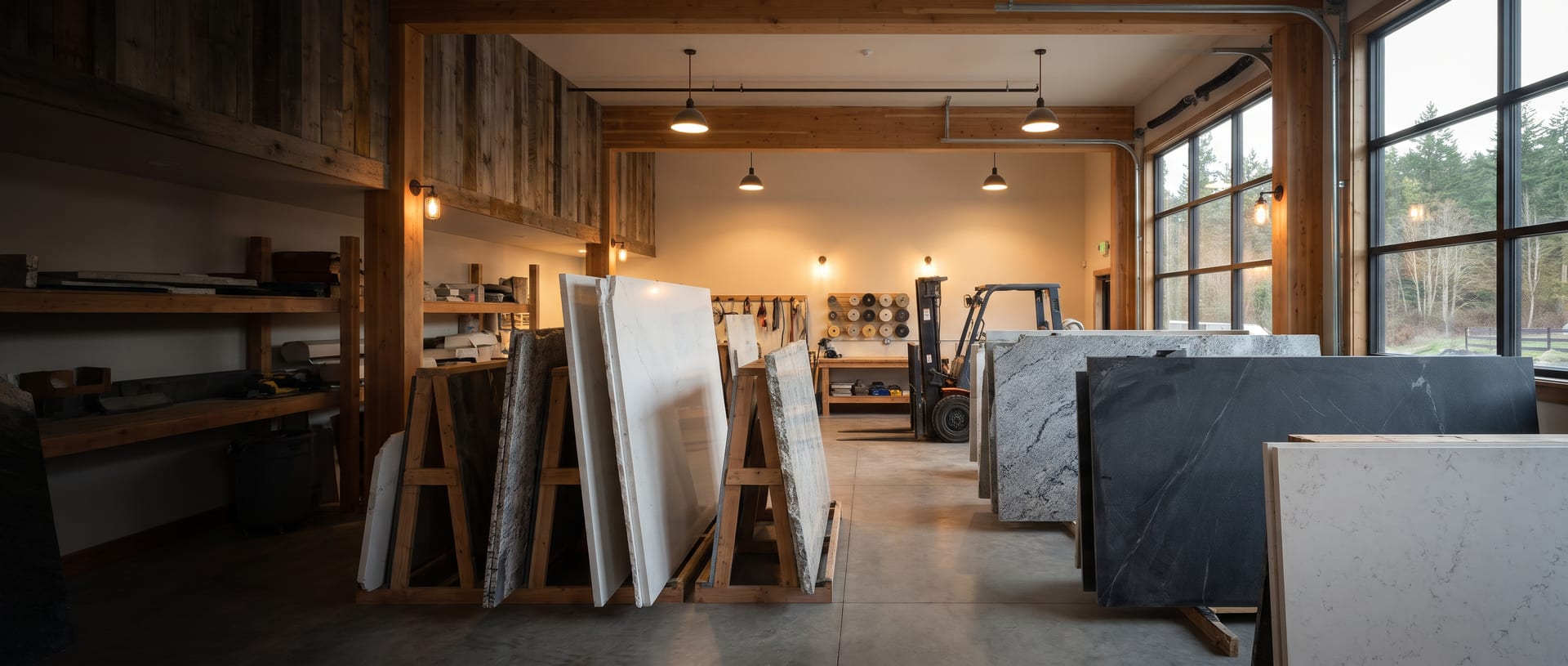
A remnant is the leftover end of a slab after a fabricator cuts a bigger project. You get the same stone, just less of it. Yards price it low because they can’t sell it as a full slab and they want the rack space back.
| Material | My full-price installed range | National remnant range, installed |
|---|---|---|
| Granite | $165 to $205/sq ft | $20 to $45/sq ft |
| Quartz | $165 to $230/sq ft | $35 to $60/sq ft |
| Marble | $80 to $240/sq ft | $30 to $60/sq ft |
| Butcher block | $45 to $120/sq ft | Not a remnant item |
| Laminate | $20 to $65/sq ft | Not a remnant item |
The remnant column comes from national published ranges. It isn’t my quote, and it isn’t a Pierce County price list. Local markets can run about 20% higher or lower, and larger partial slabs often get only 15 to 25% off. The 30 to 60% savings figure compares remnants with national full-slab prices, so don’t read the gap between these two columns as your exact savings.
If you only want the raw stone, remnant material alone runs about $5 to $25 per square foot, against $20 to $60 for new stone. Some yards even give away pieces under 6 square feet if you haul them yourself. Some shops also charge a flat price per piece instead of a per-foot rate, so ask which one you’re looking at.
Why the Per-Foot Price Fools You on a Small Top
Here’s the thing. Fabrication labor doesn’t drop because the stone got cheaper. The shop still has to cut it, polish the edge, and drill the holes, so most shops charge a minimum of $300 to $600 no matter how small the piece is. One published example puts a $400 minimum on a 4 square foot top, which works out to about $100 per square foot even if the stone costs you nothing.
Run the numbers on a standard vanity top:
- Measure it. A 31 by 19 inch top comes to about 4 square feet.
- Do the remnant math. At $20 to $45 per square foot, granite looks like $80 to $180 on paper.
- Apply the shop minimum. Your price jumps to $300 to $600.
- Add the sink cutout if the quote leaves it out. A cutout runs $100 to $200.
That puts a small remnant vanity top around $300 to $800. Straight multiplication at my full-slab granite range gives you $660 to $820 for the same 4 square feet, and any shop minimum still applies. So on a very small top, a remnant may save you less than you’d expect. What it really gets you is one small piece of stone, without paying for a whole slab.
Where the Savings Actually Show Up
The bigger the piece, the better the deal. At $40 per square foot, a $400 minimum covers your first 10 square feet. That’s why a 10 square foot remnant granite top, at about $250 to $450 installed nationally, can cost about the same as a 4 square foot one.
The same 10 square feet at my full-slab granite range comes to $1,650 to $2,050. If your project sits near that size, a remnant deserves a hard look.
What Adds to the Price
These national ranges can sit on top of the stone, so ask whether your quote includes them.
| Add-on | National range |
|---|---|
| Sink cutout | $100 to $200 each |
| Simple eased edge | $5 to $12 per linear foot |
| Full bullnose or ogee edge | $25 to $45 per linear foot |
| Basic drop-in install | $150 to $300 |
| Shop labor | $75 to $150 per hour |
My countertop installs include removing and disposing of your old top. Elsewhere, demo and removal can run $50 to $300, so ask every bidder. If you’re pricing a full run instead, a typical 40 square foot kitchen in quartz runs $6,600 to $9,200, and my kitchen countertop replacement cost breakdown goes through that number. You’ll find the full service on my countertop installation page for Puyallup.
Can I Get a Small Piece to Match What I Have?
Usually not an exact match. Homeowners call and ask me this, and it’s the first thing to settle when you shop countertop remnants and small countertop pieces. I’d rather tell you now than after you’ve paid for a cut.
Natural stone changes from slab to slab, and two slabs with the same name can carry different color and veining, so the granite you bought 15 years ago may look nothing like the piece sitting in a yard today. A match only becomes realistic with a very common granite or quartz that’s still in production. Even then, check it in daylight before you commit.
What to Do When a Match Isn’t Realistic
- Bring a sample. Take a loose piece or a clear daylight photo to the yard. Showroom lighting lies.
- Contrast on purpose. A different stone on an island, bar, or vanity looks like a decision. A near-miss color next to the original looks like a mistake.
- Break the run where it already breaks. Put any transition at a range, a sink base, or a change in height. Don’t butt two near-matches together on one flat run.
- Check the thickness. Stone commonly comes in 2 cm and 3 cm, and a different thickness shows right at the edge.
- Replace the whole run. If nothing else works, new stone on the full run may beat a patch you’ll stare at every morning.
If this was my mom’s house, I’d give the same advice. A close match sitting right next to the original will bug you every single day.
What Are My Countertop Options for a Small Piece, Like Marble?
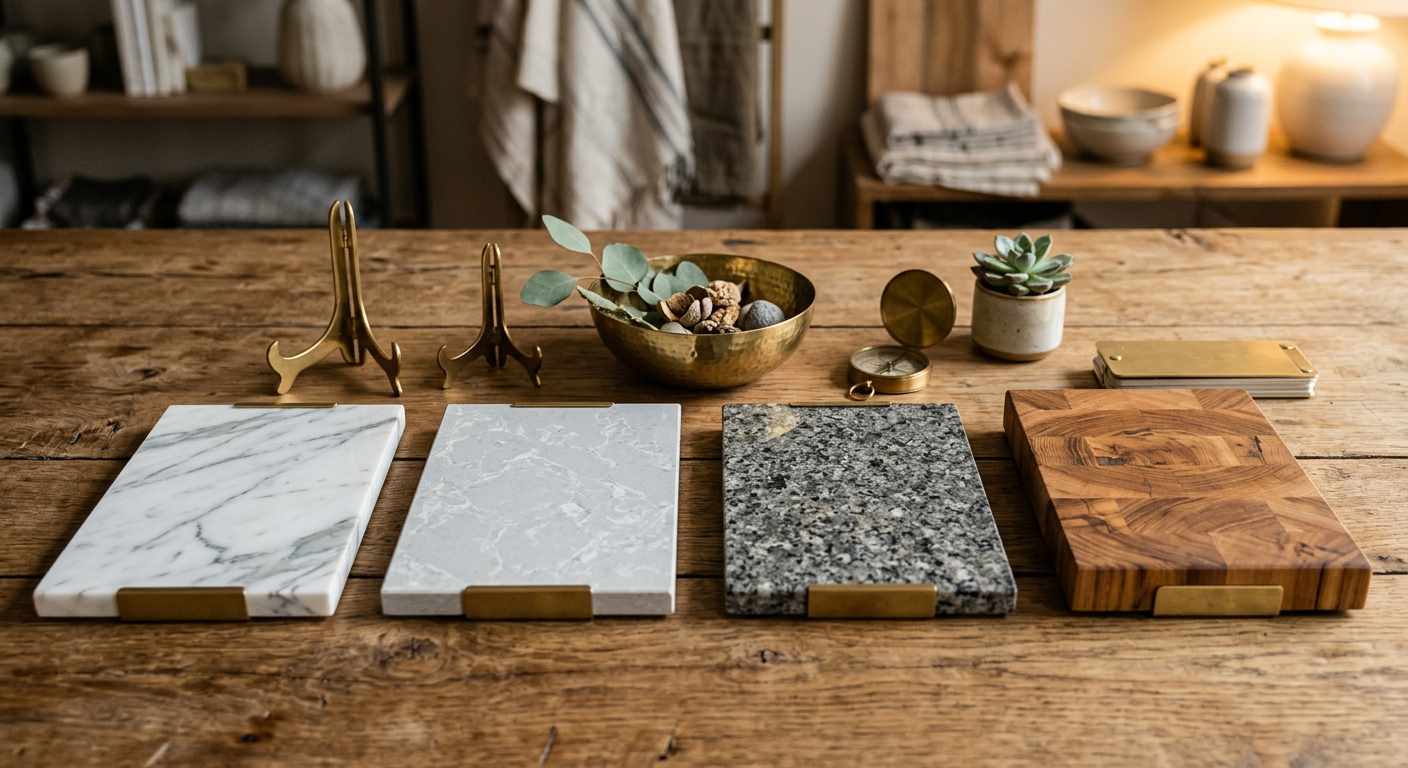
I install marble, quartz, and granite. Your choice comes down to where the piece goes and how much upkeep you’ll tolerate. My comparison of 10 countertop materials goes deeper if you want every option side by side.
Marble
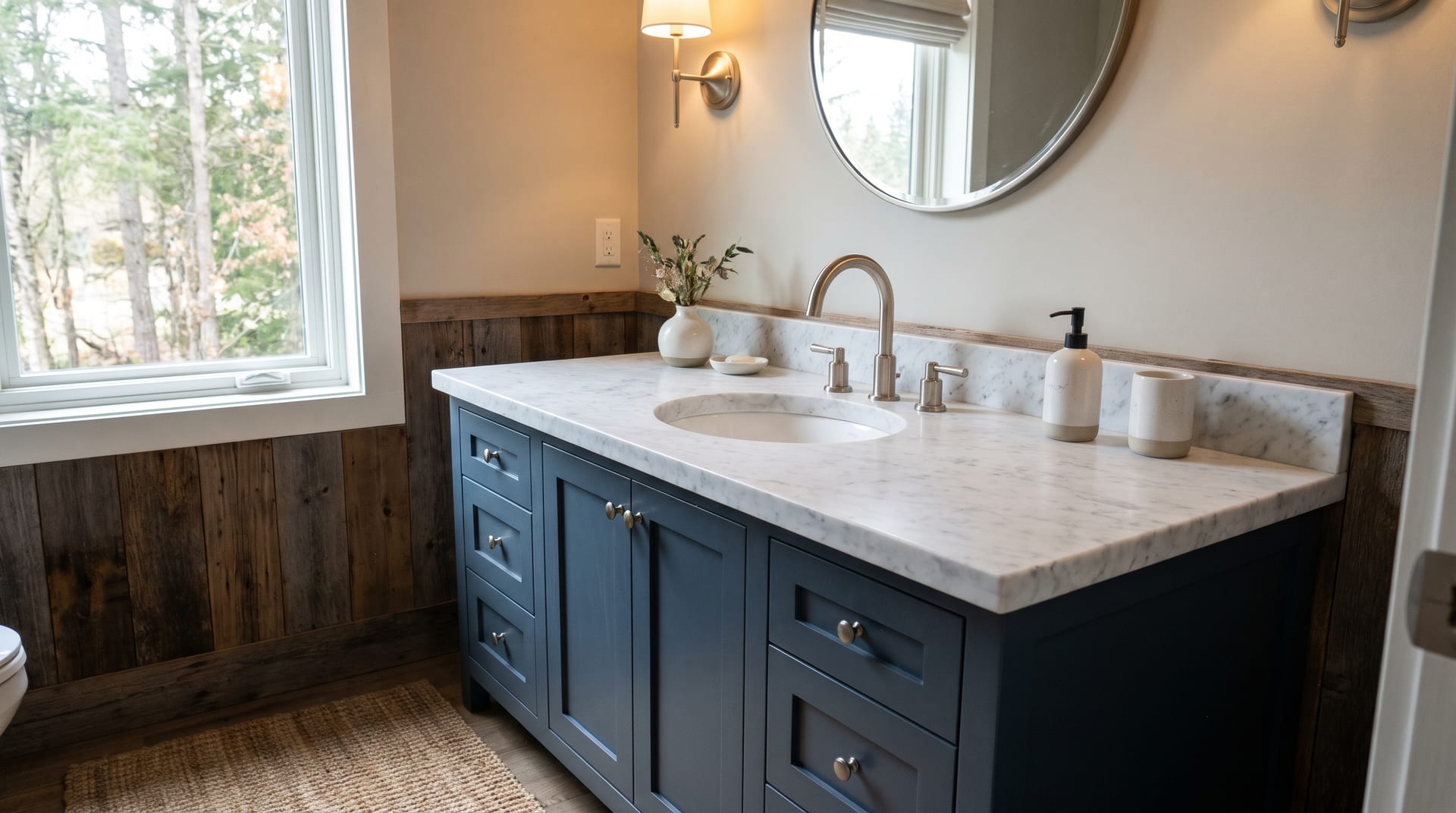
My installed marble range runs $80 to $240 per square foot, and remnant Carrara runs about $30 to $60 nationally. That spread makes a small piece an affordable way to own real marble. Marble is soft, though, and acids like lemon juice can etch it, so I’d put it on a vanity before I’d put it beside your cutting board.
Quartz
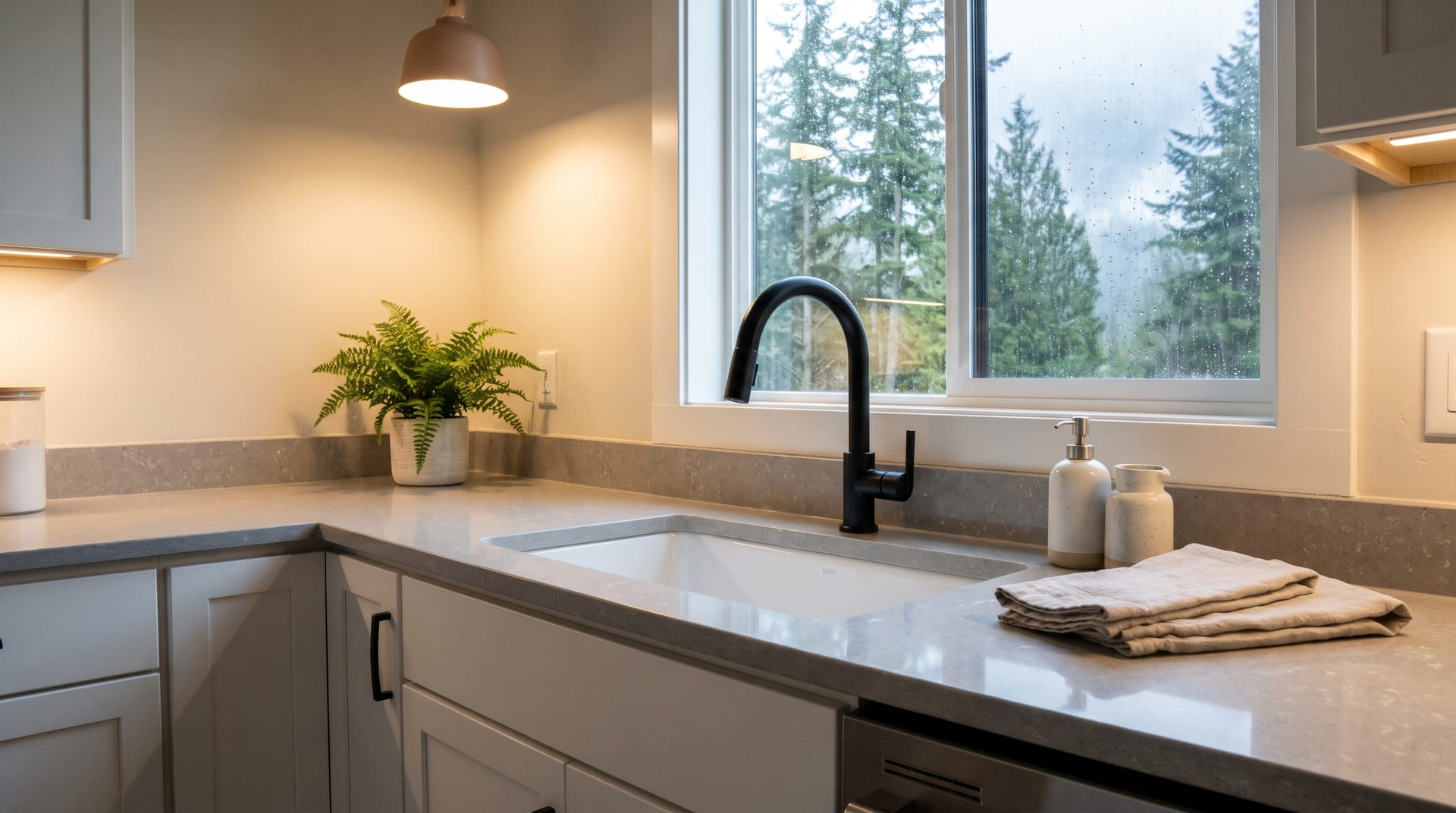
Quartz runs $165 to $230 per square foot installed, and it’s the most popular countertop I install. It doesn’t need sealing, which makes life easier in a damp Pacific Northwest laundry room or bath. Remnants from brands like Cambria, Silestone, and Caesarstone run about $35 to $60 nationally.
Granite
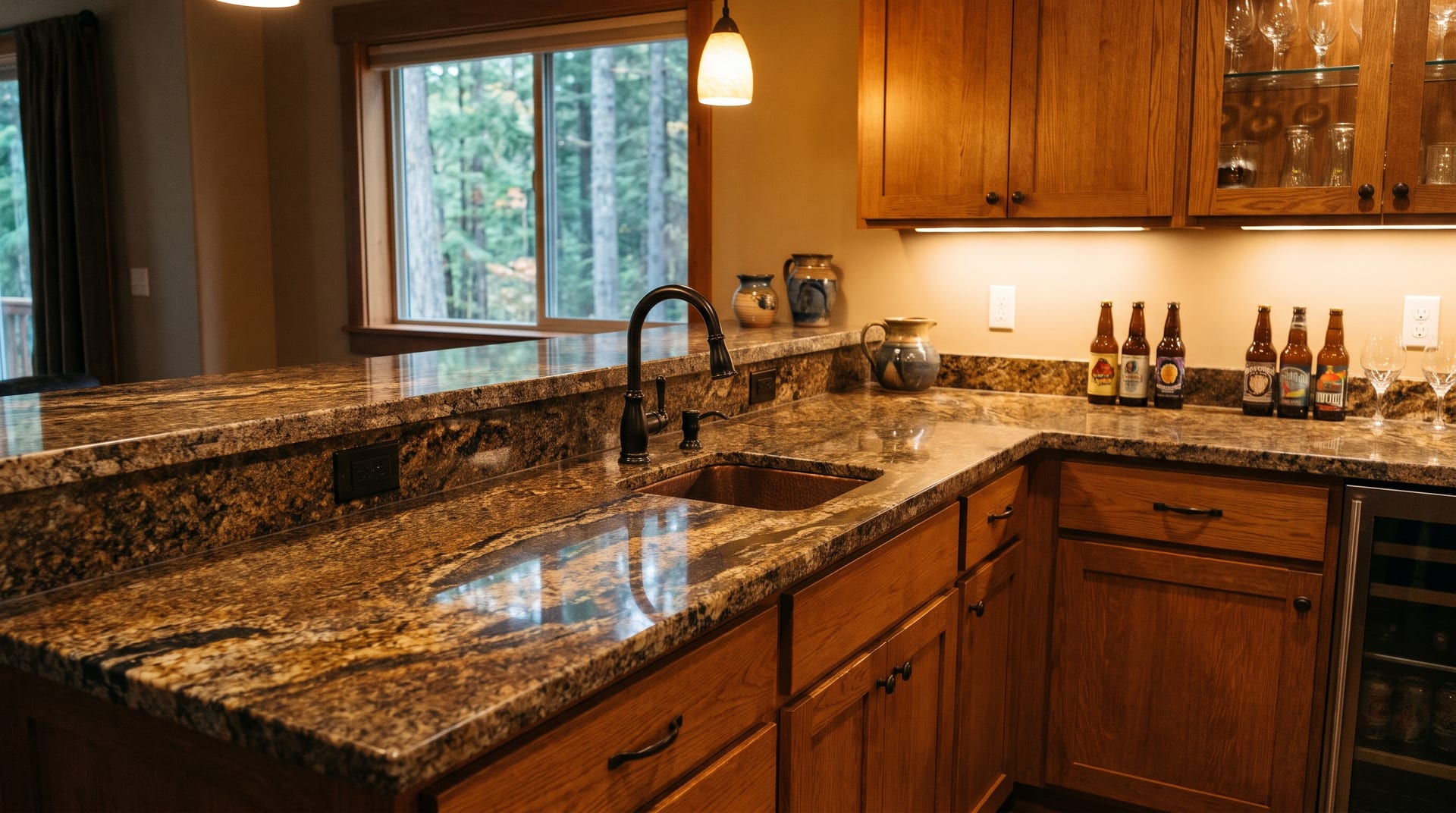
Granite runs $165 to $205 per square foot installed, and it needs sealing once a year. Remnants start lowest of the three, at about $20 to $45 nationally. If you’re torn between the two most common picks, read my quartz vs. granite comparison.
Butcher Block and Laminate
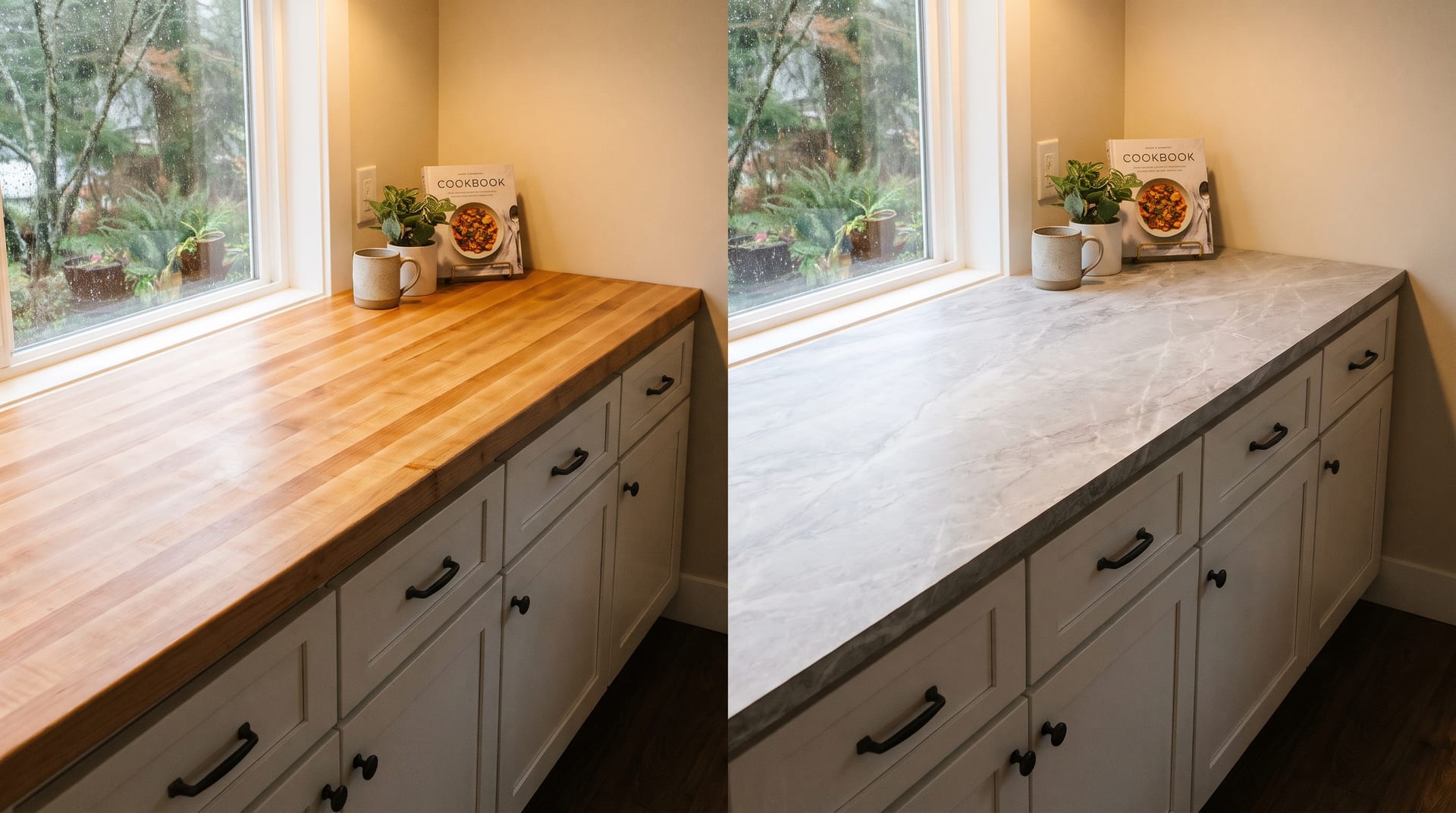
Neither one comes from a stone rack, but both can make sense on a small piece. Butcher block runs $45 to $120 per square foot and laminate runs $20 to $65. At my range, 10 square feet of laminate comes to $200 to $650, which is worth pricing against a stone shop minimum, even if you had your heart set on stone.
Where a Remnant Makes Sense and Where It Doesn’t
Countertop remnants and small countertop pieces work best on one short, standalone run. These spots fit:
- Bathroom vanities. The classic use. Read my bathroom vanity buying guide before you pick the cabinet and the top.
- Laundry counters. Short runs, simple edges, and often no sink cutout.
- Bars and coffee stations. Small enough for one piece of stone.
- Small kitchen islands. One island or one short run is the realistic ceiling.
- Fireplace surrounds and shelves. Low wear, and you can show off a stone you’d never pay full price for.
A typical remnant won’t cover a full kitchen run. Two-piece layouts get tricky too, so ask whether both pieces came from the same slab before you commit.
Small, older kitchens in Puyallup, Sumner, and Tacoma can suit remnant-sized runs. Newer subdivisions around Bonney Lake and Graham tend to start with builder-grade vanity tops, which make an easy first upgrade.
I tell people all the time: good, fast, or cheap, pick two. Remnants add one more trade. You give up choice and take whatever color sits on the rack that week.
What Quartz Looks Like on a Bathroom Vanity
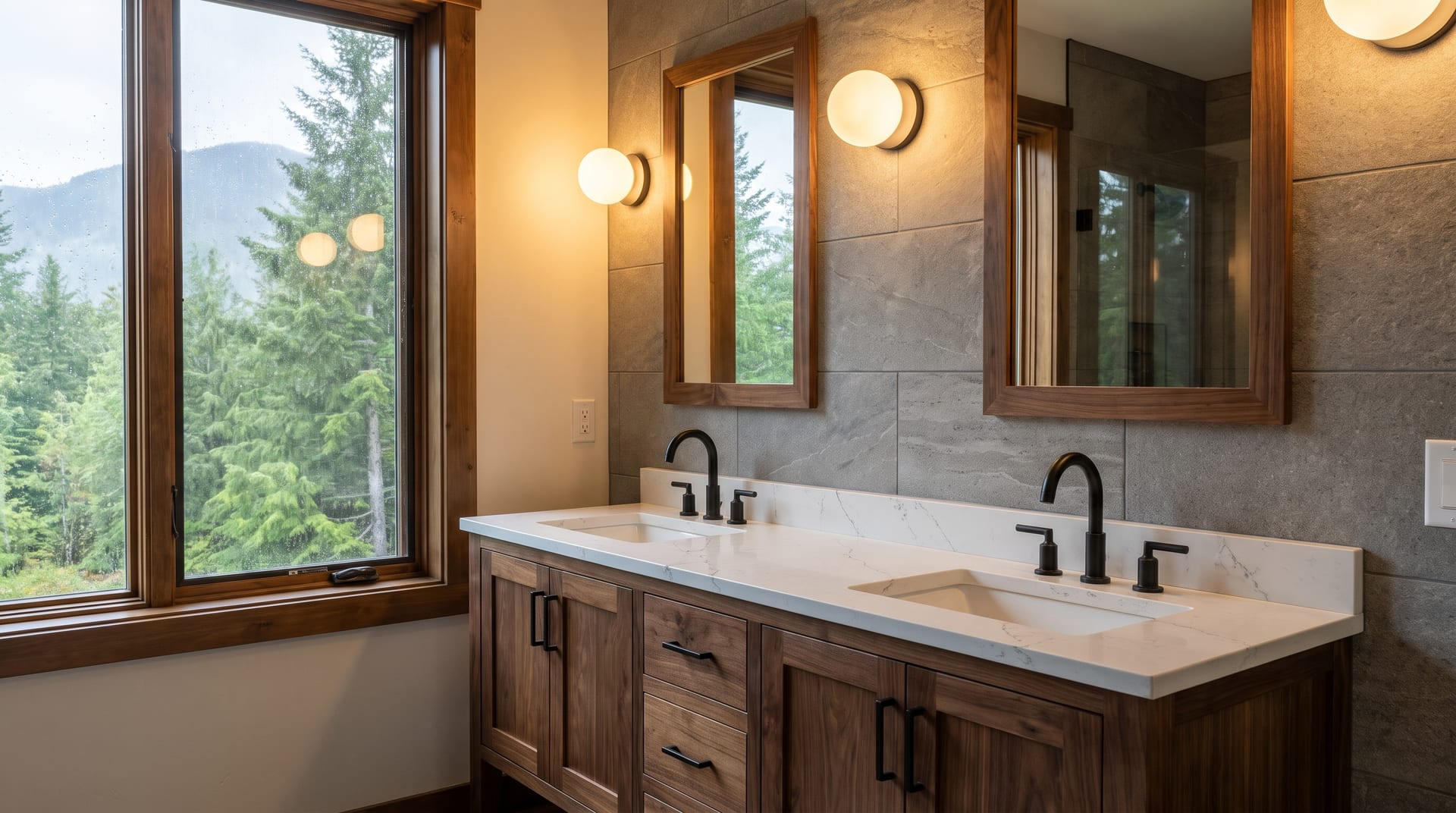
I’m not calling this one a remnant project. I’m showing it because a vanity is where most small stone ends up, and you should see what quartz looks like there.
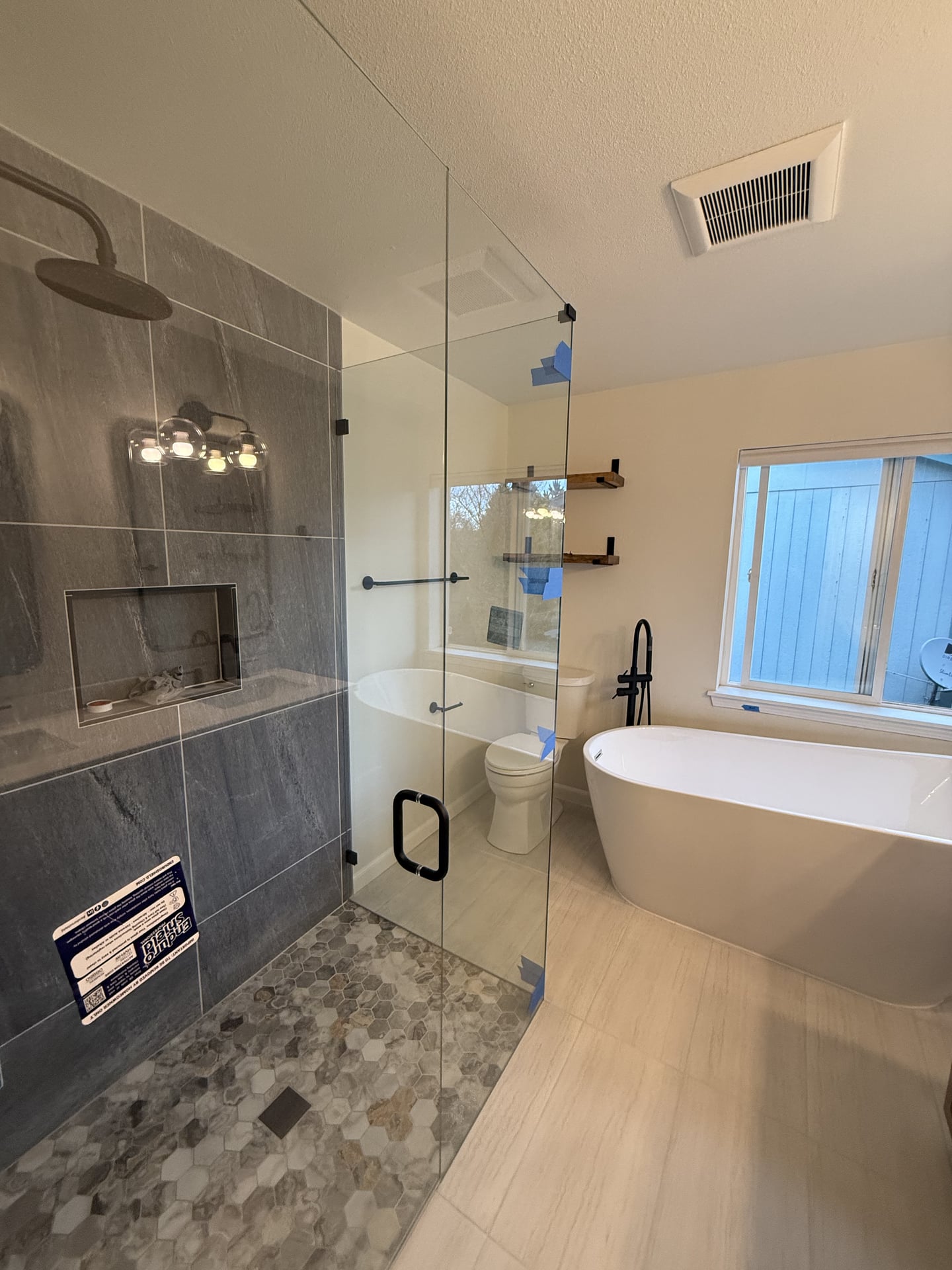
I gutted this Pierce County master bath and rebuilt it from the studs up. It has a double vanity in dark stained wood with a quartz countertop, globe vanity lights, and matte black fixtures throughout. The rest of the room has a walk-in shower with gray large format tile, a hexagon mosaic floor, a glass enclosure, a matte black rain head, and a freestanding soaking tub.
Compare that with a full kitchen run, like my white shaker kitchen remodel, with quartz countertops, white shaker cabinets, a subway tile backsplash, a built-in wine cooler, and hardwood flooring throughout. Full kitchens like that usually need more stone than a remnant rack offers.
4 Mistakes That Cost You Money on a Remnant
- Buying the stone before you measure. Stone doesn’t stretch. Measure twice, cut once, and get your fabricator’s OK on the piece before you pay. Bring your dimensions and sink spec, and ask if the shop can hold or re-cut it.
- Ignoring the minimum charge. Ask for the shop minimum before you fall in love with a piece. If you have a vanity and a laundry counter to do, bundle them into one order so you aren’t paying two minimums.
- Expecting a match to your existing counters. Bring a sample and plan a contrast design, or price the whole run.
- Assuming “exempt” means no rules apply. A permit exemption doesn’t excuse a code violation. Any electrical or plumbing change can still need its own permit.
You get what you pay for. A remnant price that looks too low usually leaves out the cutout, the edge, or the install, so compare bids line by line.
Why Crooked Walls and Wet Sink Cabinets Matter More on a Small Piece
Two local problems bite harder on a small top. A remnant gives you no extra stone to work with.
Out-of-Square Walls
Many homes from the 1940s through the 1970s in Puyallup, Lakewood, and Tacoma have walls and cabinets that drifted out of level and out of square over the decades, and a remnant with only an inch or two to spare leaves your fabricator no room to scribe the back edge.
Template after the cabinets sit in place. Measure the wall at the front and the back of the top, not just once. South Hill’s 1990s split-levels usually give you straighter walls, but I’d still check.
Moisture Under the Sink
Between the Air Force and the trades, I’ve lived and worked from Guam to Alaska. Pacific Northwest rain still does its damage where nobody looks, and the spot under your sink tops that list. Pull everything out of the cabinet and press on the floor of it.
If the cabinet floor feels soft or shows old water stains, fix the cabinet first. New stone on a rotted base just moves your problem up a level.
Old adhesive or a soft substrate can also show up when the old top comes off. Hidden work will get you, so I tell homeowners to hold back 15 to 20% for surprises.
Your Checklist Before You Pay for a Remnant
I spent 5 years as a B-52 crew chief in the Air Force, and I still trust a checklist over my memory. Run this one before you pay for countertop remnants and small countertop pieces:
- Measure the width, and measure the depth at both ends
- Write down your sink model and faucet hole count
- Bring a sample or daylight photo of your existing top
- Ask for the shop minimum in dollars
- Ask if the price runs per square foot or flat per piece
- Ask if the quote includes the sink cutout, edge profile, and install
- Ask who disconnects and reconnects the faucet and drain
- Check the thickness against what you already have
- Inspect the piece for chips, cracks, and fissures
- Press on the sink cabinet floor and look for water stains
- Get your fabricator’s OK on the exact piece
- Ask how long the yard will hold it
Do You Need a Permit for a Small Countertop Piece in Puyallup?
Probably not for the countertop alone, but confirm it for your address. Enumclaw and Lynnwood both list countertops as exempt finish work, and many Washington jurisdictions follow similar model code language. Puyallup’s own wording is what counts for you, so check with the city’s permitting office before you rely on an exemption.
If you live outside city limits, as many South Hill and Graham homeowners do, you’d check with Pierce County instead of the City of Puyallup, because each jurisdiction sets its own exemption wording.
The exemption stops at the countertop. These changes can pull you into separate permits:
- Relocating plumbing or moving a sink drain
- Adding outlets or new circuits
- Adding under-cabinet lighting
My guide to remodeling permits in Puyallup covers the bigger picture.
How Long Does a Small Countertop Piece Take?
My standalone countertop work runs 2 to 3 weeks, including templating and fabrication. Installation itself takes 1 day for a standard kitchen, so a small piece shouldn’t take longer than that on install day. You can also visit the slab yard and pick your exact piece.
A remnant can shorten your wait for material, because the stone already sits at the yard. It doesn’t move you ahead in the fabricator’s line.
A small job doesn’t get less care from me. I hold a 4 square foot vanity top to the same standard as a full kitchen, because Colossians 3:23 says to work at whatever you do with all your heart, and it doesn’t list a minimum square footage.
“I would highly recommend Brad for projects big and small. A true professional.” (JB S., Google review)
Questions Homeowners Ask About Small Countertop Pieces
Can I buy just a small piece of countertop?
Yes. I can do small remnant pieces, including a vanity top or a small matching piece. Plan your budget around the fabricator’s shop minimum, which runs $300 to $600 nationally, because it often sets the price on a piece that small.
How much does a remnant vanity top cost?
At national rates, plan on about $300 to $800 for a 4 square foot top once you count the shop minimum and a sink cutout. A 10 square foot remnant granite top runs about $250 to $450. Local prices can run about 20% higher or lower.
What countertop options do I have besides marble?
I install marble, quartz, and granite. Quartz needs no sealing, granite needs sealing once a year, and marble can etch from acids. Butcher block and laminate also work on small pieces, at $45 to $120 and $20 to $65 per square foot.
Where do I find countertop remnants near Puyallup?
Call local fabricators and ask what they have in your color family, because many don’t advertise remnants. Have your dimensions ready before you call. Inventory changes constantly, so a piece you see this week may not sit there next month.
Will a remnant hurt my resale value?
I don’t see why it would. Once the stone sits on your vanity, no buyer can tell it came off a remnant rack. I can’t give you a resale number specific to remnants, but a minor kitchen refresh returns 75 to 85% at resale, against 60 to 80% for a mid-range remodel, and a remnant top sits at the small end of that scale.
Also Serving Homeowners Across Pierce County
I handle countertop remnants and small countertop pieces for homeowners in Puyallup, Tacoma, Sumner, Bonney Lake, Edgewood, South Hill, and Lakewood, plus Graham and the rest of Pierce County.
Get a Straight Price on Your Small Countertop Piece
You can call me even if all you need is one 4 square foot vanity top. Measure the space, snap a photo of what’s there now, and have your sink spec handy. I’ll tell you straight whether a remnant makes sense or whether another material gets you there for less.
Call (253) 392-9266 or get your free estimate.
Brad Zemke, Owner Pacific Remodeling LLC Puyallup, WA