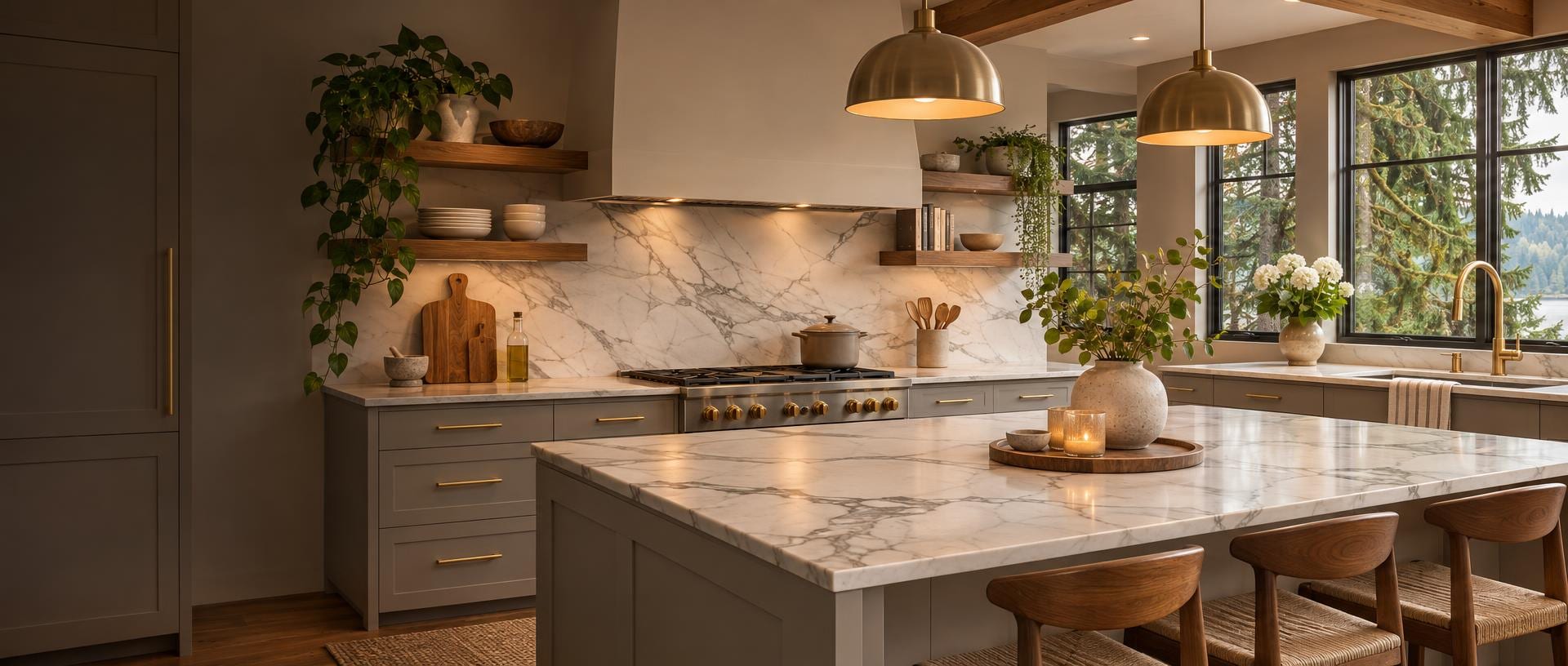
Marble countertops give you one-of-a-kind veining, a cool surface for baking, and a stone a pro can refinish. The tradeoff: marble etches from acid, stains if spills sit, and scratches more easily than granite. Installed marble runs about $75 to $250+ per square foot, with Carrara at $75 to $120 and Calacatta at $150 to $250+.
That’s the short version of the marble countertops pros and cons. My honest take: marble makes a great bathroom vanity or baking station, and a tough fit for the main prep counter in a busy family kitchen.
I’m Brad Zemke, a third-generation carpenter and Air Force veteran with 20+ years in the trades. I’ve run Pacific Remodeling in Puyallup since 2018, and I handle everything from full remodels to countertop installation across Pierce County.
“We received 3 bids and his was clear, easy to understand and fair.” (JB S., Google review)
Marble Countertops Pros and Cons at a Glance
Here’s the quick comparison I’d sketch on a notepad at your kitchen table.
| Pros | Cons |
|---|---|
| Natural veining that no factory pattern fully copies | Acids like lemon, wine and vinegar etch the surface |
| Carrara runs close to mid-range quartz pricing | Porous stone soaks up coffee, wine and oil if spills sit |
| Stays cool, which bakers love for rolling dough | Scratches more easily (3 to 5 on the Mohs scale vs. 6 to 6.5 for granite) |
| A pro can hone out etches and refinish the surface | Needs sealing at least once a year, more often in kitchens |
| Wears into a soft patina over time | Premium types like Calacatta run $150 to $250+ per square foot |
| Works beautifully on bathroom vanities | Every slab differs, so a showroom sample can mislead you |
If you read the right column and shrugged, marble will probably make you happy, and if the right column made you wince, keep reading, because I’ll show you the look-alikes that take a lot less work. Either way, you should see the full cost before you decide.
What Marble Countertops Cost in 2026
Price is where the marble countertops pros and cons stop being theory. National pricing guides put installed marble at about $75 to $250+ per square foot. One popular cost site lists a $50 low end, but that sits well below most other guides, so I treat it as a floor, not a budget.
These are national figures, not Pierce County fabricator quotes. Local pricing moves with slab availability and shop rates. Use these numbers to budget, and get a real quote before you fall for a slab.
Installed Price by Marble Type
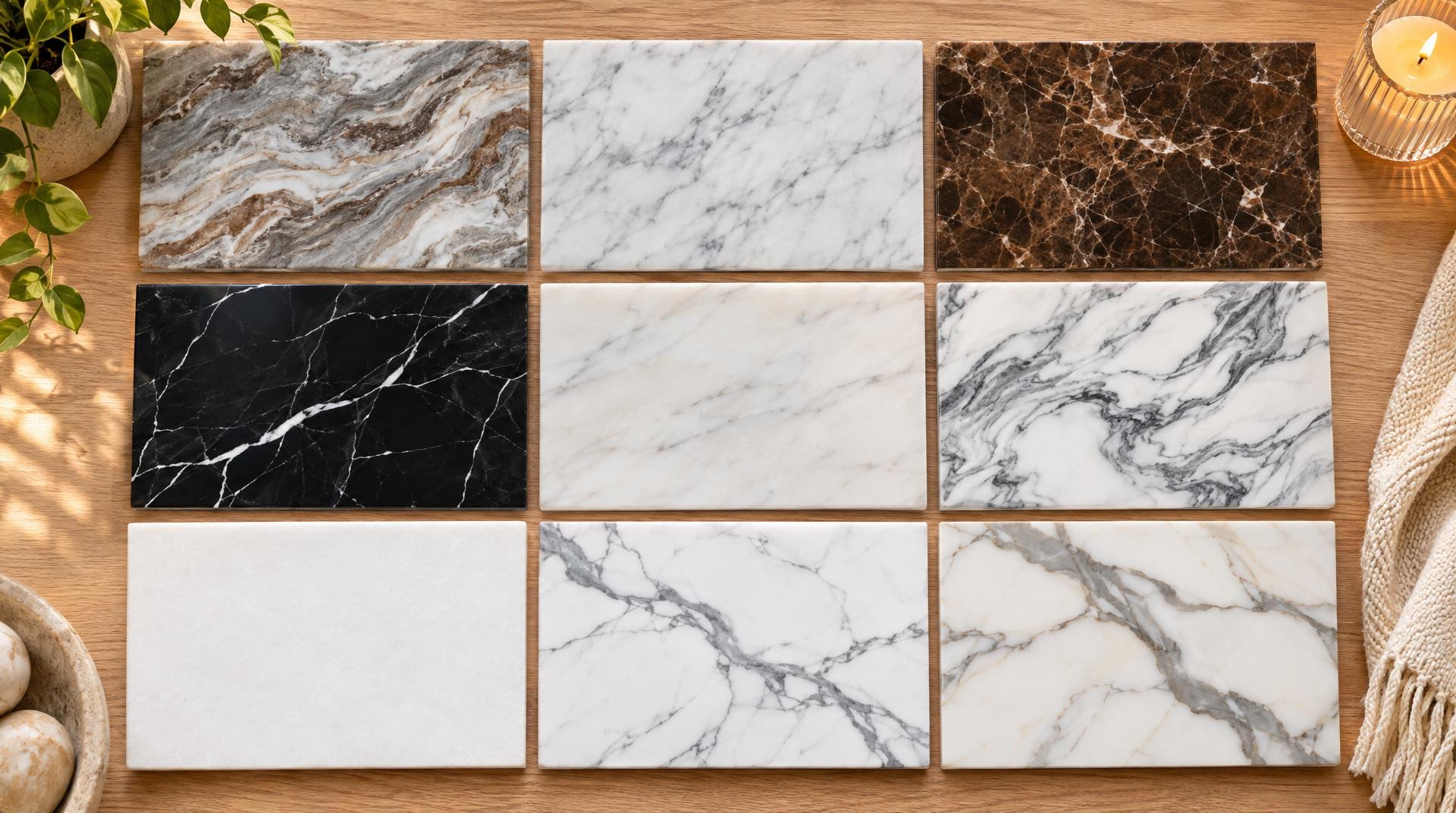
| Marble type | What it looks like | Installed cost per sq ft |
|---|---|---|
| Fantasy Brown | Gray, white and brown swirls | $70 to $110 |
| Carrara | White with soft gray veining | $75 to $120 |
| Emperador | Deep brown with lighter veins | $80 to $130 |
| Nero Marquina | Black with crisp white veins | $90 to $150 |
| Danby | White with soft veining, from Vermont | $100 to $160 |
| Arabescato | White with bold, swirling gray veins | $120 to $200 |
| Thassos | Nearly pure white | $120 to $180 |
| Statuario | Bright white with dramatic gray veins | $130 to $200 |
| Calacatta | White with thick, bold veining | $150 to $250+ |
Carrara is the marble most people picture, and it’s where I’d point most budgets. Calacatta runs about double Carrara per square foot. It also varies more from slab to slab, so see the actual slab before you sign anything.
What a 35 Square Foot Kitchen Adds Up To
A per-square-foot price never tells the whole story. Here’s how the line items stack up for Carrara on an average 35 square foot kitchen, using the national figures above.
| Line item | Low | High |
|---|---|---|
| Carrara tops, installed (35 sq ft at $75 to $120) | $2,625 | $4,200 |
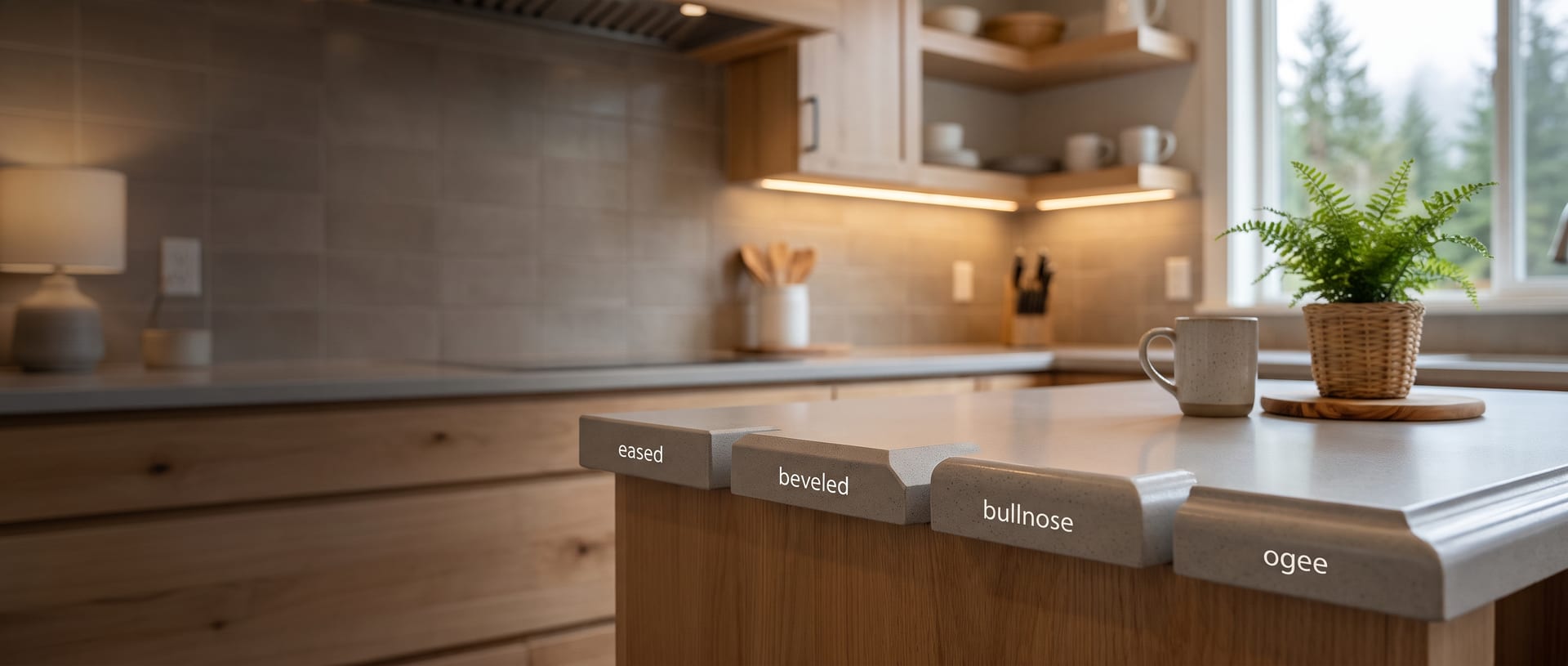
| Edge upgrade (eased edge comes standard; bullnose on about 17 linear ft at $10 to $15) | $0 | $255 |
| Backsplash (typical range, not full-height marble) | $500 | $1,500 |
| First sealing | $50 | $350 |
| Tear-out of old tops | $50 | $300 |
| Total | $3,225 | $6,605 |
That total doesn’t cover moving plumbing, new electrical, or a new sink and faucet. A full-height backsplash in matching marble can run up to $6,000 on its own.
Want Calacatta on the same kitchen? Plan on $5,250 to $8,750 for the tops alone, before backsplash, sealing or tear-out.
Edges matter more than people think. An eased edge comes standard on most marble jobs, bevel or bullnose runs $10 to $15 per linear foot, and an ogee or Dupont edge runs up to $25. My countertop edge profiles guide shows what each one looks like on a finished top.
The Pros: Why People Still Choose Real Marble
Marble has stayed in kitchens and baths for centuries for good reasons. Here’s what you actually get for the money.
- Nothing else looks quite like it. Real marble veining runs through the full thickness of the stone, and no two slabs match. The best quartz look-alikes get about 85 to 90% of the way there, according to stone industry comparisons.
- Carrara isn’t the luxury price people expect. At $75 to $120 per square foot installed, Carrara lands right next to mid-range engineered quartz at $70 to $110.
- It stays cool. Bakers love a marble surface for pie crust and pastry dough because it stays cool to the touch.
- You can fix it. A pro can hone out etches and repolish the surface for $5 to $15 per square foot. You can often buff minor etches yourself with marble polishing powder.
- It wears in, not out. Marble picks up a soft patina over the years. Some people hate that. Others buy marble for exactly that reason.
- It suits bathrooms especially well. Bathroom tops see fewer acids than kitchen tops, and stone guides put the bathroom sealing interval at 6 to 12 months instead of every few months.
Across more than 50 bathroom remodels, the vanity top is where I think marble earns its keep most. I’ll come back to that below.
The Cons: Etching, Staining and Scratches
Here’s what the showroom brochure tends to skip. Marble is a soft, calcium-based stone, and that chemistry drives almost every downside on this list.
Acid Etches the Surface
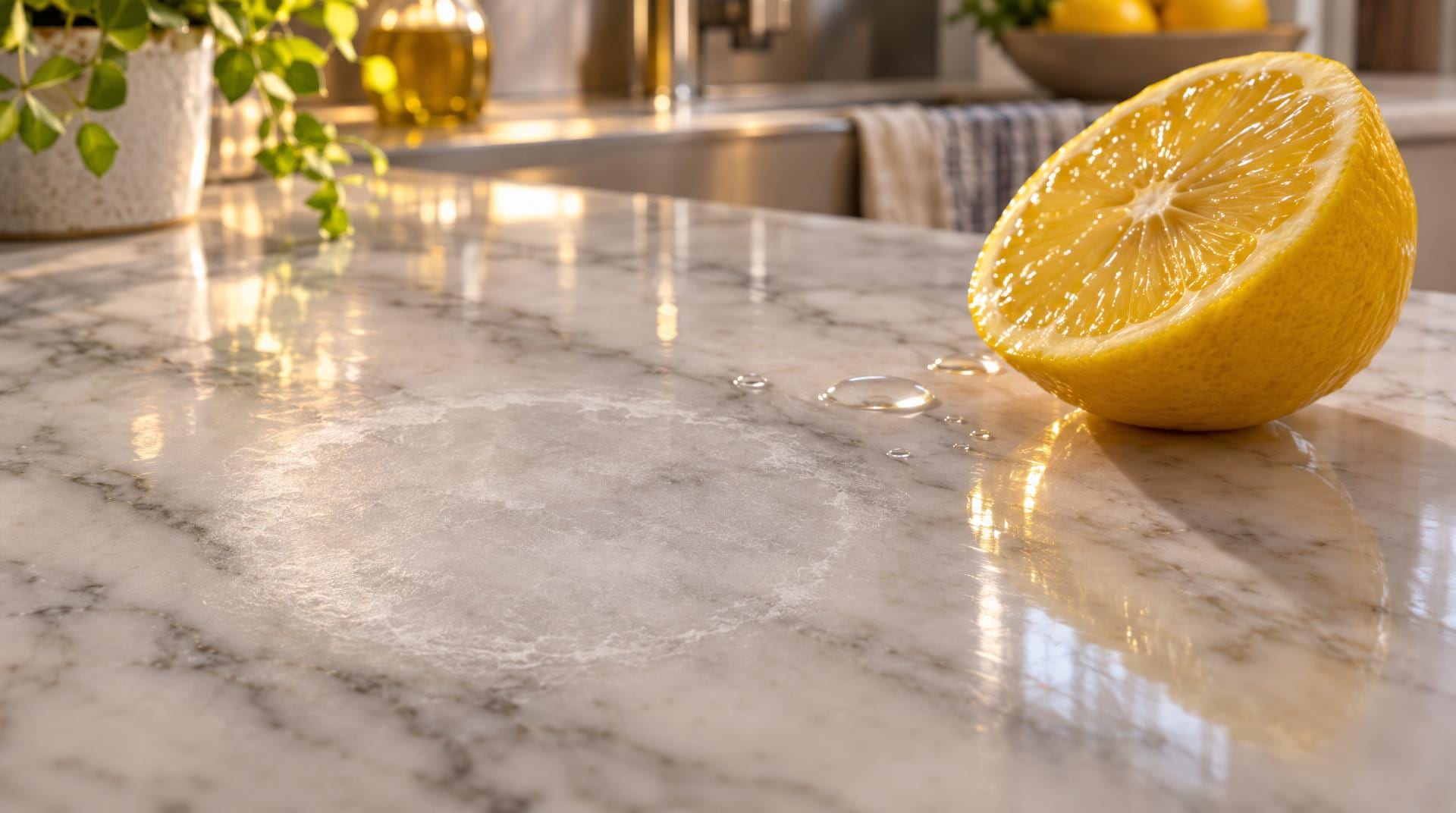
Etching happens when an acid reacts with the calcium carbonate in marble. Lemon juice, wine, vinegar and tomato sauce all do it. The acid leaves a dull spot where the stone used to shine.
Sealer does not stop etching. It slows stains. Acid still eats the surface. If anyone tells you a sealer makes marble “etch-proof,” get a second opinion.
Spills Can Soak In and Stain
Marble is porous. Coffee, wine, cooking oil and juice can soak in and leave a dark mark, and a spill that sits long enough can stain for good. A sealer buys you time to wipe it up. It doesn’t buy you a free pass.
It Scratches Easier Than Granite
Marble rates 3 to 5 on the Mohs hardness scale. Granite rates 6 to 6.5. In plain terms, dragging a cast iron pan or cutting without a board can mark marble where granite would shrug it off.
The Upkeep Never Stops
Guides disagree on how often to seal marble. One national cost guide says once or twice a year. Another stone guide says every 3 to 4 months in a kitchen and every 6 to 12 months in a bathroom, at about 30 minutes per application.
I spent 5 years as a B-52 crew chief in the Air Force. On that flight line you followed the checklist every single time, because skipping a step on a bomber was never an option, and marble asks for the same habit on a much smaller scale. If you won’t keep a sealing schedule, marble will let you know.
Every Slab Looks Different
Showroom samples can mislead you. A 12 inch sample can’t show how the veining moves across a full slab, and Calacatta varies more from slab to slab than Carrara, so the sample in the showroom may look nothing like the stone on your cabinets. Pick and tag your actual slab, and ask for a photo of the layout before anyone cuts.
Honed vs. Polished Marble: Which Finish Hides More?
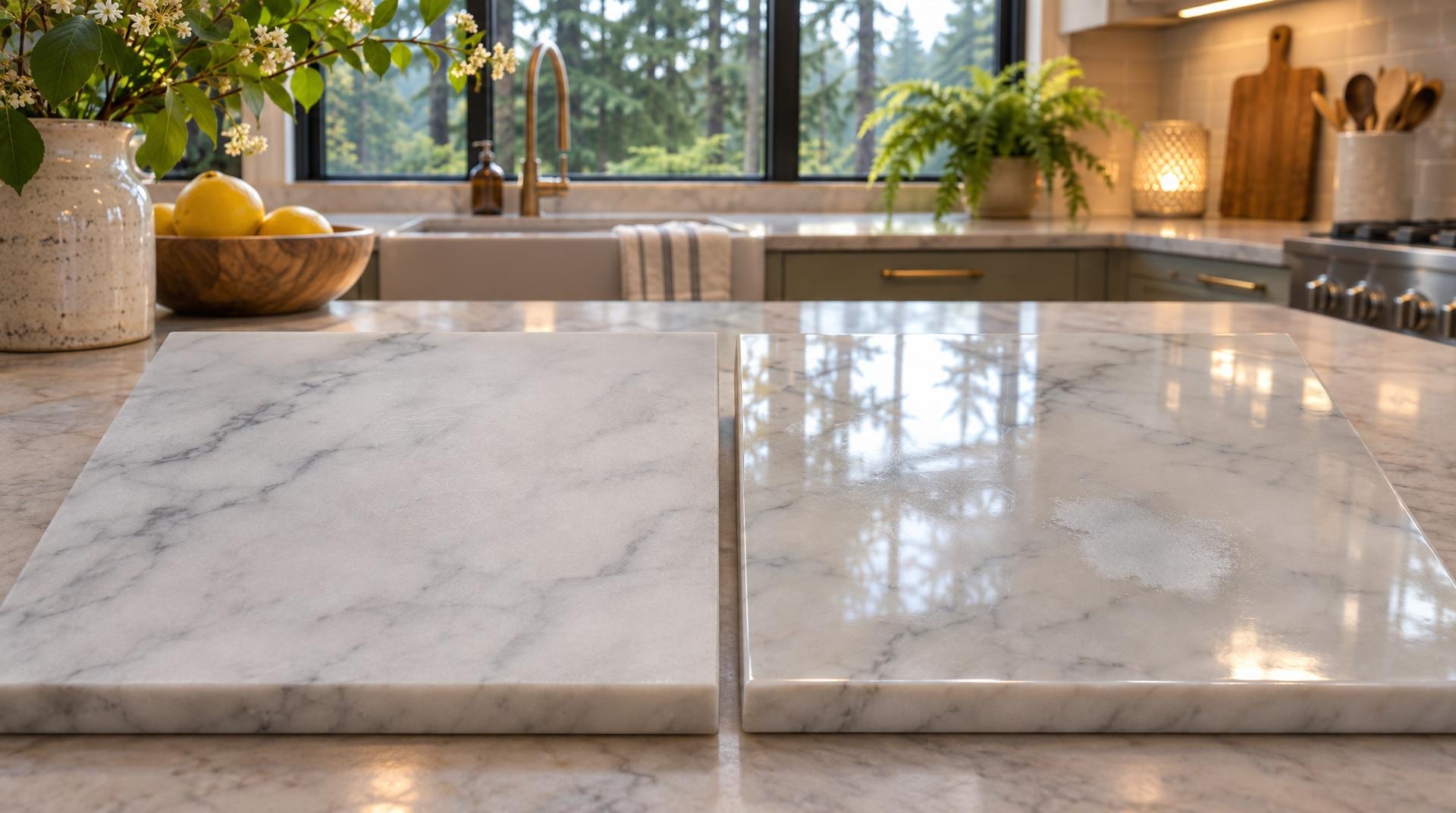
The finish changes how marble lives in your kitchen more than most people expect. Upfront, honed and polished cost about the same.
| Honed (matte) | Polished (glossy) | |
|---|---|---|
| Etch marks | Blend in, hard to spot | Show clearly against the shine |
| Stain resistance | Soaks up spills a bit faster | Slightly better, with tighter pores |
| Sealing | Needs it more often | Needs it less often |
| Where I’d use it | Kitchens and busy counters | Bathroom vanities and low-traffic tops |
| Overall look | Soft, old-world | Bright, reflective |
For a kitchen, I’d pick honed almost every time. Polished marble shows every etch, because the dull spot breaks up the gloss. Honed hides those marks, and you handle the staining tradeoff by sealing on schedule.
How Marble Holds Up in a Pacific Northwest Home
I’ve built in tropical humidity in Guam and arctic cold in Alaska. Here in the Pacific Northwest, moisture is still the number one enemy, and it touches a marble countertop job in a few specific ways.
Water Damage Under the Sink
Water damage under sinks is one of the most common things I find in older Pierce County homes. Before new stone goes on, check the sink base for soft or stained plywood. Ask your fabricator to seal the cutout edges and the sink rim joint, not just the top surface.
Older Cabinets That Sit Out of Level
Downtown Puyallup and older parts of Lakewood and Tacoma have plenty of homes from the 1940s through the 1970s, while South Hill leans toward 1990s split-levels and Graham, Bonney Lake and Edgewood have a lot of newer subdivisions. Older cabinets often sit out of level and out of square, and a stone top won’t flex to hide it.
- The installer should level and fasten the cabinets first.
- The fabricator should template after that, not before.
- Stone is heavy, so have someone confirm 40-year-old boxes are solid before a full-thickness marble top goes on them.
Permits for a Countertop Swap
A straight countertop swap usually counts as finish work under the model residential code most Washington cities follow, so it typically doesn’t need a building permit. Moving the sink, adding a circuit or changing plumbing can need permits of its own. Confirm with the City of Puyallup or Pierce County before work starts.
Where I’d Put Marble in Your Home (and Where I Wouldn’t)
This is where the marble countertops pros and cons turn into a real decision. My rule is simple. Put marble where people admire it more than they abuse it.
Good fits for marble:
- Bathroom vanities. Fewer acids, a longer sealing interval, and a small top that keeps the cost down.
- A baking station or island inset. A cool marble section for rolling dough, with tougher stone on the main prep counters.
- Fireplace surrounds and shelves. All the look, almost none of the wear.
Tough fits for marble:
- The main prep counter next to the stove and sink, where lemons, tomatoes and vinegar live.
- Bars and coffee stations, where wine, citrus and coffee hit the counter daily.
- Busy kitchens with young kids, where a juice cup can sit for an hour before anyone notices.
I always run one test. If this were my mom’s kitchen, would I put polished Calacatta right next to the stove, where tomato sauce and lemon juice land every week? No. I’d give her quartz by the stove and save the marble for her bathroom vanity.
Marble on a Budget: Remnants for Vanities
A standard 31 by 19 inch vanity top is about 4 square feet. Carrara remnants run about $30 to $60 per square foot installed, but most fabricators charge a shop minimum of $300 to $600 no matter how small the piece. On a vanity, that minimum usually sets your price.
My guide to countertop remnants for small projects covers how to shop the stone yards. My bathroom vanity buying guide helps you pick the cabinet underneath.
From My Portfolio: A Marble Vanity and Hex Niche Shower
This Pierce County bathroom remodel mixes real marble with marble-look tile. The walk-in shower has marble-look large format tile walls, triple stacked recessed niches with marble hexagon mosaic inside, and a marble hex floor. The room also got a freestanding soaking tub, LVP flooring, and a white vanity with a marble countertop.
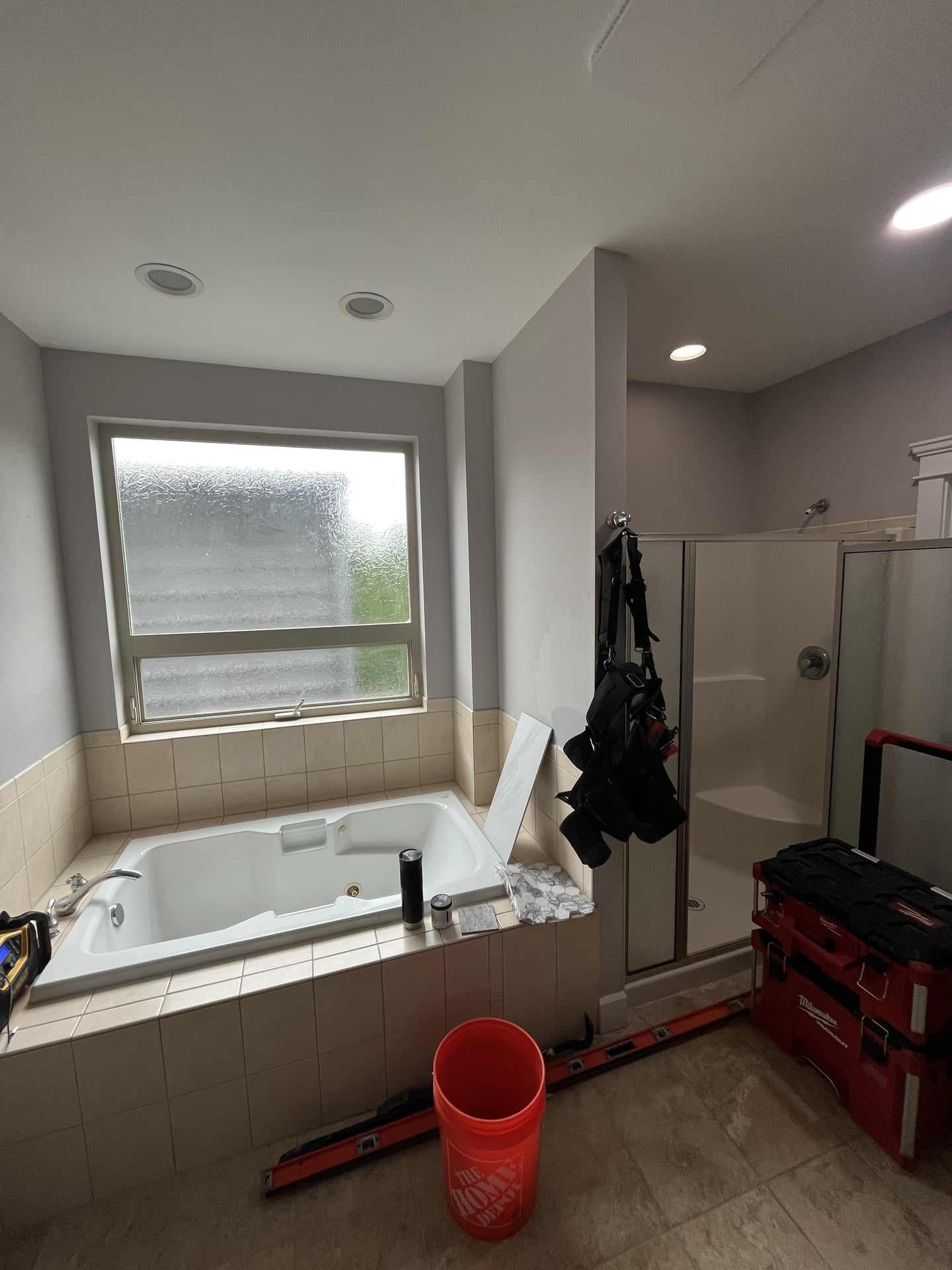
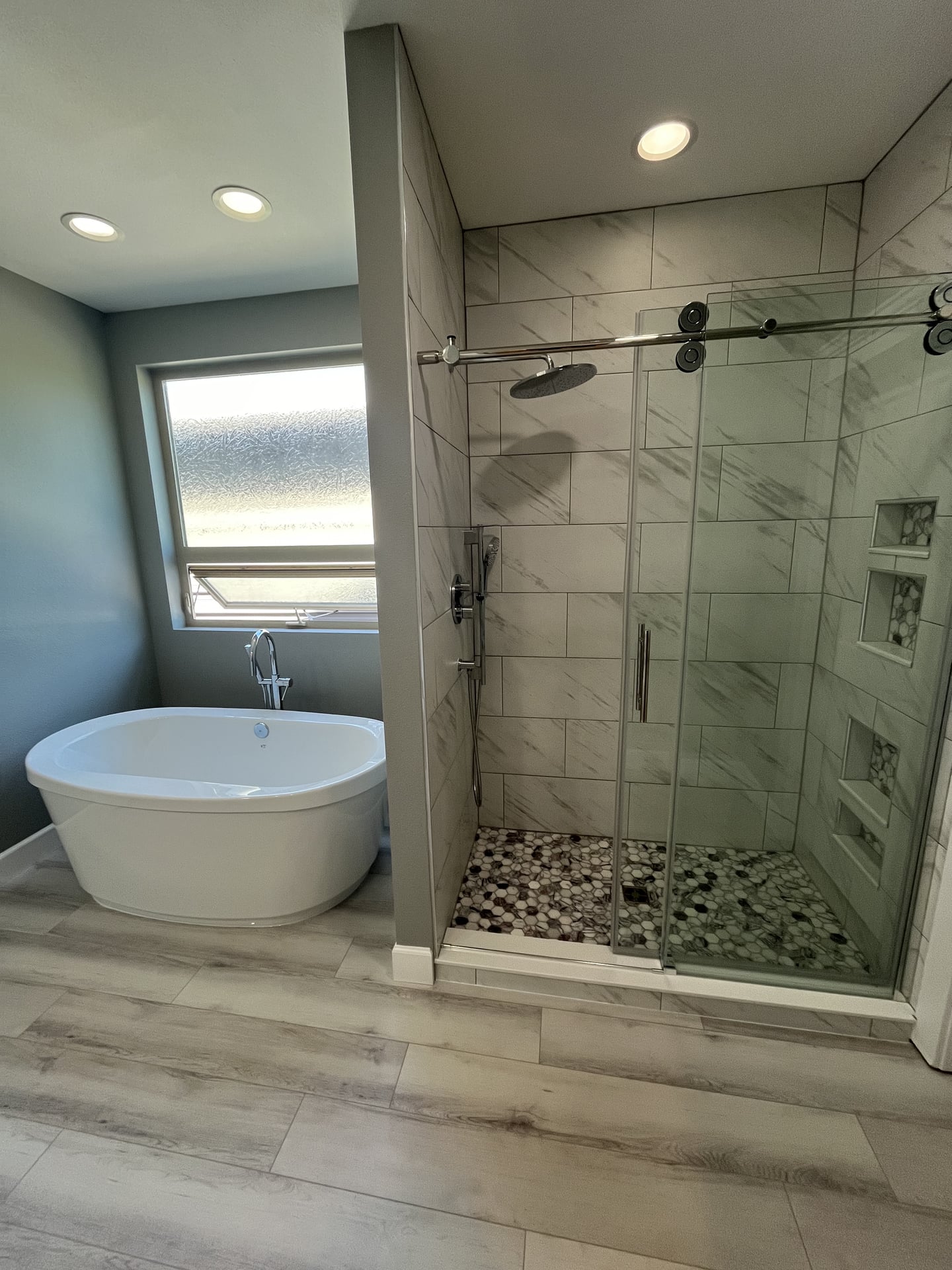
The vanity is the spot where I like real marble most in a bathroom. It’s a small top, it doesn’t see the lemon juice and tomato sauce a kitchen counter sees, and you still touch it every single morning when you brush your teeth.
See the full project: Marble Hex Niche Walk-In Shower.
Marble Tile With Quartz Countertops in a Kitchen
The Green Cabinet Kitchen Remodel takes the opposite approach. It pairs green shaker cabinets and a stainless steel range hood with a herringbone marble tile backsplash and quartz countertops.

It’s a combination I like for busy kitchens. You get real marble on the wall, where acids rarely land, and a low-maintenance quartz surface where you actually chop, spill and cook every day of the week.
Marble-Look Alternatives That Take Less Work
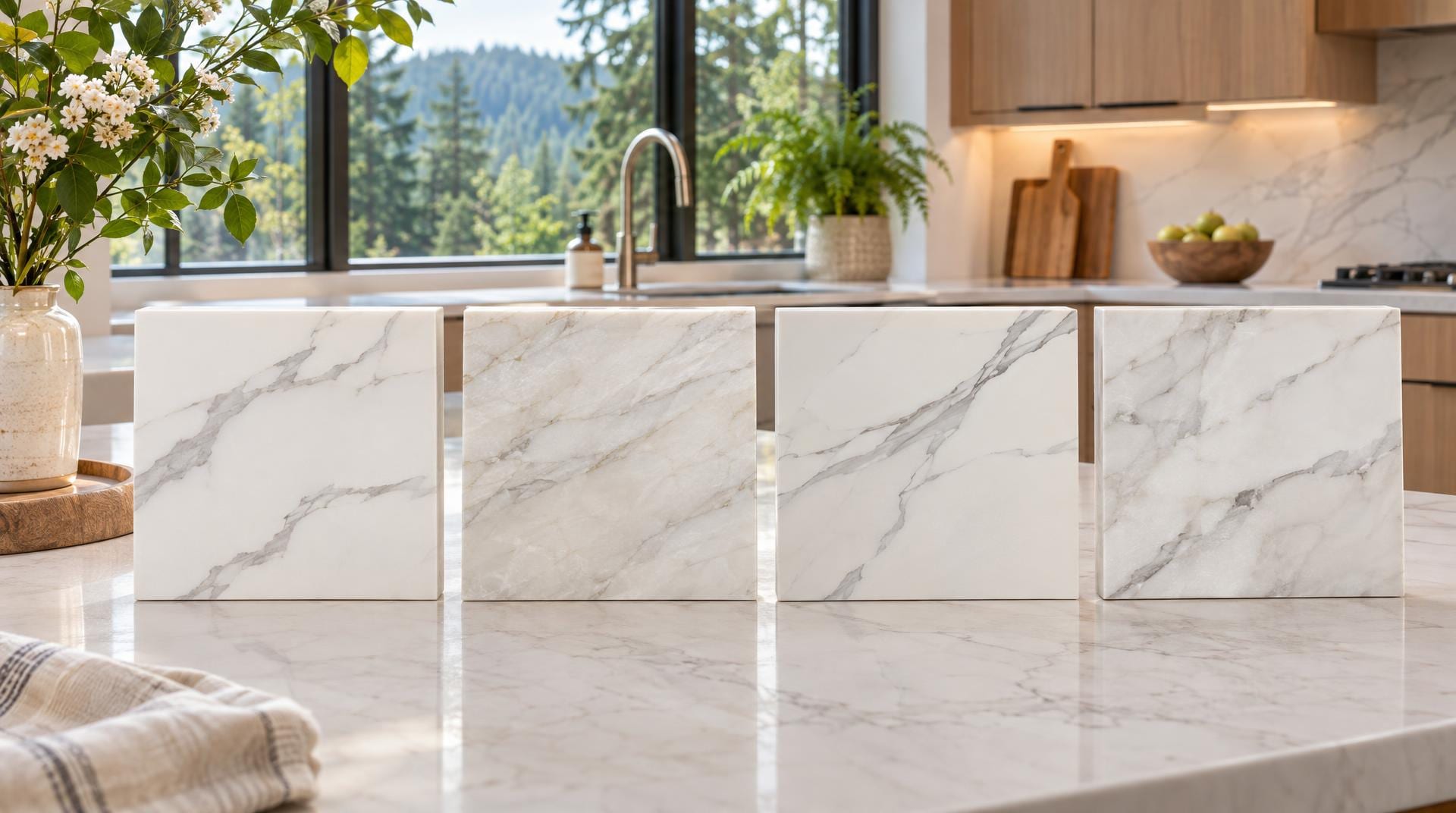
If you love the look but not the upkeep, you have solid options. Here’s how the common marble look-alikes compare, from stone industry pricing.
| Alternative | How close to the marble look | Maintenance | Installed cost per sq ft |
|---|---|---|---|
| Calacatta-look quartz (Cambria, Silestone) | About 85 to 90% | Very low | $80 to $150 |
| White quartzite (Taj Mahal, Mont Blanc) | About 80 to 85% | Moderate | $100 to $200 |
| Porcelain slab (Dekton, Neolith) | About 75 to 85% | Very low | $70 to $150 |
| Marble-look sintered stone | About 75 to 80% | Very low | $80 to $140 |
Calacatta-look quartz runs $80 to $150 per square foot installed, and real Calacatta starts at $150. You give up some depth in the veining. You get a counter that doesn’t flinch at a squeeze of lemon.
White quartzite gets you closer to natural stone and generally resists etching better than marble, though it still needs some upkeep. If quartz is on your short list, my quartz vs. granite comparison covers cost and durability side by side. For the full field, I compared 10 kitchen countertop materials with their pros, cons and costs.
How to Keep Marble Countertops Looking Good
Marble rewards habits, not heroics. Build these into your routine and the stone will treat you well.
- Wipe up acids right away: lemon, wine, vinegar, tomato and juice.
- Use a cutting board every time. Never cut directly on marble.
- Set coasters under glasses of wine, juice and anything citrus.
- Clean with a cleaner made for natural stone, never vinegar or lemon-based sprays.
- Do a water drop test every few months. If the water darkens the stone instead of beading up, reseal.
- Reseal at least once a year in a bathroom, and more often on a busy kitchen counter.
- Buff minor etches with marble polishing powder.
- Call a pro for deeper etches. Honing and repolishing runs $5 to $15 per square foot.
On a 35 square foot kitchen, a professional refinish at $5 to $15 per square foot runs $175 to $525 a visit. Some stone guides suggest a professional polish every 1 to 2 years in a working kitchen. Put that in your budget before you pick marble.
Questions to Ask Before You Buy a Marble Slab
Take this list to every fabricator or contractor you talk to. The answers tell you a lot about who you’re dealing with.
- Can I go to the yard and tag my exact slab?
- Can you send me a photo of the slab layout before you cut?
- Does your quote cover the first sealing, and which sealer do you use?
- How often do you recommend resealing for this marble and this finish?
- Do you recommend honed or polished for where this top goes?
- Which edge profile does the price cover?
- Does the quote cover tear-out and haul-away of my old tops?
- Will you check my cabinets for level and strength before templating?
- What’s your shop minimum on small pieces like a vanity top?
- Where will the seams fall?
Then compare bids line for line. A cheap marble quote that leaves out sealing, backsplash and tear-out isn’t cheap. It’s incomplete, and you’ll pay the difference later. I’d rather lose a marble job than talk you into a stone that frustrates you every time you cook.
Marble Countertop FAQ
Are marble countertops worth it?
They’re worth it if you love the look and can live with a patina. If you want a counter that looks the same in 10 years with zero effort, marble will frustrate you. For most busy Pierce County families, I steer the main kitchen counters toward quartz or quartzite and save real marble for the vanity or a baking island.
What’s the difference between etching and staining on marble?
Etching is a dull spot from acid reacting with the stone’s surface. Staining is a dark spot from a liquid soaking into the stone. Sealer helps against stains but does nothing to stop etching.
How often should I seal marble countertops?
Guides disagree. Plan on resealing at least once a year, and as often as every 3 to 4 months on a busy kitchen counter. A water drop test tells you when it’s time.
Is Carrara or Calacatta better for a kitchen?
Carrara, for most budgets. It runs $75 to $120 per square foot installed against $150 to $250+ for Calacatta. Both are marble, so both etch and stain the same way. Calacatta also varies more from slab to slab, so pick your slab in person if you go that route.
Is marble more expensive than quartz?
Not always. Carrara lands close to mid-range engineered quartz, at $75 to $120 per square foot installed vs. about $70 to $110 for quartz. Premium marble like Calacatta runs well past most quartz.
Can you put marble countertops in a bathroom?
Yes, and it’s my favorite place for marble. Bathroom tops see fewer acids than kitchen counters, and stone guides put the sealing interval at 6 to 12 months. A remnant can keep a vanity top near the $300 to $600 shop minimum.
Do I need a permit to replace countertops in Puyallup?
A straight countertop swap usually counts as finish work that doesn’t need a building permit. Moving plumbing or adding electrical can change that. Confirm with the city before work starts.
Also Serving Pierce County
I install countertops for homeowners in Puyallup and across Pierce County, including Tacoma, Sumner, Bonney Lake, South Hill, Edgewood and Lakewood.
Get Your Free Countertop Estimate
Not sure marble fits how you cook? I’ll look at your kitchen or bathroom, check your cabinets, and walk you through the marble countertops pros and cons for your house, side by side with quartz and quartzite. You get a clear written estimate and a straight answer, even if that answer is that marble isn’t the right call.
“Every day I come downstairs I have a smile on my face looking at my new kitchen.” (Thomas R., Google review)
Get your free estimate or call (253) 392-9266.
Brad Zemke, Owner Pacific Remodeling LLC Puyallup, WA