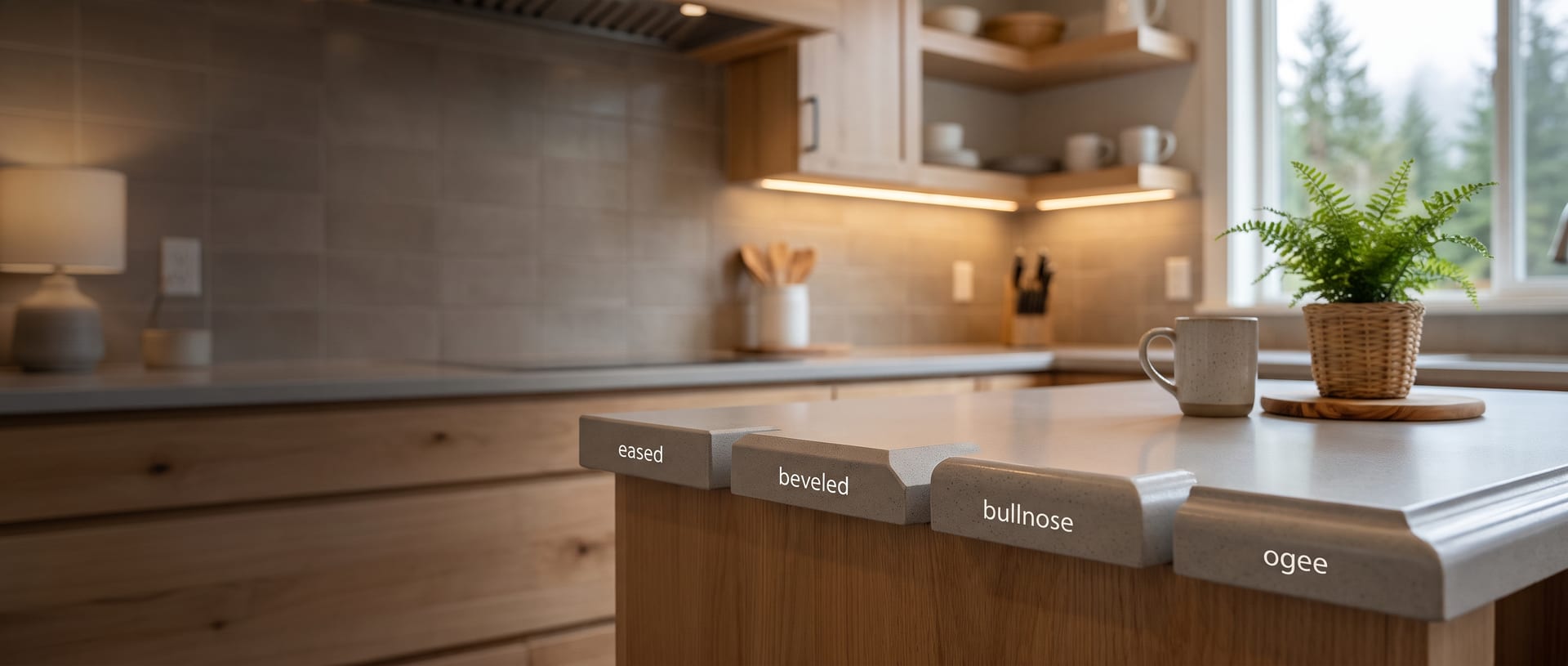
This countertop edge profiles guide starts with the answer: for most kitchens, pick an eased edge. Most fabricators include it in the base price, it wipes clean in one pass, and it handles daily bumps from pots, hips, and kids’ toys without much drama. Decorative edges like ogee or Dupont typically add $10 to $25 per linear foot, and a mitered waterfall can run $25 to $60 or more per foot.
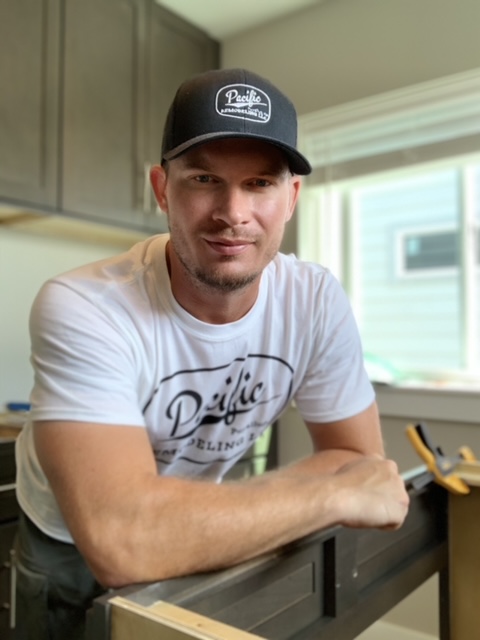
I’m Brad Zemke, a third-generation carpenter with 20+ years in the trades. I’ve run Pacific Remodeling LLC in Puyallup since 2018 and completed more than 500 projects since then.
Your countertop edge gets more contact than any other part of your kitchen. Hands, hips, wet towels, toddler foreheads. Pick it for how you live, not just how it looks in a photo. Here’s what one kitchen client wrote in a Google review:
“From the beginning to end Brad made the whole process easy. I was very pleased on the work that was done. I feel like I have a brand new kitchen and living and dining room. Every day I come downstairs I have a smile on my face looking at my new kitchen. He was always on time and left the job site clean when he left. I have plans to have him do more work at my house.” (Thomas R., Google review)
Countertop Edge Profiles Guide: Every Common Edge in Plain English
A countertop edge profile is the shape a fabricator cuts and polishes into the exposed edges of your countertop. It controls how the counter looks from across the room, how it feels when you lean on it, how easily it chips, and how long you spend cleaning crumbs out of it.
Here are the edges you’ll find on almost every fabricator’s chart, grouped by how much work they take to make.
Simple Edges (Usually Free or Close to It)
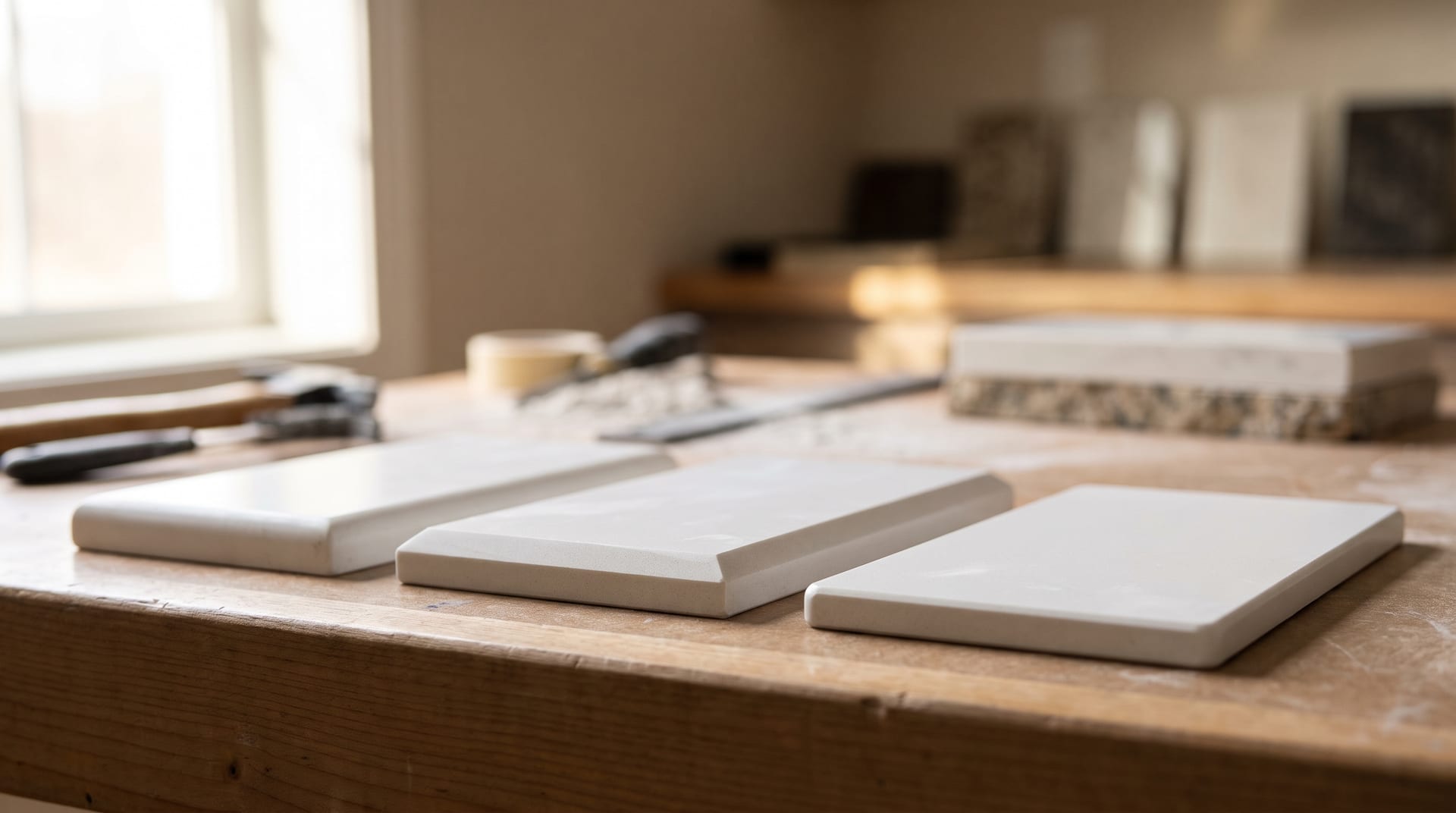
- Eased. A square edge with the top and bottom corners lightly softened. Clean, modern, and the default at most shops.
- Bevel. A 45-degree cut along the top corner. Some shops also offer a larger 1/2-inch bevel for a bolder line.
- Pencil. A thin, crisp profile with small rounded corners. It reads sharp and minimal.
Rounded Edges
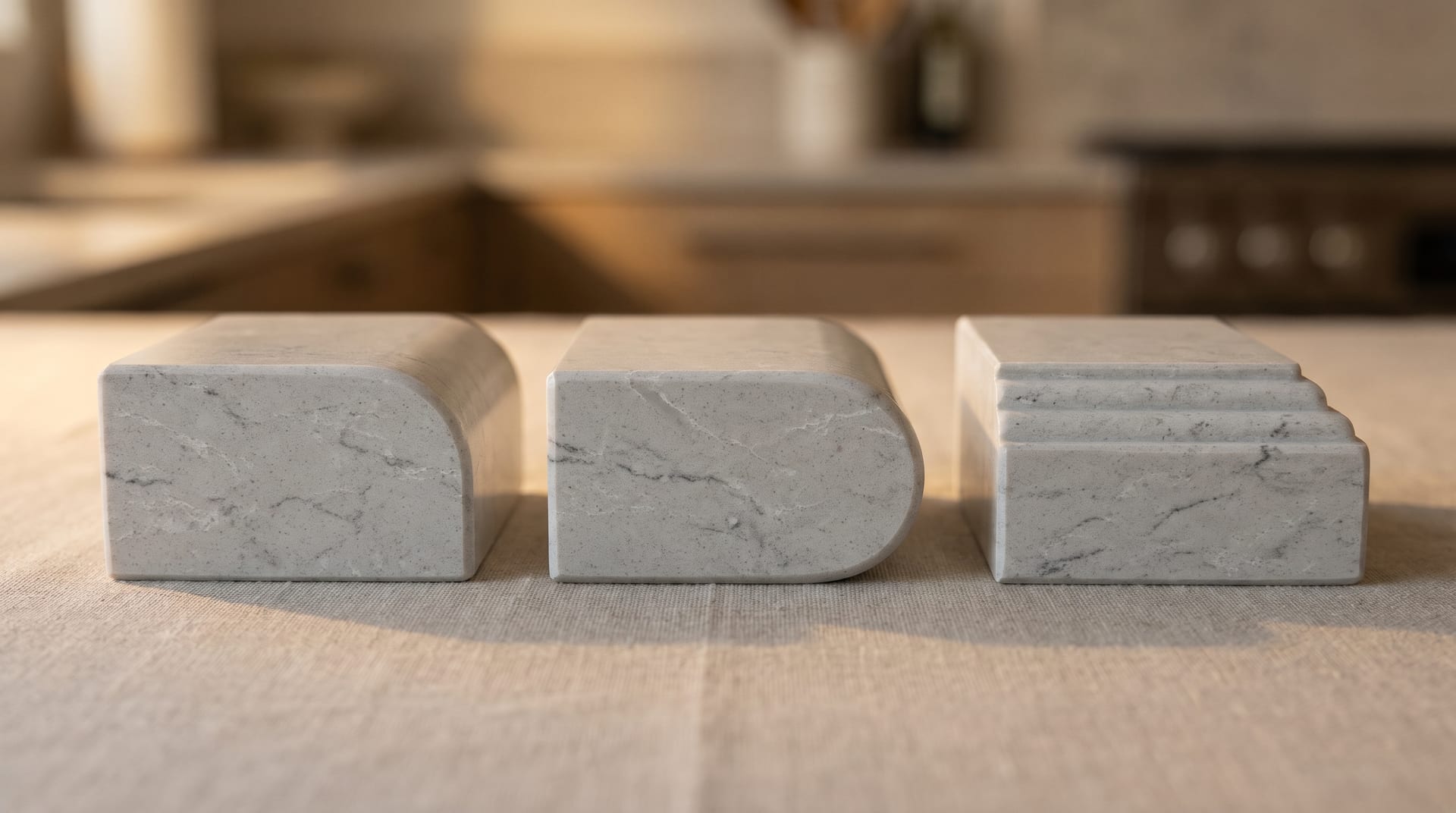
- Half bullnose. The top curves over and the bottom stays flat. It softens the look without going full round.
- Full bullnose. The edge curves over the top and the bottom, like the end of your thumb. No sharp corners anywhere.
- Triple pencil. Three small stepped rounds down the face. A modern edge with a little detail.
Decorative Edges
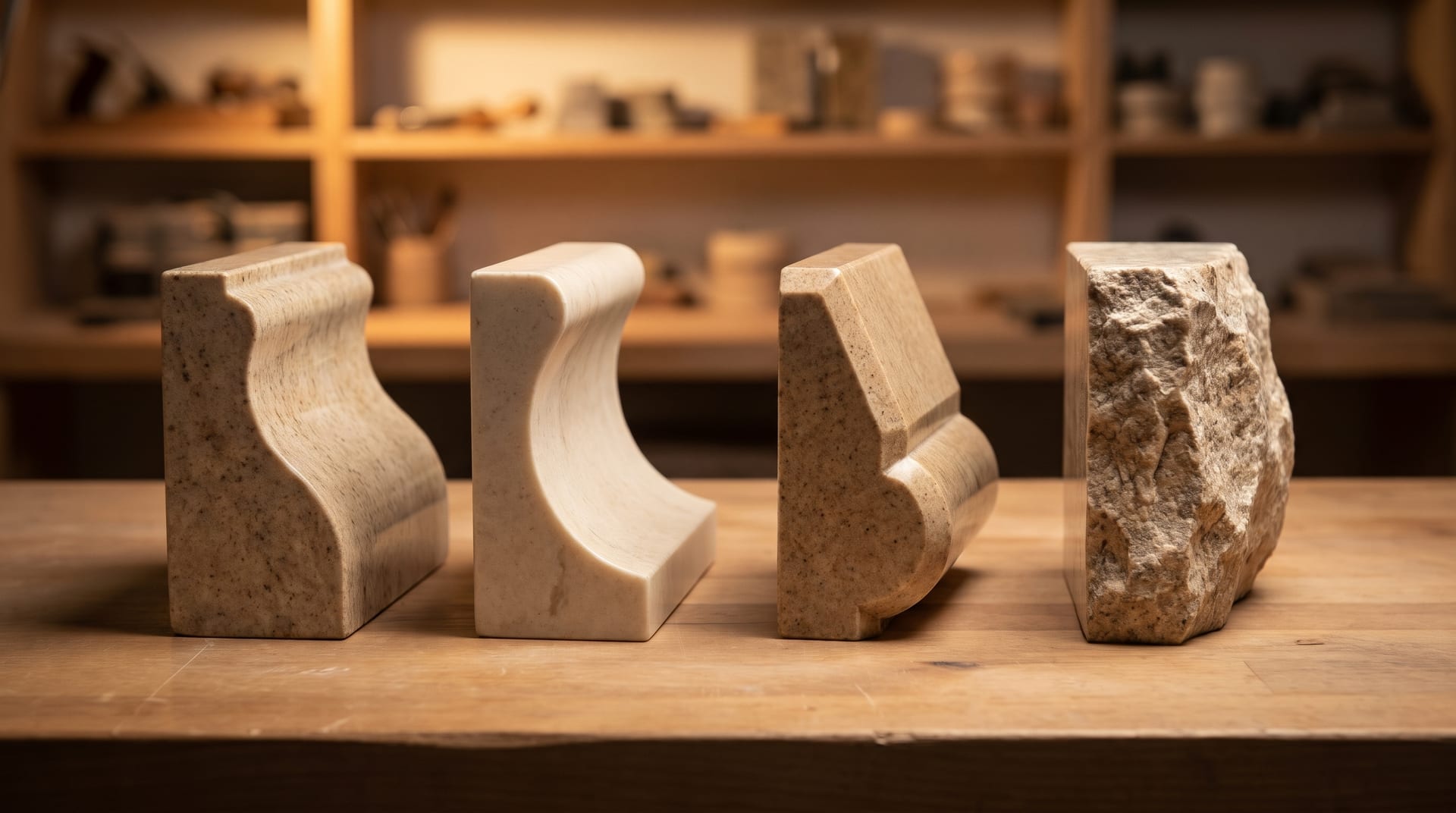
- Ogee. An S-shaped curve. The classic traditional edge.
- Cove. A concave cut along the top edge. It looks similar to an ogee and takes less work to make.
- Dupont. A straight or beveled top that steps down into a cove or rounded lower section.
- Chiseled or rough. A deliberately rough, split-stone face. Rustic and heavy-looking.
Thick-Look and Specialty Edges
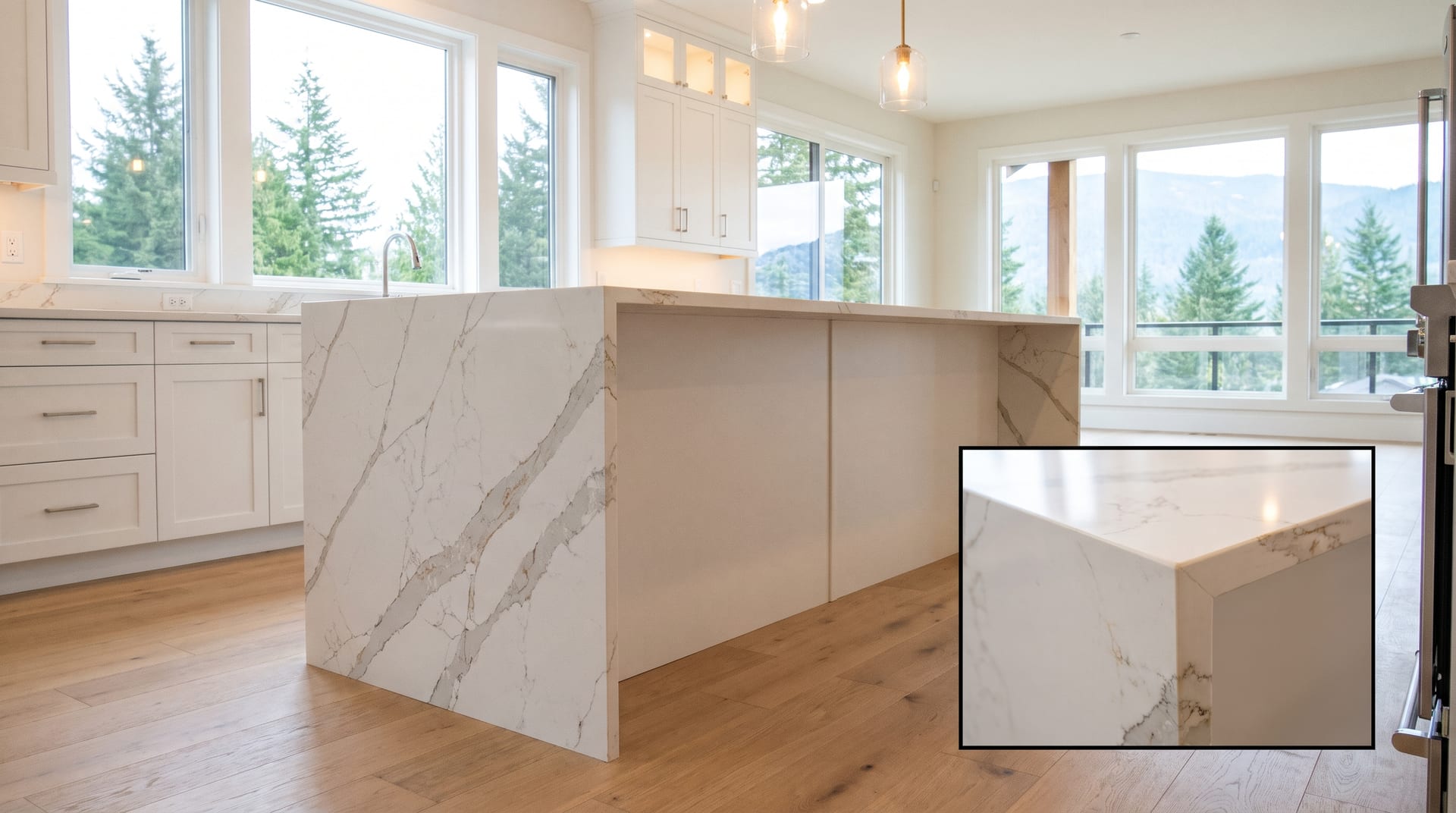
- Laminated (built-up). The fabricator glues a strip of stone under the front edge so the visible face reaches about 2 1/2 to 3 inches.
- Mitered. Two pieces meet at a 45-degree angle along the front, so the counter looks like one thick block.
- Waterfall. The countertop turns the corner and runs straight down the side of an island to the floor.
Quick reference: Most residential granite runs 3cm thick, about 1 1/4 inches. Older or budget installs sometimes use 2cm stone over a plywood base. Thickness changes which edges you can get and what they cost.
How Much Does Each Countertop Edge Cost Per Linear Foot?
Fabricators charge edge upgrades by the linear foot, on top of the base countertop price. The numbers below are typical national ranges. Pierce County shops land all over the map, so use this as a starting point and get every shop’s edge pricing in writing.
| Edge Profile | Typical Upcharge Per Linear Foot | Cleaning | Style Fit |
|---|---|---|---|
| Eased | $0 at most shops | Easiest, one wipe | Modern, shaker, most kitchens |
| Bevel | $0 or $2-$5 | Angle catches some crumbs | Transitional, shaker |
| Pencil | $0 or $2-$5 | Easy | Modern, minimal |
| Half bullnose | $2-$10 | Easy | Family kitchens, classic |
| Full bullnose | $5-$15 | Easy | Kids, high traffic, classic |
| Triple pencil | $8-$18 | Moderate | Modern with detail |
| Ogee | $10-$25 | Grooves trap crumbs | Traditional |
| Dupont | $12-$25 | Needs a small brush | Traditional |
| Cove and step | $15-$30 | Grooves trap crumbs | Traditional |
| Chiseled or rough | $10-$30 | Hardest | Rustic |
| Double ogee | $20-$40 | Grooves trap crumbs | Formal traditional |
| Laminated (built-up) | $20-$50 | Depends on profile | Islands, thick-slab look |
| Mitered or waterfall | $25-$60+ | Easy | Modern islands |
What this means for your kitchen: A typical kitchen has 20 to 25 linear feet of exposed edge. A $10-per-foot upgrade adds about $200 to $250. A $50-per-foot laminated edge adds $1,000 to $1,250.
Why Price Guides Disagree
Some guides list eased at $5 to $12 per foot and bullnose or ogee at $25 to $45 per foot, which is a big jump from the chart above and tells you how differently shops set their prices. Some shops price per foot. Others charge a flat fee per piece or per waterfall end.
That’s why I tell homeowners to ask one simple question on every quote. “Which edge does this price include, and what does it cost to change it?”
Thicker Stone Costs More to Shape
Thickness moves the price too. A full bullnose on 3cm stone runs about $2 to $5 per foot more than the same edge on 2cm. Ogee and Dupont on 3cm run $3 to $8 per foot more. More stone means more grinding and more polishing.
What a Fancy Edge Adds to a Real Kitchen Budget
Let me run the numbers on a typical kitchen. Say you have 40 square feet of quartz. At my installed range of $165 to $230 per square foot, that countertop runs $6,600 to $9,200 before any edge upgrade.
Now say that kitchen has 22 linear feet of exposed edge. Here’s what each upgrade adds:
| Edge Choice | Upcharge Per Foot | Added Cost on 22 Linear Feet |
|---|---|---|
| Eased | $0 at most shops | $0 |
| Full bullnose | $5-$15 | $110-$330 |
| Ogee | $10-$25 | $220-$550 |
| Laminated 2 1/2” to 3” face | $20-$50 | $440-$1,100 |
| Mitered | $25-$60+ | $550-$1,320+ |
On a $6,600 countertop, a $550 ogee upgrade is a real bump. On a $9,200 countertop, it moves the needle less. Know which end of that range you’re on before you fall in love with a profile.
Every number in this countertop edge profiles guide covers the edge only. For the rest of the bill, read my breakdown of kitchen countertop replacement costs.
Mix Profiles to Cut the Upcharge
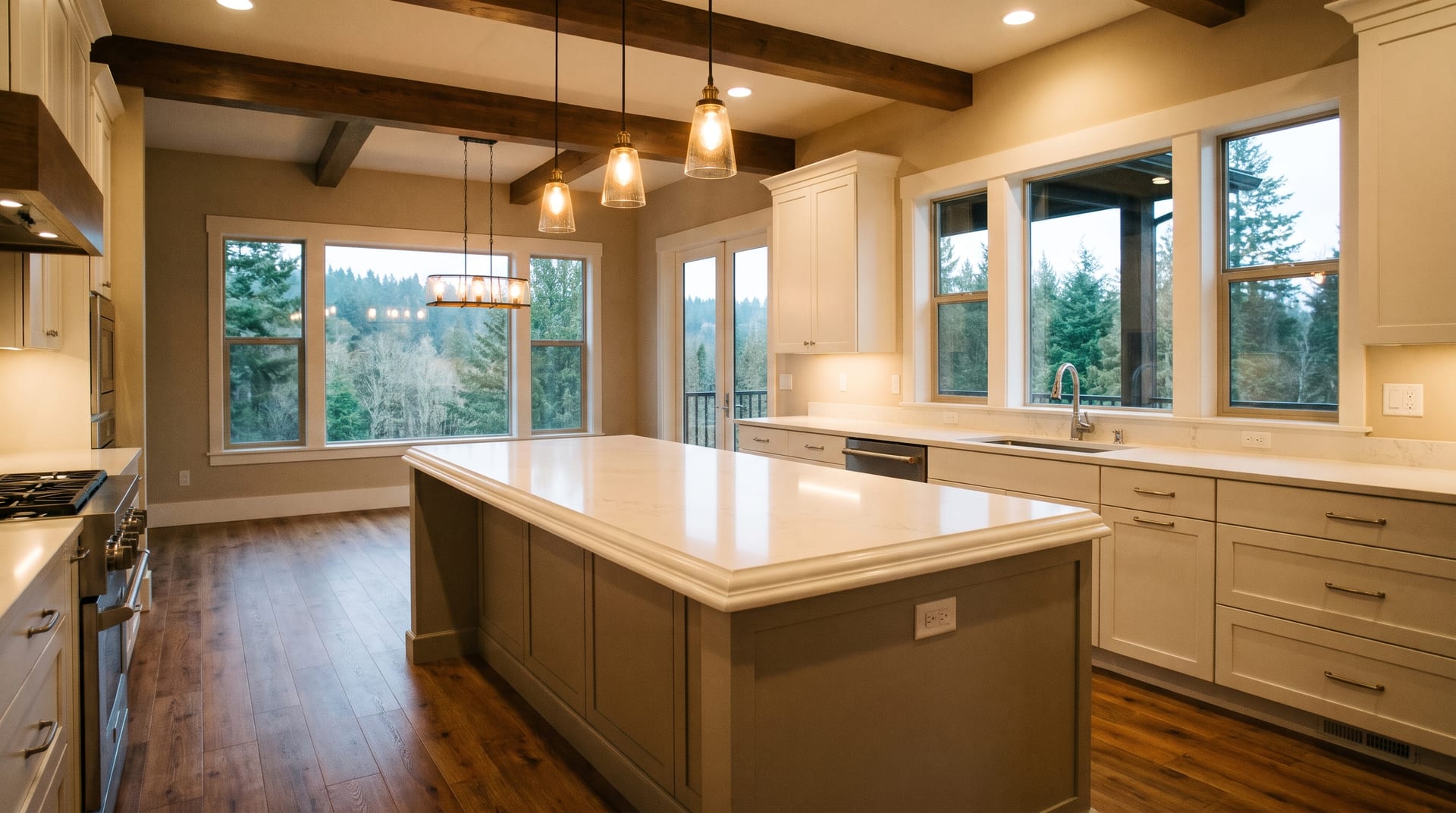
You don’t need the fancy edge everywhere. Put the decorative profile on the island, where everyone sees it, and run eased on the perimeter.
Here’s the math on a kitchen with 20 feet of perimeter edge and a 4-by-8-foot island open on all four sides:
- Island edge: 4 + 8 + 4 + 8 = 24 linear feet
- Ogee everywhere (44 feet): $440 to $1,100
- Ogee on the island only (24 feet): $240 to $600
- What stays in your pocket: $200 to $500
Keep the two profiles related. An ogee island next to an eased perimeter works. A Dupont island next to a chiseled perimeter fights itself.
Waterfall Islands: The Big-Ticket Edge
A waterfall is where edge budgets jump. An island with two waterfall ends needs about 12 to 18 linear feet of miter work, which runs roughly $800 to $2,500. It often needs 1 to 2 extra slabs on top of that, and some shops charge a flat fee per waterfall end.
A waterfall island needs the miter at the top corner to line up as the stone turns down the side, and that takes extra slab, extra shop time, and a fabricator who knows exactly what they’re doing. Good, fast, or cheap. You can pick two, and a waterfall lands squarely on good, not cheap.
If you’re planning a new island anyway, my kitchen island cost guide covers the rest of that budget.
Which Countertop Edge Is the Most Durable?
Full bullnose, with eased close behind. The honest answer is that nobody has run a controlled chip test I can point you to, so every durability ranking you read, mine too, comes from fabricator opinion and years of working around stone.
Here’s how fabricators generally rank chip resistance:
- Full bullnose. No sharp corners at all. Many fabricators call it the toughest edge you can buy.
- Eased. Softened corners on a full-thickness edge. A lot of fabricators now treat it as the practical durability pick.
- Bevel. The thin ridge at the top chips a little more easily than eased. On good quartz, the difference stays small.
- Pencil, knife-edge, and other thin profiles. The most fragile of the bunch.
Physics does most of the work here. A sharp corner puts the whole hit from a cast iron pan onto a thin ridge of stone. A rounded corner spreads that hit out.
Think About the Repair, Too
Chips happen, even on the best edge. Complex profiles like ogee and Dupont take more tooling to match during a repair. A simple edge gives the repair tech much less to recreate.
My dad drilled one rule into me growing up on job sites with him: take pride in your work, even the parts nobody looks at. I think about that with edges. The best edge isn’t the fanciest one. It’s the one that still looks right after years of real cooking.
My recommendation for a working family kitchen is eased or full bullnose. Save the decorative profiles for an island or bar top that takes less abuse.
Matching the Edge to Your Countertop Material
Not every edge works on every material. The stone itself sets some limits. My countertop installation services in Puyallup cover quartz, granite, marble, butcher block, and laminate, and if you’re still choosing a material, start with my quartz vs. granite countertops comparison.
Quartz: The Widest Menu
Quartz is the most popular countertop I install, and it gives you the most edge options. Its makeup stays consistent from one end of the slab to the other, so it handles complex profiles like ogee, Dupont, and laminated waterfalls well.
Quartz never needs sealing. That means you don’t have to reseal the grooves in a decorative edge. Expect $165 to $230 per square foot installed.
Granite: Watch the Veining
Granite takes most profiles well. A good fabricator checks for heavy veining and soft mineral deposits before cutting a detailed profile. Granite runs $165 to $205 per square foot installed.
Granite needs sealing once a year. Seal the edges and the sink cutout, not just the flat top, and give beveled or decorative edges extra attention. My guide on how to clean granite countertops covers the day-to-day care.
Marble and Quartzite: Skip the Thin, Sharp Edges
Marble and quartzite chip on thin, sharp edges. Both need an experienced fabricator. Go with an eased edge and skip pencil and knife edges. Marble runs $80 to $240 per square foot installed, so a chipped edge costs real money.
Butcher Block: Wood Plays by Different Rules
Wood is home turf for me. On butcher block, the edge comes down to a router bit and careful passes, the same kind of carpentry I grew up doing with my dad. I’d round or ease every butcher block corner, because a sharp wood corner dents easily under a heavy pot. Butcher block runs $45 to $120 per square foot installed.
Choosing an Edge for Kids, Cleaning, and Pacific Northwest Kitchens
If You Have Little Kids
Go with a bullnose. Full or half bullnose has no sharp top corner, and island corners sit close to head height for a lot of toddlers. Sharp pencil edges don’t belong in a house with little ones unless the fabricator eases them. Ask about rounding the outside corners of the island too, not just the edge profile.
If this were my sister’s kitchen with toddlers running laps around the island, I’d want rounded corners. That’s the same Golden Rule test I use for every client. How would I want it done for my own family?
If You Hate Cleaning Crumbs Out of Grooves
- Easiest: eased and straight edges. One wipe does it.
- Easy: half and full bullnose. Smooth curves wipe clean.
- Moderate: bevel. The angle catches crumbs and dust.
- Harder: ogee and Dupont. Their grooves trap crumbs, and you’ll want a small brush.
- Hardest: chiseled or rough edges. Every pocket in the stone holds something.
What the Pacific Northwest Climate Means for Your Edge
Moisture is the number one enemy in Pacific Northwest homes. I see water damage under sinks, around windows, and behind walls from Graham to Tacoma. Your countertop edge sits right in the splash zone.
Near the sink, I’d rather have an edge that sheds water than one with a groove that holds it. An eased or bullnose edge wipes dry in a second. An ogee groove gives water and grime a place to sit through a damp Puyallup winter.
On natural stone, add the edges and cutouts to your yearly sealing. Quartz skips that chore entirely.
Older Homes and Out-of-Square Walls
Pierce County has a lot of older homes, from Tacoma and Lakewood out to Sumner and Edgewood. In a lot of these houses, the walls and cabinets aren’t dead square, and a mitered corner or waterfall joint will show every bit of that misalignment if the templater doesn’t account for it.
That’s why the templater should come out after the installer sets and levels the cabinets. Not before.
Measure twice, cut once. Stone doesn’t forgive. Once the fabricator cuts your slab, that edge is final.
Two Pierce County Kitchens With Quartz Countertops and Shaker Cabinets
Both of these kitchens from my portfolio pair quartz countertops with shaker cabinets. Shaker doors have a flat center panel and a square frame. That simple geometry is why I recommend clean edges like eased, bevel, or half bullnose for most shaker kitchens, because an ornate double ogee next to a plain shaker door tends to look like two different kitchens fighting each other.
Green Cabinet Kitchen Remodel

This kitchen got green shaker cabinets, a herringbone marble tile backsplash, a stainless steel range hood, and quartz countertops. It’s a fresh take on a classic kitchen.
When the backsplash carries a pattern as busy as herringbone, I like a quiet countertop edge. Two busy details fighting for attention is one too many. See the full Green Cabinet Kitchen Remodel.
White Shaker Kitchen Remodel

This full kitchen renovation included white shaker cabinets, quartz countertops, a subway tile backsplash, a built-in wine cooler, and hardwood flooring throughout. See the full White Shaker Kitchen Remodel.
White shaker with subway tile is about as classic as kitchens get. A simple edge keeps it that way.
If your new countertops are part of a bigger project, my kitchen remodeling services in Puyallup cover cabinets, countertops, flooring, lighting, and everything in between.
7 Countertop Edge Mistakes That Cost You Money
- Picking the edge from a photo alone. A profile that looks great on Pinterest can chip, trap crumbs, or bruise a toddler. Think about who uses the kitchen every day.
- Ignoring the material’s limits. Thin, sharp edges on marble or quartzite chip. Heavy veining in granite can make some profiles hard to cut cleanly.
- Putting the decorative edge everywhere. Use it where people see it most and run eased on the rest. That alone can save you a few hundred dollars.
- Forgetting about cleaning. Ogee and Dupont grooves trap crumbs. If you won’t brush them out, don’t pick them.
- Skipping the extras on a waterfall. A waterfall island can need 1 to 2 extra slabs. Price the stone, not just the miter.
- Not confirming what’s included. Ask whether the base price covers your edge, and whether the shop prices it per foot or per piece.
- Changing your mind after template day. Indecision costs money on any remodel. Stone is the least forgiving place for it.
Your Edge Checklist Before Template Day
A standalone countertop job runs 2 to 3 weeks from templating through fabrication, and the install itself takes 1 day for a standard kitchen. The edge decision has to happen before the templater shows up, not after.
I spent 5 years in the Air Force as a B-52 crew chief. Nothing about that job worked without a checklist, and I still run one on every project. Bookmark this countertop edge profiles guide and run through this list before you sign off:
- Hold a physical sample of your edge in your hand
- Confirm which edge the base price includes
- Get the upcharge in writing, per linear foot or per piece
- Count your exposed linear feet, including island sides and end caps
- Confirm your material and thickness (2cm or 3cm) allow the profile you want
- Ask whether a waterfall end needs extra slabs, and how many
- Ask how the shop handles a chip repair on that profile
- For granite or marble, plan to seal the edges and cutouts too
- Make sure the edge matches your cabinet door style
- Lock in your choice before template day
You can also visit the slab yard and pick your exact piece. Seeing the stone in person makes the edge decision a lot easier.
Common Questions About Countertop Edges
What is the most common countertop edge?
Eased. Most fabricators include it, or a similar straight or bevel edge, in the base price. It suits modern, shaker, and transitional kitchens, and it’s the edge I recommend most often for Puyallup kitchens.
Which countertop edge is safest for kids?
A full or half bullnose. Both curve away at the top, so there’s no sharp corner at the height a small child runs into. Avoid sharp pencil and knife edges in a busy family kitchen.
How much does it cost to upgrade a countertop edge?
Most shops include eased at no charge. Full bullnose typically adds $5 to $15 per linear foot, ogee $10 to $25, and a mitered waterfall $25 to $60 or more. On a typical kitchen with 20 to 25 feet of exposed edge, a $10-per-foot upgrade adds about $200 to $250.
What’s the difference between a mitered edge and a waterfall?
A mitered edge joins two pieces at 45 degrees along the front so the counter looks thicker. A waterfall uses a miter at the corner of an island so the stone runs straight down the side to the floor. Every waterfall uses a miter, but not every miter is a waterfall.
Do quartz edges need sealing?
No. Quartz doesn’t need sealing anywhere, including the edges. Granite needs sealing once a year, and you should seal the edges and sink cutout along with the top.
Countertop Installation Across Pierce County
I install countertops for homeowners in Puyallup and across Pierce County, including Tacoma, Sumner, Bonney Lake, Edgewood, and South Hill. Same process, same honest numbers, no matter which side of the valley you live on.
Get Your Free Countertop Estimate
Here’s what one homeowner wrote after their second project with me, a kitchen:
“We have used Pacific Remodeling LLC for 2 projects on our home now and have never been happier with the finished work. This last project was on our kitchen and it turned out amazing! It is hard to find the right words to describe how great this company is. Brad is professional, friendly, listens to what you want and works hard to make it happen. We are so lucky to have found these guys!” (Traci H., Google review)
Picking an edge gets a lot easier with real numbers in front of you. I’ll walk your kitchen, count your exposed edge, and price each profile you’re considering so you can compare them side by side. I also remove and haul away your old countertops as part of the job.
Get your free countertop estimate or call me directly at (253) 392-9266.
Brad Zemke, Owner Pacific Remodeling LLC Puyallup, WA