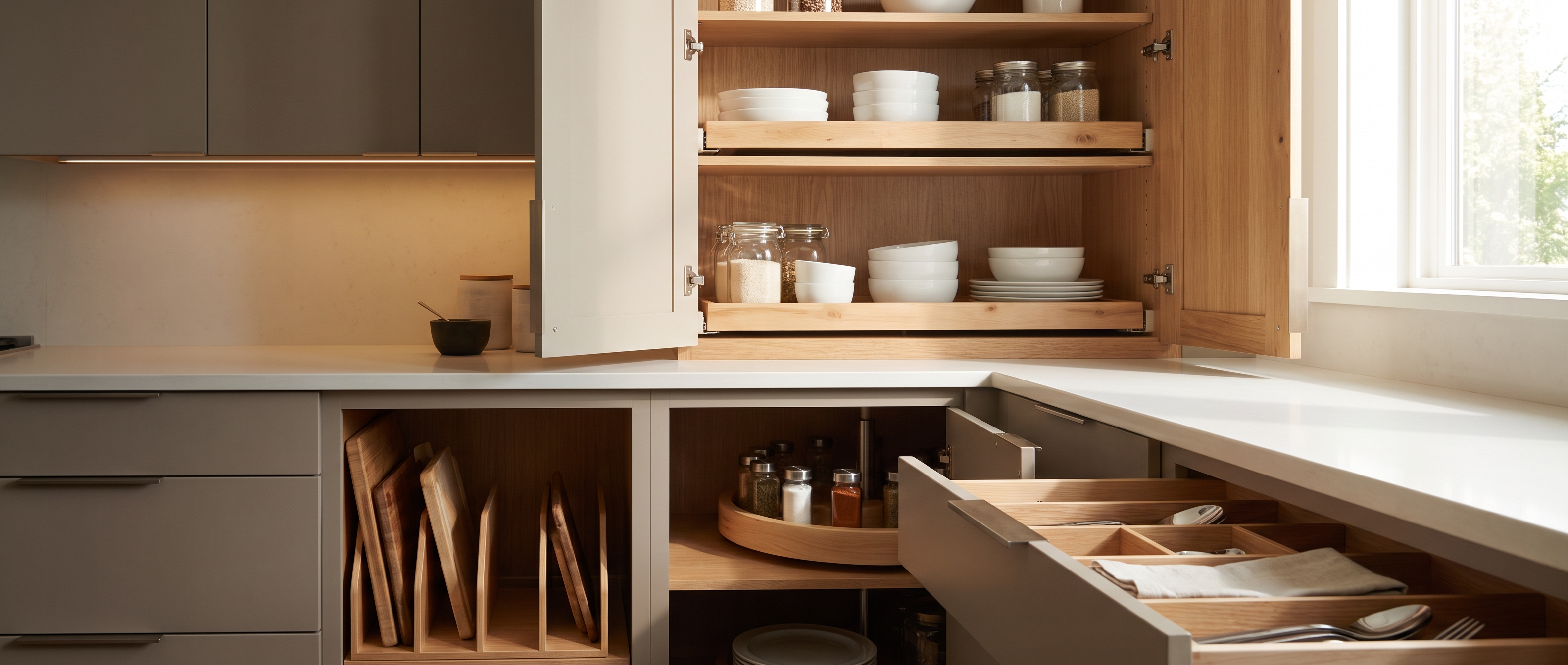
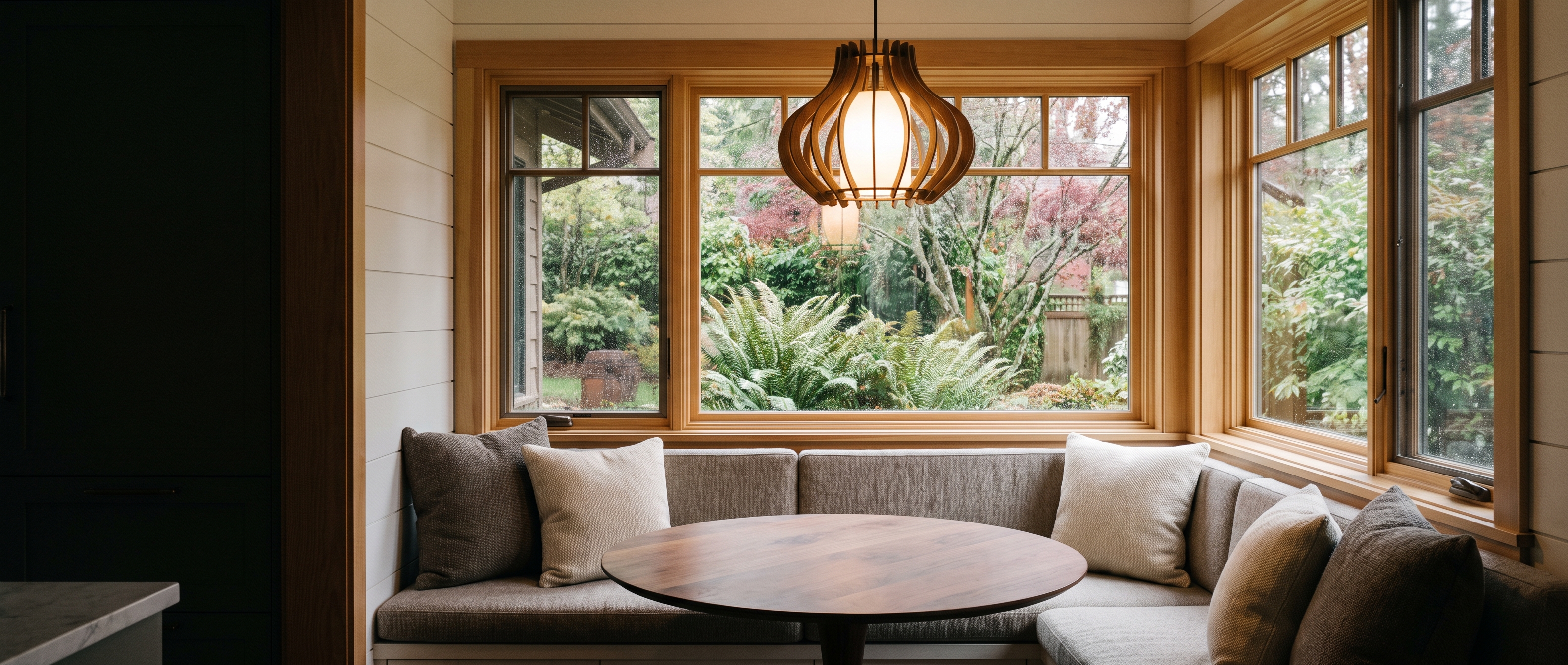
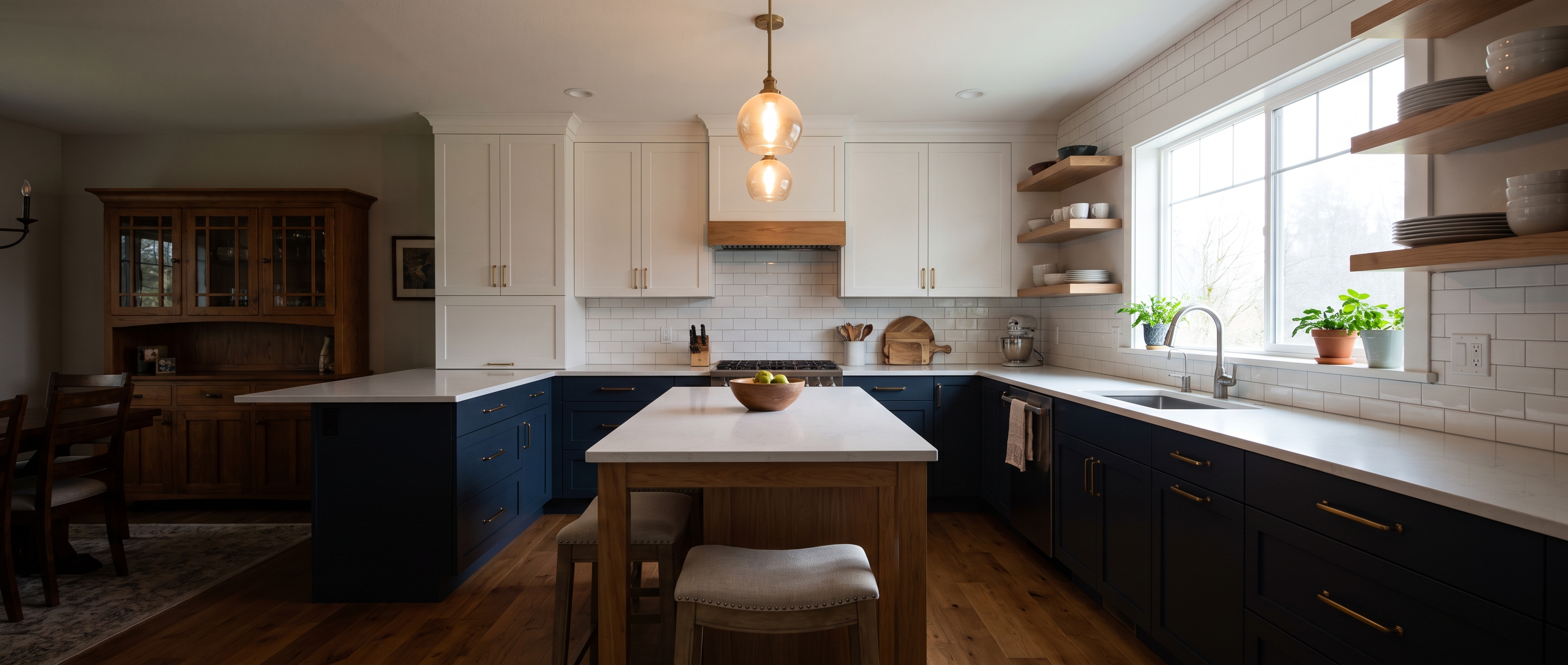
A basic closet-to-pantry conversion in Pierce County runs $1,400 to $3,000. A walk-in pantry conversion costs $3,500 to $10,000. A full butler’s pantry build-out lands between $9,500 and $30,000. Those are the real numbers from projects I’ve completed in Puyallup, South Hill, and Sumner over the past several years.
I’m Brad Zemke, owner of Pacific Remodeling. Third-generation carpenter with 20+ years in the trades, serving Pierce County since 2018. Kitchen pantry remodel ideas come up in almost every consultation I do, because nearly every older home in this area has the same problem: not enough kitchen storage.
This post gives you real kitchen pantry remodel ideas with actual costs, material recommendations, and specific advice for the housing stock we have here in the Pacific Northwest.
Which Type of Kitchen Pantry Remodel Fits Your Home?
Not every pantry project looks the same. The right choice depends on your kitchen’s layout, your budget, and how much storage you actually need. Here’s how the main pantry types compare for Pierce County homeowners:
| Pantry Type | Cost Range (Pierce County) | Best For | Timeline |
|---|---|---|---|
| Reach-in closet conversion | $1,400 - $3,000 | Tight kitchens, starter homes, budget projects | 2-4 days |
| Pull-out cabinet pantry | $1,800 - $4,800 | Kitchens with no adjacent closets | 1-3 days |
| Walk-in pantry conversion | $3,500 - $10,000 | Homes with unused adjacent closet or room | 1-3 weeks |
| Butler’s pantry | $9,500 - $30,000 | Entertainers, larger homes, premium upgrades | 3-6 weeks |
| Pantry addition (bump-out) | $18,000 - $60,000+ | No existing space to convert | 6-12 weeks |
Most of my Puyallup-area clients land in that walk-in conversion range. It hits the sweet spot between cost and usability.
Closet-to-Pantry Conversions: The Best Bang for Your Dollar
This is the project I recommend to almost every homeowner on a budget. Got a coat closet near your kitchen? A hallway linen closet within 10 feet of the kitchen door? That’s your future pantry.
I’ve done dozens of these in the 1950s through 1970s ranch homes that fill neighborhoods across Puyallup, Spanaway, and Lakewood. Those homes almost never have a dedicated pantry, but they usually have a coat closet or hallway closet that nobody fully uses.
What a Closet Conversion Includes
Here’s a typical component breakdown for a reach-in pantry conversion:
| Component | Cost |
|---|---|
| Remove existing rod and shelf | $100 - $200 |
| Adjustable shelving system (Elfa or ClosetMaid SuiteSymphony) | $450 - $1,000 |
| LED lighting with switch | $150 - $300 |
| New door (barn door or pocket door) | $700 - $1,500 |
| Interior paint | $150 - $300 |
| Total | $1,400 - $3,000 |
A sliding barn door saves 8 to 10 square feet of swing clearance compared to a standard hinged door. In the tight hallways of Pierce County’s older ranches, that space matters.
Shelving That Works
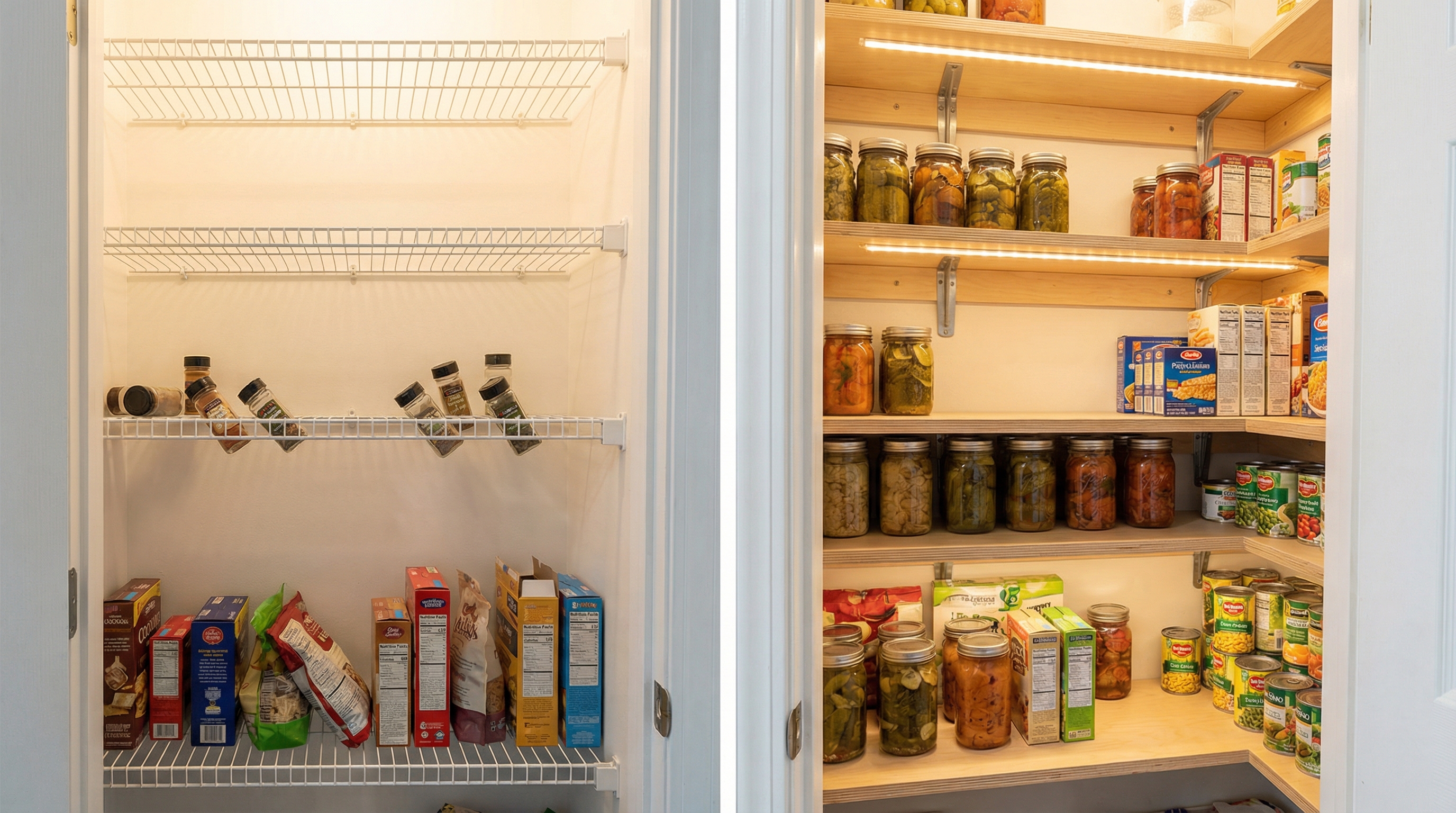
I’ve installed every type of pantry shelving over the years. Here’s my honest take:
- Wire shelving (ClosetMaid) costs $50 to $200 and installs fast, but small cans and jars tip over between the wires. One advantage in our wet climate: wire shelves allow airflow, which reduces condensation on exterior walls.
- Laminate modular systems (ClosetMaid SuiteSymphony, IKEA PAX) run $200 to $1,200 and look clean. These work well for most reach-in conversions.
- Custom plywood shelving costs $800 to $3,500 built-in, but you get exact dimensions and the sturdiness to hold heavy canning jars and bulk goods. I build these from 3/4” Baltic birch plywood. It holds up.
- Elfa (from The Container Store) hits a solid middle ground at $600 to $2,500 installed. Wall-mounted, adjustable, and each shelf holds up to 100 lbs.
For a coat closet conversion, I usually recommend the Elfa system or custom plywood. The adjustable shelves let you change the layout as your storage needs shift.
Don’t Forget the Door Storage
A 30” x 80” pantry door can hold 60 to 80 lbs of over-door organizers. Spices, small cans, aluminum foil, plastic wrap. Richelieu makes a solid door-mount rack for $80 to $150 that I install on most pantry projects. That’s free storage space most designs overlook completely.
Walk-In Pantry Ideas for Pierce County Homes
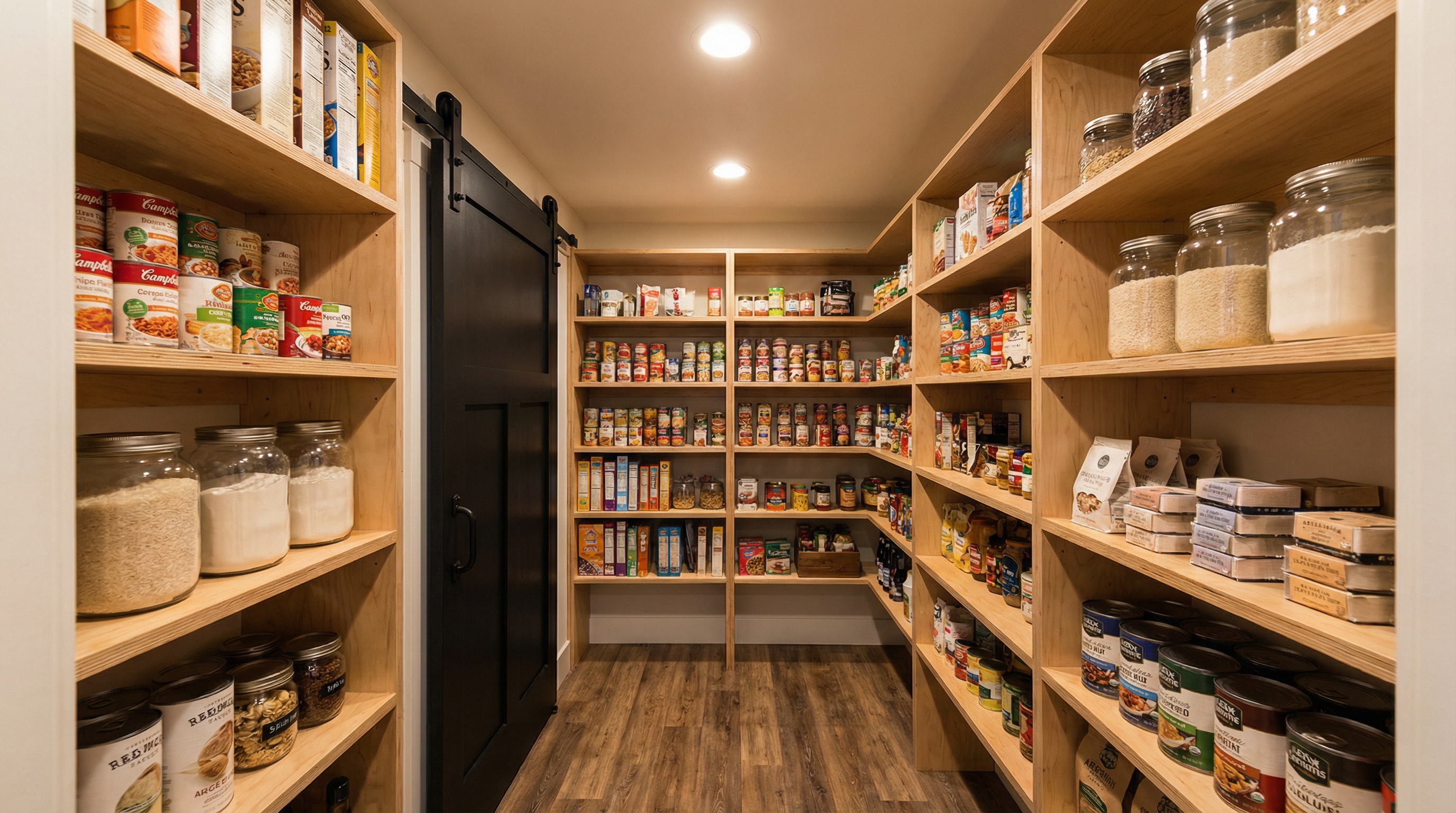
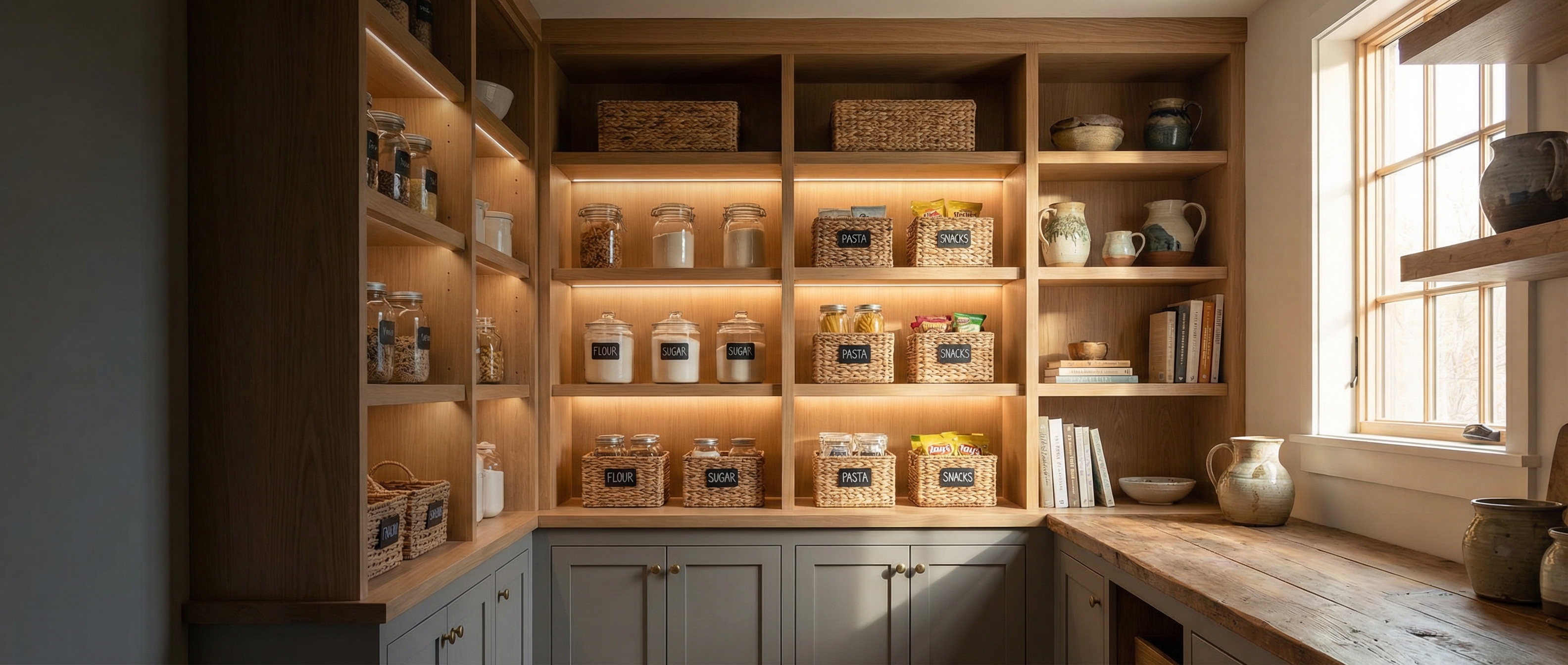
A walk-in pantry changes how your kitchen works. Instead of digging through cabinets, you step into a dedicated room and see everything at a glance.
I built a walk-in pantry last year for a family on South Hill. They had a 6’ x 6’ spare room between their kitchen and garage that served as a catch-all junk room. We opened a new doorway from the kitchen, installed custom plywood shelving on three walls, added recessed LED lighting, and hung a sliding barn door. Total project cost: $7,200. Took us 8 working days from demo to final touch-up.
That family told me it changed the way they cook. Everything visible. Everything within reach. No more forgetting what they bought at Costco because it got buried in a cabinet.
Walk-In Pantry Cost Breakdown
Here’s what a typical walk-in conversion runs in our area:
| Component | Cost |
|---|---|
| Wall opening / new doorway framing | $800 - $1,800 |
| Custom plywood shelving (3 walls) | $1,200 - $2,800 |
| LED recessed lighting (2 fixtures + switch) | $300 - $600 |
| Barn door + hardware | $800 - $1,500 |
| Paint and finish | $200 - $400 |
| Flooring match to kitchen | $200 - $500 |
| Building permit (if load-bearing wall) | $250 - $500 |
| Total | $3,750 - $8,100 |
If the wall between your kitchen and the adjacent space is load-bearing, I install an LVL beam to carry the load. That adds $2,500 to $6,000 depending on span and structural requirements. I always bring in a structural engineer for that assessment, which runs $300 to $600.
Smart Layout for a Walk-In Pantry
Most walk-in pantries I build are 25 to 50 square feet. Here’s how I lay them out for maximum storage:
- Back wall: Deep shelves (18” to 21”) for bulk items, small appliances, and heavy goods. These go floor to ceiling.
- Side walls: Standard depth (12” to 16”) for cans, jars, boxes, and everyday items. Adjustable shelf spacing lets you fit everything from spice jars to cereal boxes.
- Floor level: Leave 12” to 18” of open floor space on the bottom for heavy items like 25-lb bags of flour, cases of water, and bulk pet food.
- Door wall: Over-door rack for spices and small items. If you have a pocket door or barn door, mount a narrow shelf unit on the inside wall next to the opening.
If you do any home canning or preserving, tell your contractor. Quart canning jars weigh about 3 lbs each. I space shelves at 10” to 12” for canning storage and use brackets every 16” to handle the weight. Standard shelf brackets won’t cut it.
Kitchen Pantry Remodel Ideas for the Coffee Station Crowd
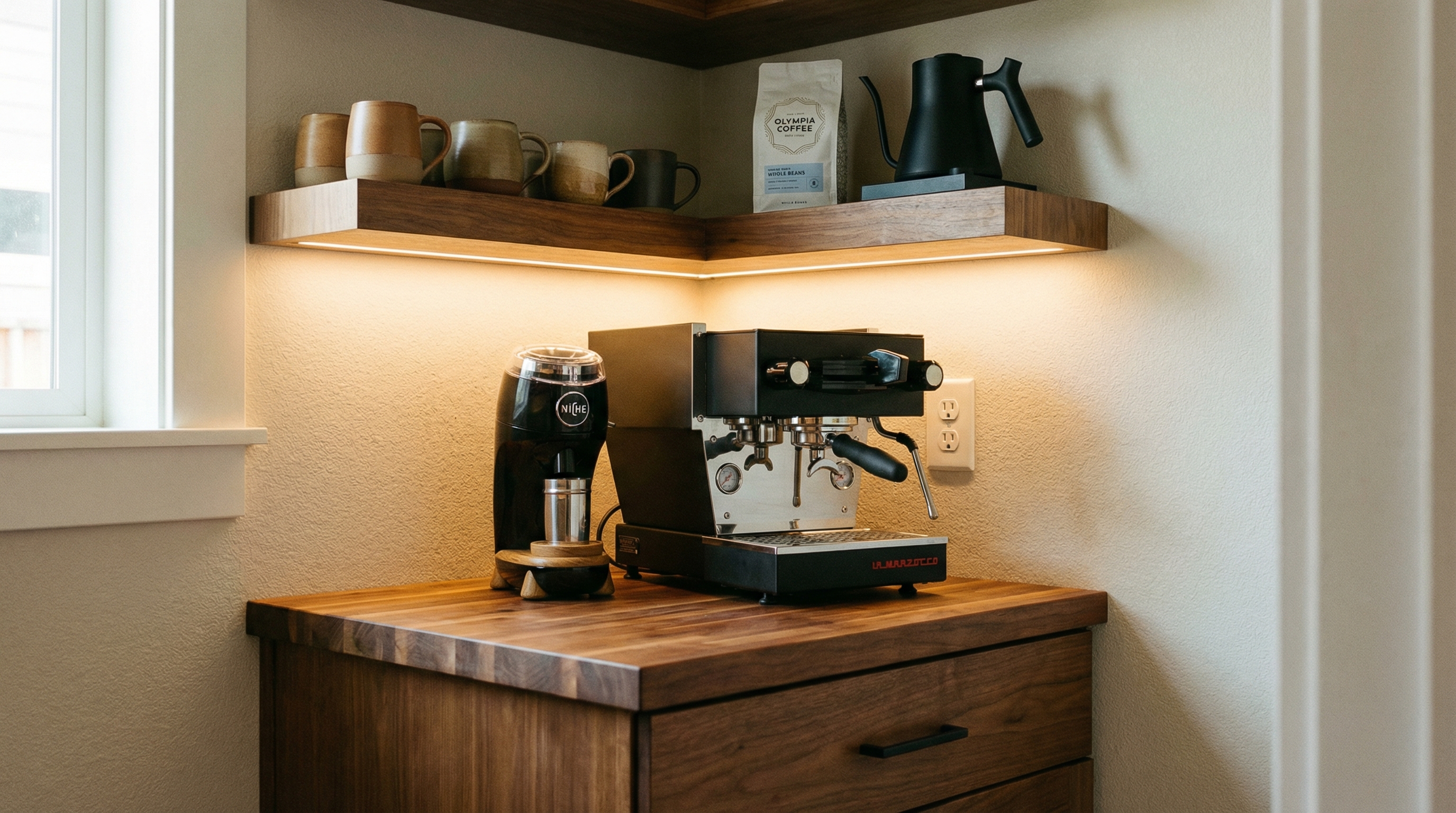
The pantry coffee station is the single most requested upgrade I hear about in consultations right now. And it makes sense. Instead of cluttering your kitchen countertops with an espresso machine, grinder, mugs, and coffee supplies, you tuck it all into one corner of your walk-in or butler’s pantry.
What you need for a pantry coffee station:
- Dedicated 20A electrical outlet (espresso machines pull 15A minimum)
- Counter space of at least 24” wide for machine plus grinder
- Open shelving above for mugs and supplies
- Cabinet or drawer below for filters, beans, and extras
- Optional: water line for plumbed espresso machines (adds $800 to $1,500 for plumbing)
A basic coffee station setup inside an existing pantry adds $400 to $1,200. If you’re building it into a new butler’s pantry, it’s included in the overall build cost.
Butler’s Pantry: The Premium Kitchen Pantry Remodel
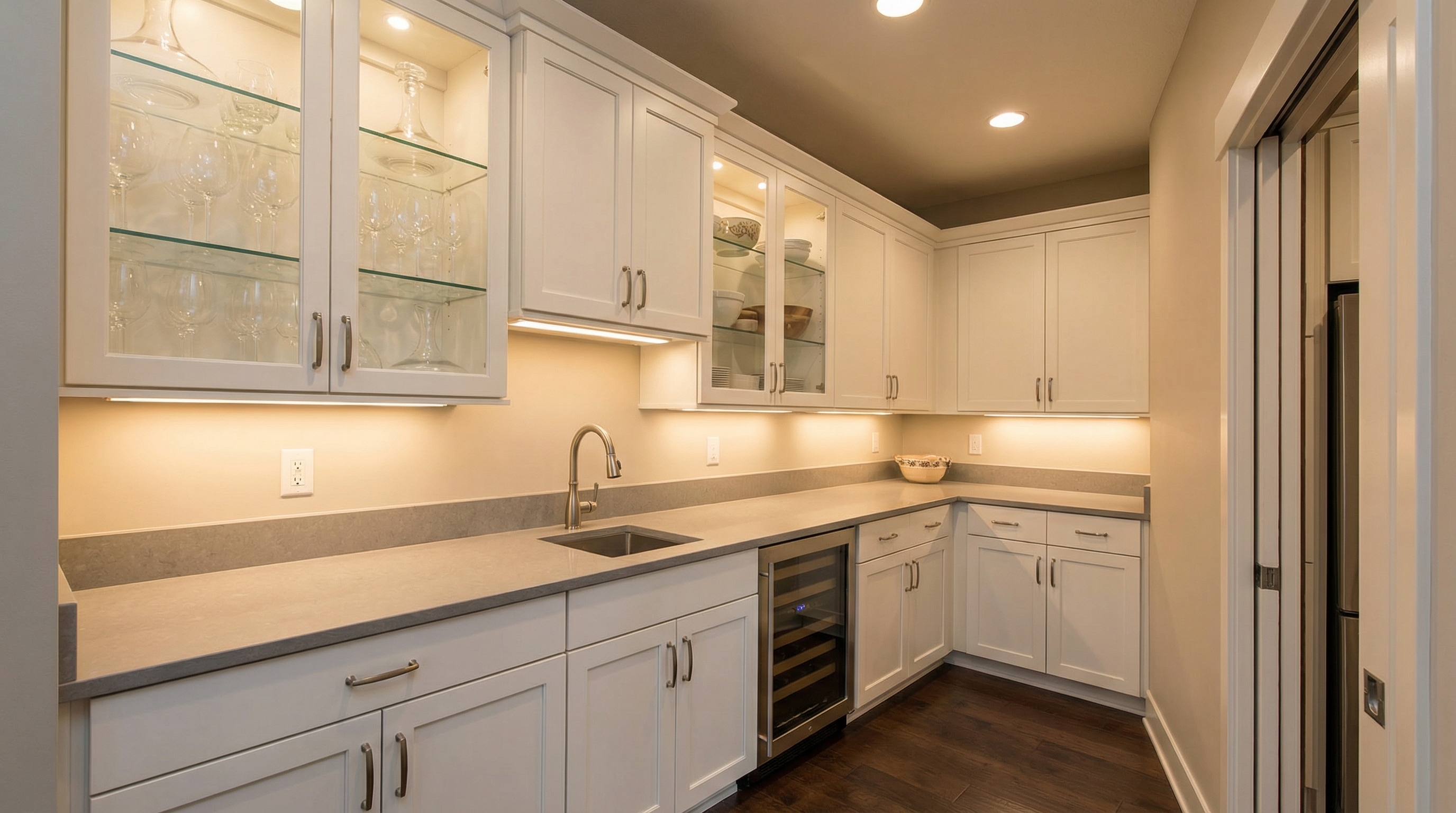
A butler’s pantry isn’t just storage. It’s a secondary prep and staging space between your kitchen and dining area, with its own counter, cabinetry, and often a sink. Think of it as a hidden kitchen behind the kitchen.
I’ve built butler’s pantries in homes across Bonney Lake, Edgewood, and South Hill. In the $600,000+ homes that are common on South Hill and around Lake Tapps, a butler’s pantry is a meaningful upgrade that buyers notice.
Butler’s Pantry Component Costs
| Component | Cost |
|---|---|
| Semi-custom cabinetry (uppers + lowers, ~12 linear feet) | $3,500 - $6,500 |
| Quartz countertop (remnant piece, ~14 sq ft) | $400 - $900 |
| Bar sink + faucet | $300 - $600 |
| Plumbing rough-in (water + drain) | $900 - $1,800 |
| Wine cooler | $400 - $1,800 |
| Electrical (2 circuits + outlets) | $500 - $1,200 |
| Glass-front upper cabinet doors | $400 - $900 |
| Lighting (recessed + under-cabinet) | $400 - $800 |
| Barn or pocket door | $800 - $1,500 |
| Paint and finish | $300 - $500 |
| Permits (electrical + plumbing) | $200 - $350 |
| Total | $8,100 - $16,850 |
A quick tip on countertops: ask your fabricator about remnant pieces. After a full kitchen countertop install, fabricators often have leftover slabs. A 14 square foot butler’s pantry counter from a quartz remnant can cost $200 to $600 instead of $900 to $1,600 for a new slab. I help my clients source these regularly.
Butler’s Pantry Ideas That Pay Off
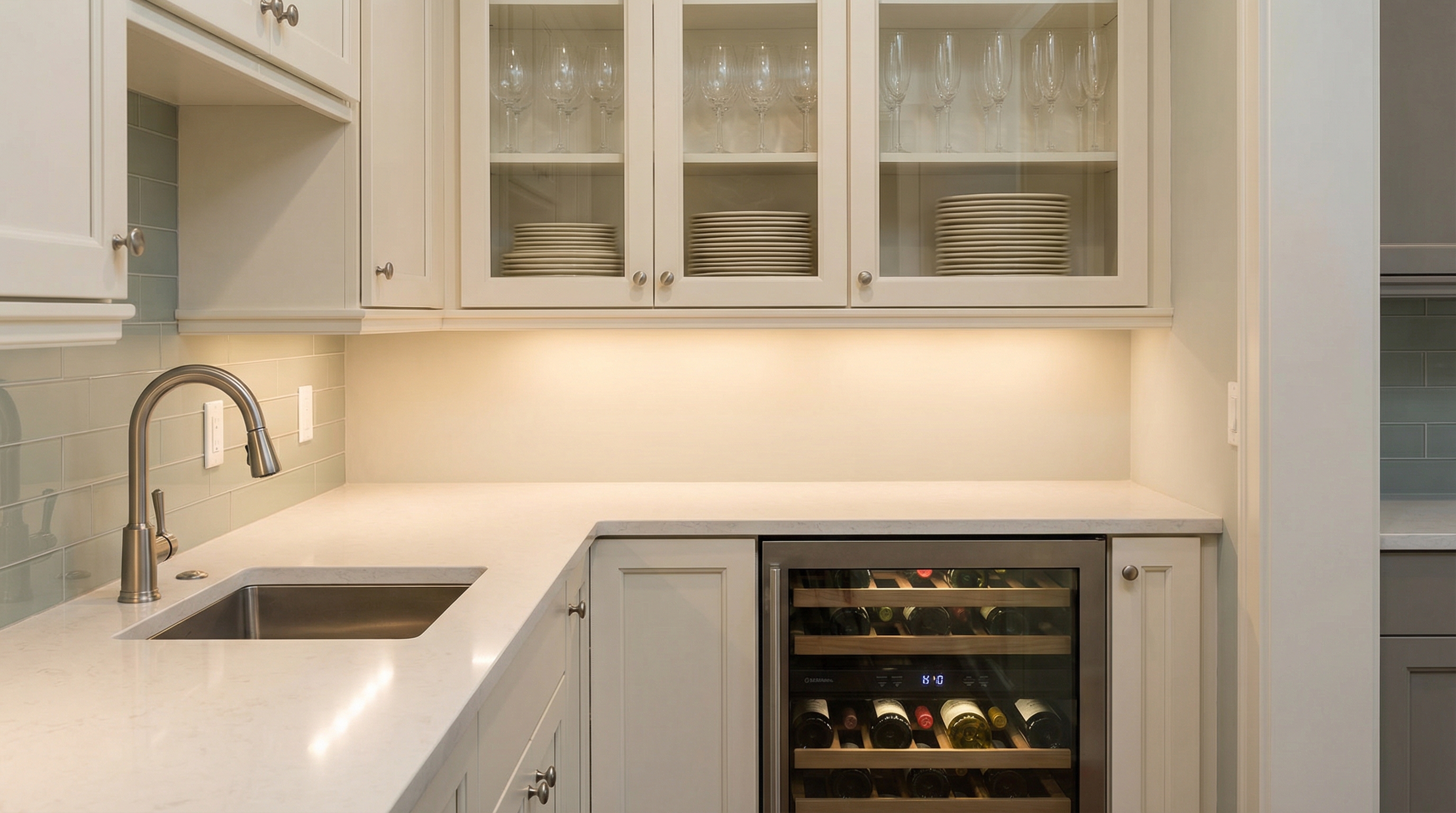
- Glass-front upper cabinets for displaying wine glasses, nice dishware, or serving pieces. Buyers love these at resale.
- Wine cooler built into the lower cabinetry. A NewAir 46-bottle unit runs $400 to $550 and fits a standard 24” cabinet opening. The Zephyr Presrv ($1,400 to $1,800) is the premium option with dual-zone temperature.
- Bar sink with prep faucet. A Kraus 14” undermount bar sink costs $150 to $220. Small investment for a huge functionality boost. Skip the fancy faucet and put the money into a quality basin.
- Dedicated appliance outlets. Two 20A circuits handle an espresso machine, toaster oven, blender, and whatever else you want to keep off the main kitchen counter.
A butler’s pantry without a sink is like a truck without a tailgate. It looks right, but you’ve lost half the function. Budget the $1,200 to $2,400 for sink and plumbing. You won’t regret it.
Pantry Shelving: What Holds Up in the Pacific Northwest
Our climate creates specific challenges for pantry storage. PNW humidity swings between dry summers and wet winters. If your pantry sits on an exterior wall or above a crawlspace, moisture can cause real problems.
What I Recommend by Pantry Location
Pantry on an interior wall: Any shelving material works fine. Custom plywood, laminate, even MDF. Go with whatever fits your budget and the look you want.
Pantry on an exterior wall: Avoid solid shelving pressed tight against the wall. The temperature difference between the heated pantry and the cold exterior creates condensation behind the shelves, which leads to mold on your wall and your food packaging. Use shelving with a 1” to 2” gap from the exterior wall, or go with wire shelving that allows airflow.
Pantry over a crawlspace (very common in Puyallup): Before you remodel, have your contractor inspect the crawlspace for moisture. Puyallup’s clay-heavy soil holds water, and that moisture wicks upward through the subfloor and into anything sitting on top of it. A $200 crawlspace inspection can prevent $5,000 to $20,000 in mold remediation later. Make sure a 6-mil poly vapor barrier is in place below the pantry ($300 to $800 if one isn’t already there).
Shelving Load Capacity Matters
Standard shelf brackets from the hardware store hold 25 to 35 lbs per bracket. That sounds like plenty until you load a shelf with canned goods. A single row of quart canning jars across a 36” shelf weighs over 30 lbs.
For pantry shelving, I use:
- 3/4” Baltic birch plywood for the shelves themselves (not MDF, which sags under weight and swells with humidity)
- Heavy-duty brackets every 16” to 24”, anchored into studs
- French cleat systems for adjustability without sacrificing load capacity
- Maximum unsupported span of 36” for loaded shelves
These details separate a pantry that works for 20 years from one that starts sagging within 2.
Mistakes I See on Pantry Remodels (and How to Avoid Them)
I’ve walked into enough botched pantry projects to know the patterns. Here are the ones that cost homeowners the most money and frustration.
Shelving that’s too deep on every wall. Homeowners think deeper means more storage. It doesn’t. A 24” deep shelf buries items against the back wall where they expire before anyone finds them. I use 12” deep for spices and cans, 16” for boxes and small appliances, and 18” to 21” for the floor level and back wall only.
No dedicated lighting. Washington state code requires switched lighting in any enclosed room. Beyond code, you need to see what you have. Motion-sensor LED strips on each shelf level cost $200 to $400 total and change the experience completely. No more digging in the dark.
Inswing doors that eat floor space. A standard inswing door in a 6’ x 6’ walk-in pantry wastes about 8 square feet of usable floor area. That’s an entire wall of lost storage. A barn door, pocket door, or outswing door solves this instantly.
Skipping the permit when electrical is involved. A new 20A circuit for your coffee station or wine cooler requires an electrical permit in Pierce County ($85 to $150). I know permits feel like a hassle, but unpermitted electrical work creates real problems when you sell your home. The inspector flags it, and now you’re negotiating repairs during escrow. For more on local permit requirements, I’ve written a full guide.
Not planning for how you actually shop. If you buy in bulk at Costco (and let’s be honest, everyone in Pierce County does), your pantry needs to accommodate warehouse-size items. That means 18” to 21” deep shelves on at least one wall, clear floor space for 25-lb bags and cases, and door openings wide enough to carry a Costco box through without turning sideways.
Before You Start Your Pantry Remodel: The Planning Checklist
Before you call any contractor, work through this list. It saves time and money during your kitchen renovation planning.
- Measure every closet and unused space within 15 feet of your kitchen
- Decide your budget range (use the comparison table at the top of this post)
- List what you need to store: everyday cooking items, bulk goods, small appliances, canning supplies, coffee station equipment
- Check whether the wall between your kitchen and the target space is load-bearing (knock on it, look in the attic for load paths above, or ask a contractor)
- Inspect your crawlspace for moisture if the pantry sits over one
- Decide on door type: barn, pocket, french, swing, or open (no door)
- Think about electrical needs: outlets for coffee machines, wine coolers, mini fridges
- Add 15-20% to your budget for surprises, especially in older homes
That last point isn’t pessimism. It’s experience. I’ve opened walls in Puyallup homes from the 1960s and found wiring from the original build, plumbing that hasn’t met code in 40 years, and moisture damage nobody knew about. An experienced contractor builds contingency into the bid for exactly this reason. A less experienced one learns the hard way, and the homeowner pays for the lesson.
Does a Pantry Remodel Increase Your Home’s Value?
Short answer: yes. The ROI on pantry projects is surprisingly strong compared to other kitchen remodel upgrades.
| Pantry Project | Cost | Value Added | ROI |
|---|---|---|---|
| Closet pantry conversion | $1,400 - $3,000 | $1,500 - $3,500 | 85-110% |
| Walk-in pantry conversion | $3,750 - $8,100 | $4,000 - $9,000 | 90-110% |
| Butler’s pantry build-out | $8,100 - $16,850 | $7,000 - $14,000 | 70-85% |
| Pantry addition (new sq footage) | $18,000 - $40,000+ | $10,000 - $22,000 | 50-65% |
Walk-in pantries are a top-5 kitchen search filter for buyers in the Puyallup and South Hill market right now. A well-executed walk-in pantry conversion sits among the best-ROI projects you can make in a home priced between $475,000 and $600,000, which is exactly the sweet spot for most Pierce County homes.
The closet conversion is the real standout. Spending $2,000 to turn an unused coat closet into a functional pantry can add $3,000 or more in perceived value. Buyers see organized storage and think “move-in ready.” That perception alone moves the needle on offers.
For the full picture on what pays back, my kitchen remodel return on investment guide breaks down every major project type.
Over-Improvement Risk
One thing I tell every client: match the upgrade to the home’s price point. A $16,000 butler’s pantry in a $450,000 Spanaway rancher risks over-improving. That money would go further as a full kitchen remodel spread across cabinets, countertops, and flooring. Save the butler’s pantry for homes above $600,000 where buyers expect that level of finish.
For a $500,000 home? The walk-in conversion in the $5,000 to $8,000 range is the sweet spot. Good return, strong buyer appeal, and proportional to the home’s value.
Kitchen Pantry Remodel Ideas by Home Style
Pierce County has a wide mix of housing. The right pantry approach depends on what you’re working with.
1950s-1970s Ranch Homes (Puyallup, Spanaway, Lakewood)
These homes rarely have dedicated pantries. Kitchens run 10’ x 12’ or smaller. Your best options:
- Convert the hallway coat closet (most have one within 10 feet of the kitchen)
- Convert a hallway linen closet
- Add pull-out pantry cabinets to the existing kitchen layout
If you’re also considering an open concept remodel that removes the wall between kitchen and dining room, that’s the perfect time to carve out walk-in pantry space from the new open floor plan.
1980s-1990s Two-Stories (South Hill, Graham)
These homes often have a small walk-in pantry already, but it’s undersized and poorly organized. Remodeling an existing 30 to 40 square foot pantry with custom shelving, proper lighting, and a new door runs $2,000 to $6,000. Huge improvement for modest money.
2000s-2010s Newer Construction (South Hill, Bonney Lake)
More likely to have a butler’s pantry or scullery space already. Upgrading with a wine cooler, new countertop, and better cabinetry: $4,000 to $12,000. These homes benefit most from finishing the space to match the rest of the kitchen’s quality level.
Frequently Asked Questions About Kitchen Pantry Remodels
How much does it cost to add a walk-in pantry in Pierce County?
Converting an adjacent closet or small room into a walk-in pantry costs $3,500 to $10,000 in our area. The biggest variables are whether you need to open a wall (and whether that wall is load-bearing), the shelving system you choose, and the door type. A structural wall adds $2,500 to $6,000 for beam work. Most of my clients spend between $5,000 and $8,000 for a walk-in conversion with custom shelving, recessed lighting, and a barn door.
Can I convert my coat closet into a kitchen pantry?
Absolutely, and it’s one of the best small kitchen upgrades you can make. The main things I look at: proximity to the kitchen (within 15 feet is ideal), depth of the closet (minimum 16” for standard pantry shelving), and whether you need electrical. A typical coat closet conversion runs $1,400 to $3,000 and takes 2 to 4 days. This is especially popular in the 1950s to 1970s ranch homes throughout Tacoma, Sumner, and Puyallup that rarely have dedicated pantry space.
Do I need a permit to remodel a pantry in Pierce County?
Shelving and cosmetic work? No permit needed. New electrical circuits for a coffee station or wine fridge? Electrical permit required, $85 to $150 through Pierce County. New plumbing for a butler’s pantry sink? Plumbing permit, another $85 to $150. Wall removal or a new doorway through a bearing wall? Building permit at $250 to $600. I handle all permit applications for my clients as part of the job.
What shelving system is best for a walk-in pantry in the Pacific Northwest?
For most walk-in pantries, I recommend custom 3/4” plywood shelving with adjustable shelf heights. It handles heavy loads, resists humidity better than MDF, and lasts decades. If you’re on a tighter budget, the Elfa system from The Container Store is a strong mid-range choice at $600 to $2,500 installed. Avoid solid shelving pressed directly against exterior walls in our climate. The moisture differential causes condensation that leads to mold. Leave a gap or use ventilated shelving on exterior walls.
What’s the difference between a walk-in pantry and a butler’s pantry?
A walk-in pantry is a storage room with shelves, lighting, and a door. A butler’s pantry is a functional prep and staging area with countertops, cabinetry, and usually a sink. Think of it as a second mini-kitchen hidden behind your main kitchen. Butler’s pantries cost significantly more ($9,500 to $30,000 vs. $3,500 to $10,000 for a walk-in) but add more resale value in homes priced above $600,000. For homes in the $450,000 to $600,000 range that make up most of the Puyallup market, a well-built walk-in pantry is usually the smarter investment.
How long does a pantry remodel take?
A closet conversion takes 2 to 4 days. A walk-in pantry conversion runs 1 to 3 weeks depending on whether structural work is involved. A full butler’s pantry build-out with plumbing and electrical takes 3 to 6 weeks from start to finish. Material lead times for semi-custom cabinetry (3 to 5 weeks) are usually the biggest schedule factor. For more context on project timelines, my kitchen remodel timeline guide breaks down every phase.
Also Serving Homeowners Across Pierce County
I’ve completed pantry remodels and full kitchen remodeling projects for families in Tacoma, Bonney Lake, Sumner, Edgewood, South Hill, University Place, and Orting. Every home is different, and I walk every project personally.
Ready to Talk About Your Kitchen Pantry Remodel?
If you’re looking at that unused closet or spare room and imagining what it could become, I’d like to help you figure it out. I do free in-home consultations where I can see your space, talk through the options, and give you a real number based on your specific situation.
I’ve been in the trades for over 20 years and have been serving Puyallup and Pierce County since 2018. My crew and I treat every home like it’s our own. If this was my mom’s kitchen, how would I want it done? That’s the standard. Every time.
Contact us to schedule your free estimate, or call me directly at (253) 392-9266. For a full look at kitchen remodel costs in Puyallup, that guide has every detail you need.
Brad Zemke, Owner Pacific Remodeling LLC Puyallup, WA