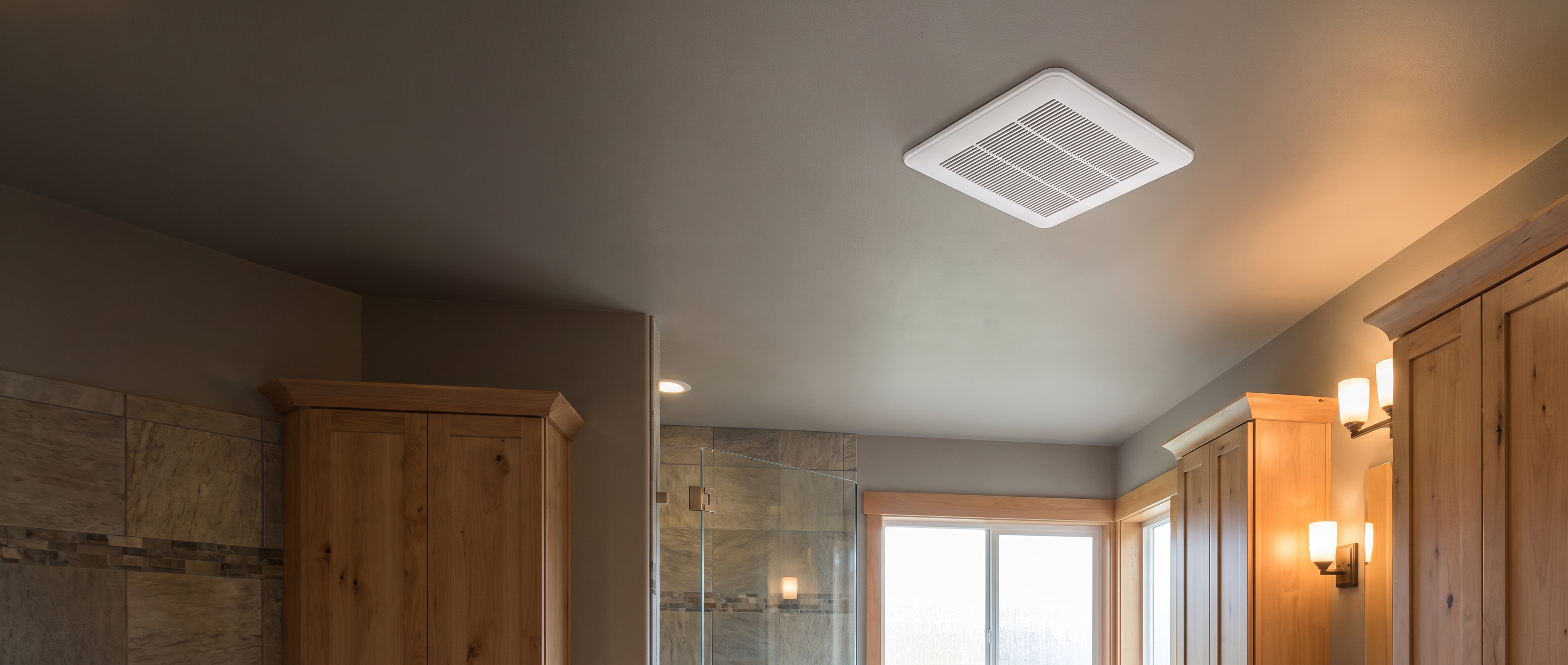
Bathroom mold comes down to one thing: moisture that sits too long. Stop it by running an exhaust fan 20 to 30 minutes after every shower, making sure that fan vents outside instead of into your attic, and sealing every wet joint with 100% silicone. Those three habits prevent more than 90% of the bathroom mold I see in Pierce County homes, and they cost under $100 to set up.
I’ve been in the trades over 20 years. I’m a third-generation carpenter, an Air Force veteran, and I’ve run Pacific Remodeling here in Puyallup since 2018. I’ve torn out more mold-rotted bathroom walls than I can count, and almost every one traced back to the same handful of mistakes. This bathroom mold prevention guide is the straight version I give my own clients.
Why Bathroom Mold Prevention Matters More in the Pacific Northwest
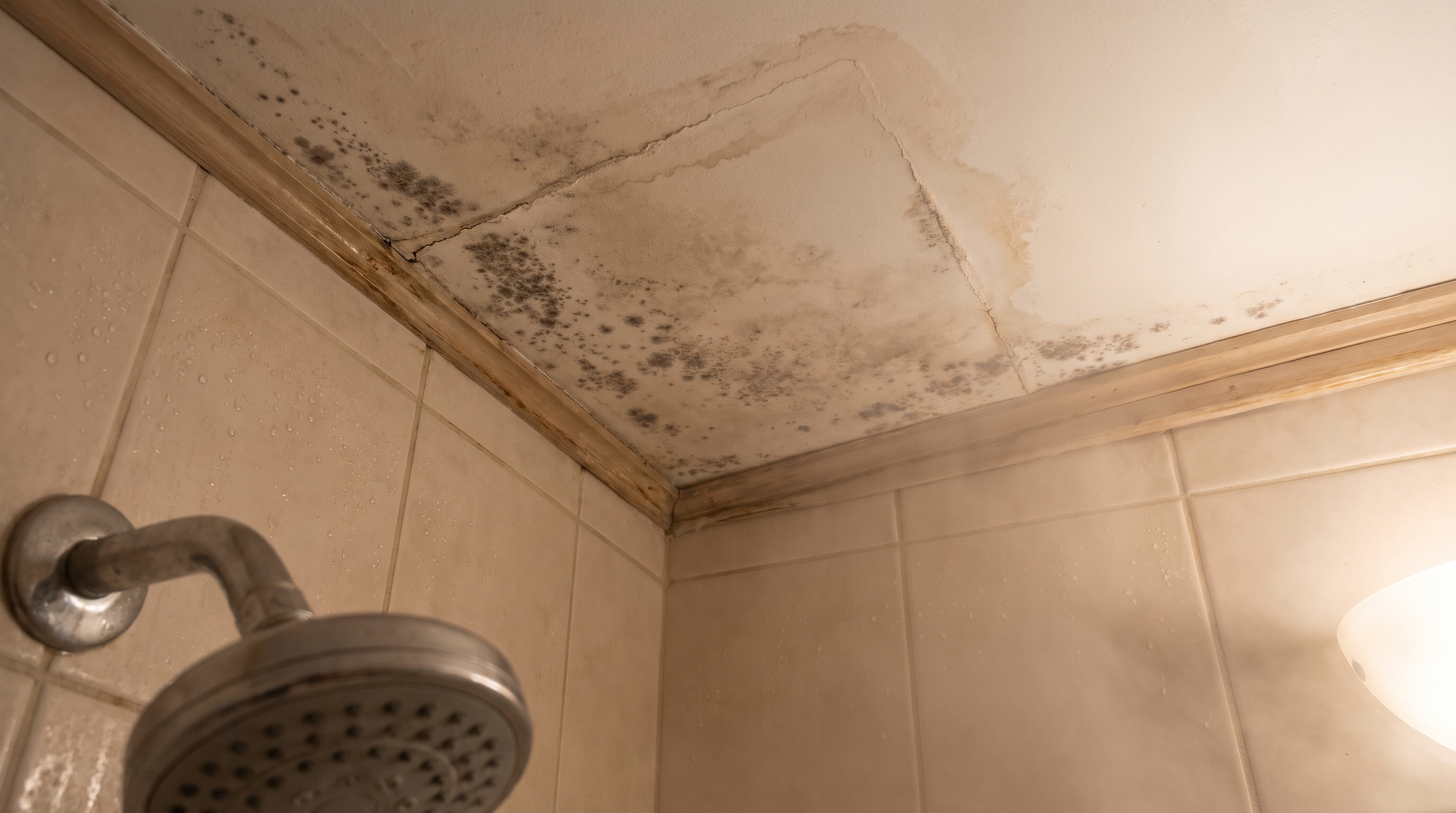
Mold needs three things. Moisture, a food source, and time. In the PNW, we hand it all three on a plate.

Pierce County gets 40-plus inches of rain a year. Our ambient humidity stays high even outside the rainy season. That means a bathroom here rarely gets the natural dry-out period that a bathroom in Arizona gets between showers. The moisture just lingers.
I’ve worked and built in Hawaii, Alaska, the desert, and the arctic. Every climate fights you differently. Here, moisture and rot are the number one enemy. I say that in almost every post I write because it’s true on almost every job.
Here’s the part most homeowners miss. Bathroom mold prevention in our climate isn’t a one-time fix. It’s a system. Ventilation, waterproofing, materials, and daily habits all have to work together. Skip one and the other three can’t carry it.
Mold is a moisture problem wearing a cleaning-problem costume. If the same black spot comes back within a month of scrubbing, you don’t have a dirty bathroom. You have a wet one.
What Causes Bathroom Mold (And How to Spot the Real Source)
Before you can prevent mold, you have to know where it’s actually coming from. Here are the five sources I run into most in Puyallup and the surrounding towns.
- Weak or missing ventilation. The fan is undersized, broken, or nobody runs it. This is the big one.
- A fan that vents into the attic. Super common in older homes. More on this below.
- Failed caulk or grout. Water sneaks behind tile and sits in the wall.
- Slow hidden leaks. A drip under the vanity or behind the shower valve feeds mold you can’t see.
- Crawlspace moisture wicking up. Ground moisture rises into the subfloor from below.
The musty-smell test
If you smell something musty but see no mold, take it seriously. That odor usually means mold is growing inside a wall cavity or under the flooring from a slow leak. I’ve opened walls in 1950s and 1960s homes near the Meridian corridor and found the framing soaked behind tile that looked perfectly fine.
Don’t write it off as “old house smell.” In homes with original plumbing, that smell is often the first warning you’ll get.
Is black mold actually dangerous?
Most bathroom mold, even the dark-colored stuff, is a surface and respiratory irritant. It’s not the toxic Stachybotrys that scares people on the news. That said, any mold covering more than roughly 10 square feet should get a professional look per EPA guidance, not a DIY scrub.
Ventilation: The Single Biggest Factor in Mold Prevention
If I could fix only one thing in a PNW bathroom to stop mold, it would be ventilation. Every time.

Washington energy code requires at least 50 CFM for intermittent bath fans, or 20 CFM for continuous. For a standard bathroom I like 80 to 110 CFM. For a big primary bath with a large shower, I go higher. More air moved means less moisture hanging around to feed mold.
But CFM on the box means nothing if the air never leaves the house. That’s the catch.
Where does your fan actually vent?
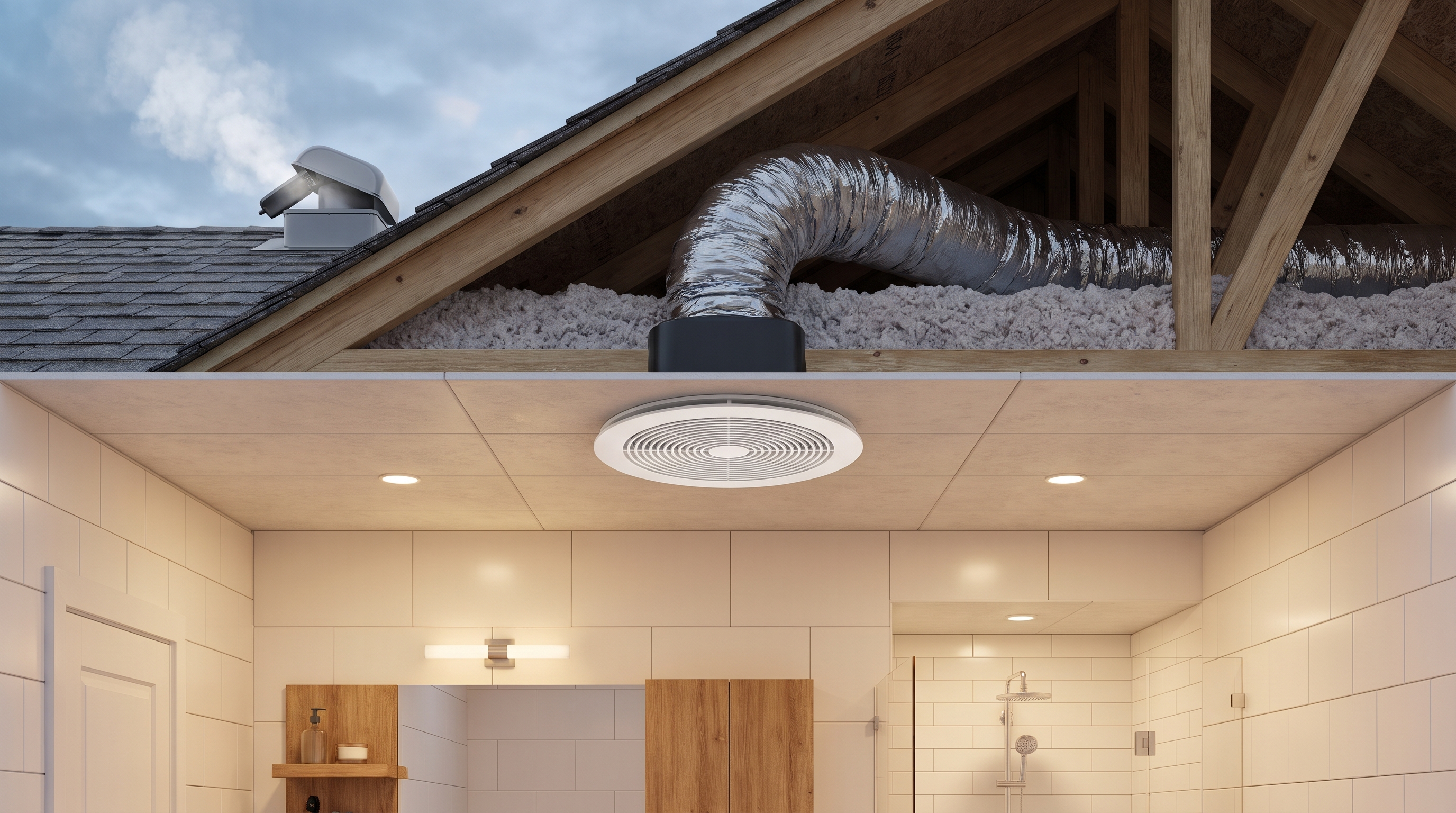
Here’s a quick check almost nobody does. Go up in your attic and find where the bathroom fan duct goes. If it ends in the attic, or just points at a soffit vent, your fan is dumping warm wet air into your roof structure. In our climate, that rots sheathing and grows attic mold that you won’t find until a reroof.
I see this constantly in older Puyallup, Sumner, and Graham homes. A fan that vents into the attic is a double problem. Poor bathroom airflow and a soaking-wet attic at the same time.
- Confirm the fan actually spins and pulls air (hold a tissue to it)
- Follow the duct in the attic to a real exterior cap, not just the attic space
- Check the duct is insulated where it crosses cold attic space
- Make sure the exterior cap has a working damper flap
Run it longer than you think
Moisture hangs in the air 20 to 30 minutes after you shut the water off. Running the fan only during your shower does almost nothing. The steam is still there when you flip it off.
Two easy fixes:
- A timer switch. A Broan time-delay wall control runs about $25 to $40 and keeps the fan going after you leave.
- A humidity-sensing fan. It turns on by itself and runs until the air dries out.
I spec the Panasonic WhisperGreen Select and the Broan Sensonic series the most. Both do humidity sensing, both run quiet, and both can idle on a low continuous trickle. In a climate with no natural dry-out period, that low continuous mode is worth a lot more here than it would be in a dry state. If your fan is original to the house, my bathroom exhaust fan replacement guide walks through sizing and cost in detail.
Cost callout: A humidity-sensing fan upgrade with new ducting runs $450 to $950 installed in Pierce County. A full relocation with a new exterior vent termination runs $800 to $1,800 because it needs a new roof or soffit penetration, flashing, and insulated duct.
Waterproofing and Materials That Fight Mold Behind the Walls
Ventilation handles the air. Waterproofing handles the water that gets past the tile. Both matter, and the second one is where corners get cut because nobody sees it.
I’ve ripped out more failed showers than I can count, and 9 times out of 10 the problem was bad waterproofing. Water got behind the tile, soaked the substrate, and fed mold and rot for years before anyone noticed. By then the repair isn’t a scrub. It’s a demo.
Materials I use in wet areas
- Cement board or foam backer, never green drywall, behind tile. Green board is not waterproof.
- A real waterproofing membrane like Schluter KERDI or Laticrete Hydro Ban over the backer. Both suit our humidity.
- Paperless mold-resistant drywall like PURPLE XP or DensShield on walls next to the tub or shower that don’t get full tile.
- Epoxy or well-sealed grout in showers. In our humidity, standard cement grout can show mold within a year or two.
- 100% silicone caulk, mold-resistant formula, at every wet joint. Never latex caulk in a wet area.
That last one is the cheapest fix on the list and the one people get wrong the most. Latex caulk absorbs moisture and grows mold within a year here. A $12 to $18 tube of GE Siliconized Advanced or Red Devil mold-resistant silicone does the job right.
Mold-inhibitive paint has a place, with one rule
Mold-resistant primer like Zinsser Perma-White runs $45 to $65 a gallon and works well on ceilings above showers where airflow is marginal. A full bathroom costs $150 to $300 in paint. It’s a cheap preventive step for homeowners who aren’t ready for a full remodel.
The rule: it only works on a clean, dry, properly ventilated surface. Painting over active mold without fixing the moisture source traps it, and it comes back within months, usually worse. Paint is prevention, not remediation.
What a Typical Recurring Mold Fix Involves
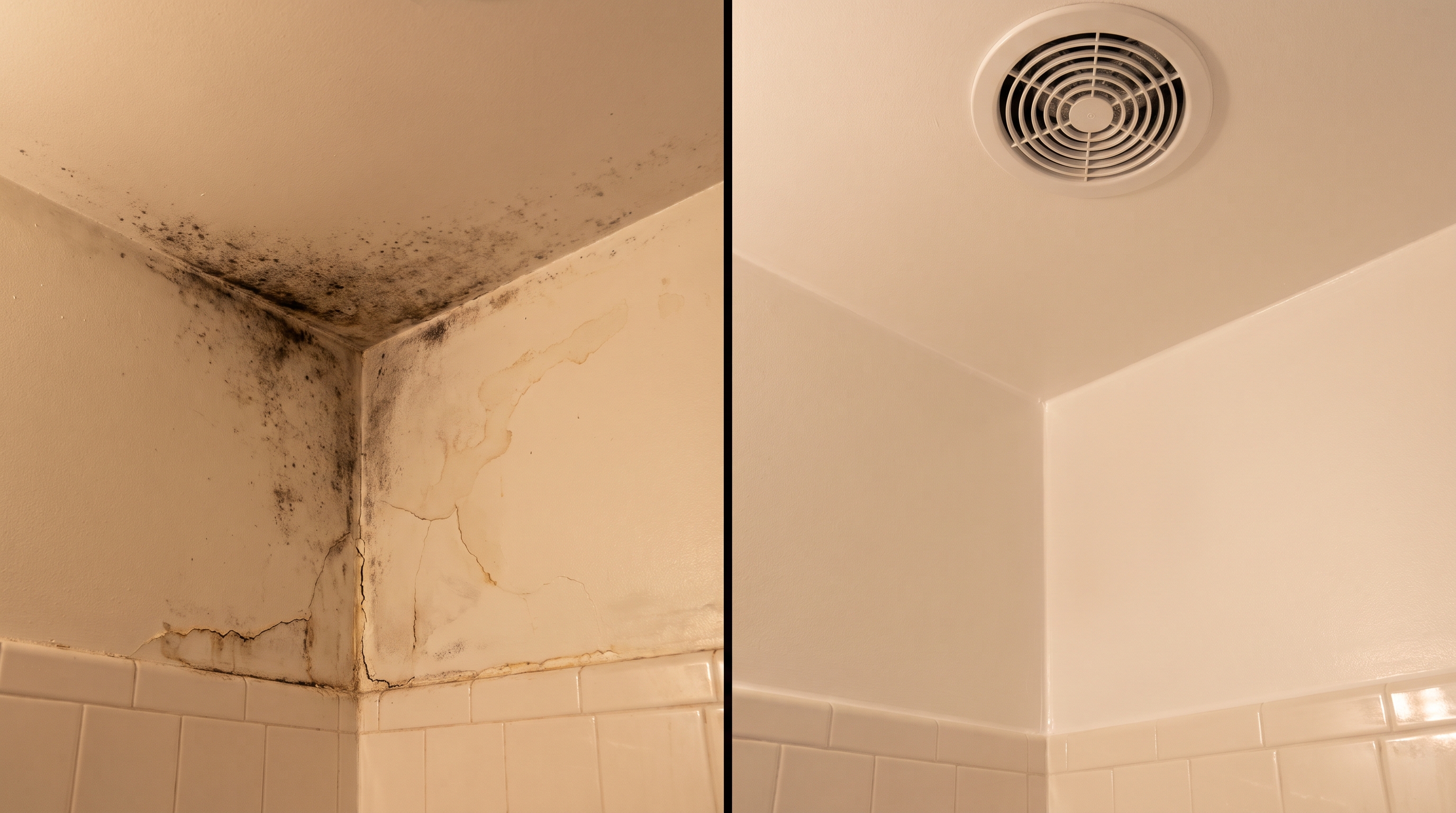
The most common mold problem I get called out for looks the same almost every time. Black mold on the primary bathroom ceiling and up the corner by the shower. The homeowner has scrubbed it and painted over it, sometimes more than once, and it keeps coming back within a couple months.
Here’s what I usually find when I dig in:
- An original builder-grade fan rated around 50 CFM in a bathroom that needs 90-plus.
- A fan duct that runs into the attic. Not outside. The attic sheathing above it is damp and spotted.
- Latex caulk at the tub-to-tile joint, cracked and holding water.
- Early mold on the drywall behind the top course of tile where moisture has wicked in.
Repainting doesn’t touch any of that. The real fix is replacing the fan with a 110 CFM humidity-sensing unit like the Panasonic WhisperGreen, running a new insulated duct to a proper roof cap, cutting out and replacing the affected drywall with DensShield, re-caulking every wet joint with mold-resistant silicone, and finishing the ceiling with Perma-White.
A job like that usually runs $2,500 to $5,000 and takes two to four working days, depending on how much drywall has to come out. That covers the fan relocation, the drywall work, and the surface remediation. When you treat the cause instead of the stain, the mold stays gone.
I do this same kind of fix for homeowners in Tacoma, Bonney Lake, and Sumner. The spots look different. The root cause is almost always the same three things.
What Bathroom Mold Prevention and Remediation Actually Cost
Here’s the honest range for Pierce County in 2026, from a cheap habit fix all the way up to hidden damage behind the walls.
| Job | What It Covers | Cost Range |
|---|---|---|
| Re-caulk wet joints (DIY) | One tube of mold-resistant silicone | $12 - $18 |
| Mold-inhibitive paint (DIY) | Ceiling and walls, one bathroom | $150 - $300 |
| Re-caulk (professional) | Full tub and shower perimeter | $150 - $350 |
| Fan swap, like-for-like | Standard 80-110 CFM replacement | $250 - $550 |
| Humidity-sensing fan + new duct | Upgraded unit, new duct run | $450 - $950 |
| Fan relocation + exterior vent | New roof or soffit penetration | $800 - $1,800 |
| Surface mold remediation | 5x8 bathroom, no demo | $400 - $1,200 |
| Remediation with demo | Drywall or subfloor removal | $1,500 - $5,000+ |
| Mold testing / air assessment | Certified inspector, lab samples | $300 - $650 |
A few notes on that table. Testing is worth it before any remediation over about 10 square feet, and many PNW insurers want it before they’ll process a claim. The demo-level remediation range is wide because it depends entirely on how much is wet and whether we need drying equipment running on-site for days.
For a full picture of where a bathroom project budget goes, I break it all down in my guide to bathroom remodel costs in Puyallup.
Daily Habits That Stop Mold With Zero Remodeling
Not every fix needs a contractor. A lot of mold prevention is just routine. Here’s what I tell every client to do, starting today.
- Run the fan during and 20 to 30 minutes after every shower. Timer switch makes this automatic.
- Squeegee the shower walls and glass. An $8 to $12 OXO squeegee removes most of the water mold feeds on.
- Crack the door or window after showering to let humid air escape.
- Wash and dry bath mats and towels often. Wet fabric on the floor is a mold buffet.
- Fix drips fast. A slow leak under the sink is a mold factory. My post on common plumbing problems and when to call a plumber covers the warning signs.
- Watch the grout and caulk. Discoloration is the early signal. Catch it before it spreads.
An absorbent diatomite bath mat ($25 to $40) and a small dehumidifier ($120 to $220) help a lot in interior bathrooms with no window and no exterior wall to vent through. If you can’t duct a fan outside, a dehumidifier is your stopgap.
PNW-Specific Mold Traps Most Homeowners Miss
Our region throws a few curveballs you won’t read about in a generic national guide.
Crawlspace moisture coming up from below
A lot of Puyallup, Sumner, and Graham homes sit on crawlspaces. Ground moisture wicks up into bathroom subfloors from underneath, and homeowners blame shower splashing. If you’ve got recurring floor-level mold, check the crawlspace vapor barrier and ventilation. That’s a diagnostic step specific to our housing stock.
Heating-season condensation
Cold, damp Pierce County mornings put heavy condensation on mirrors, walls, and windows all through fall and winter, even with decent showering habits. This is exactly why I push continuous low-speed fan operation here, not just during-shower use. The moisture isn’t only coming from your shower.
Older homes and the attic-dump problem
I’ll say it one more time because it matters. In pre-1980 homes all over Pierce County, the original fan very often vents into the attic. Combine that with our climate and you get attic mold and sheathing rot discovered only at reroof time. If your home is from that era, check the duct termination before you do anything else.
If your bathroom is due for a bigger update anyway, mold prevention folds naturally into a full remodel. I cover the whole process in my bathroom remodeling guide for Puyallup homeowners, and you can see the services on my bathroom remodeling page.
Common Mistakes That Keep Mold Coming Back
I see the same five errors over and over. Avoid these and you’re most of the way there.
- Running the fan only during the shower. The steam outlasts the water by half an hour.
- Using latex caulk in wet areas. It absorbs water and grows mold within a year here.
- Painting over active mold. Traps it. It returns, often worse.
- Never checking where the fan vents. “We have a fan” doesn’t mean it vents outside.
- Treating recurring mold as a cleaning problem. Same spot, every month, means a moisture defect, not a dirty bathroom.
That last one is the mindset shift. If you’re scrubbing the same corner on repeat, stop scrubbing and start looking for the water source.
Frequently Asked Questions About Bathroom Mold Prevention
We smell musty but see no mold. Should we worry?
Yes. A musty smell with no visible growth usually means mold inside a wall cavity or under the flooring from a slow leak. In older Puyallup homes with original plumbing, that smell is a real warning. Get a moisture meter check or a professional assessment before you assume it’s just an old-house smell.
Will running the fan longer fix mold that’s already in my grout and caulk?
No. Better ventilation stops new mold from forming, but it won’t remove mold already embedded in grout or caulk. Those joints need remediation or replacement. Fix the ventilation to stop it coming back, and redo the grout and caulk to clear what’s there.
Can I just paint over the mold on my ceiling?
No. Painting over active mold without fixing the moisture source, usually a ventilation or attic problem, traps it, and it returns within months. Mold-inhibitive paint only works as prevention on a clean, dry, well-ventilated surface. Fix the cause first, then paint.
My bathroom has no window and a 1960s fan. Is that my mold source?
Very likely. Original fans from that era are almost always undersized for current code, and they frequently vent into the attic instead of outside. That’s a double problem: poor airflow in the bathroom and moisture dumping into your roof. It’s the first thing I’d check.
Is a humidity-sensing fan worth the extra money in the PNW?
In our climate, yes. We don’t get the natural dry-out period a drier state gets between showers, so a fan that runs on its own until the air actually dries makes a real difference. It’s one of the most under-recommended upgrades I see in Pierce County.
Also Serving These Pierce County Communities
I handle bathroom remodeling and moisture fixes across the South Sound, including Tacoma, Sumner, Bonney Lake, Edgewood, South Hill, and Lake Tapps.
Ready to Stop the Mold for Good?
If you’ve got mold that keeps coming back, or you just want your bathroom built to beat our climate from day one, I’d like to take a look. I treat every home like it’s my own family’s, and I’ll give you the honest fix, not a paint-over that lasts three months.
Call me at (253) 392-9266 or reach out through my contact page to set up a free in-home estimate. I’ll find the real source, not just the stain.
Brad Zemke, Owner Pacific Remodeling LLC Puyallup, WA