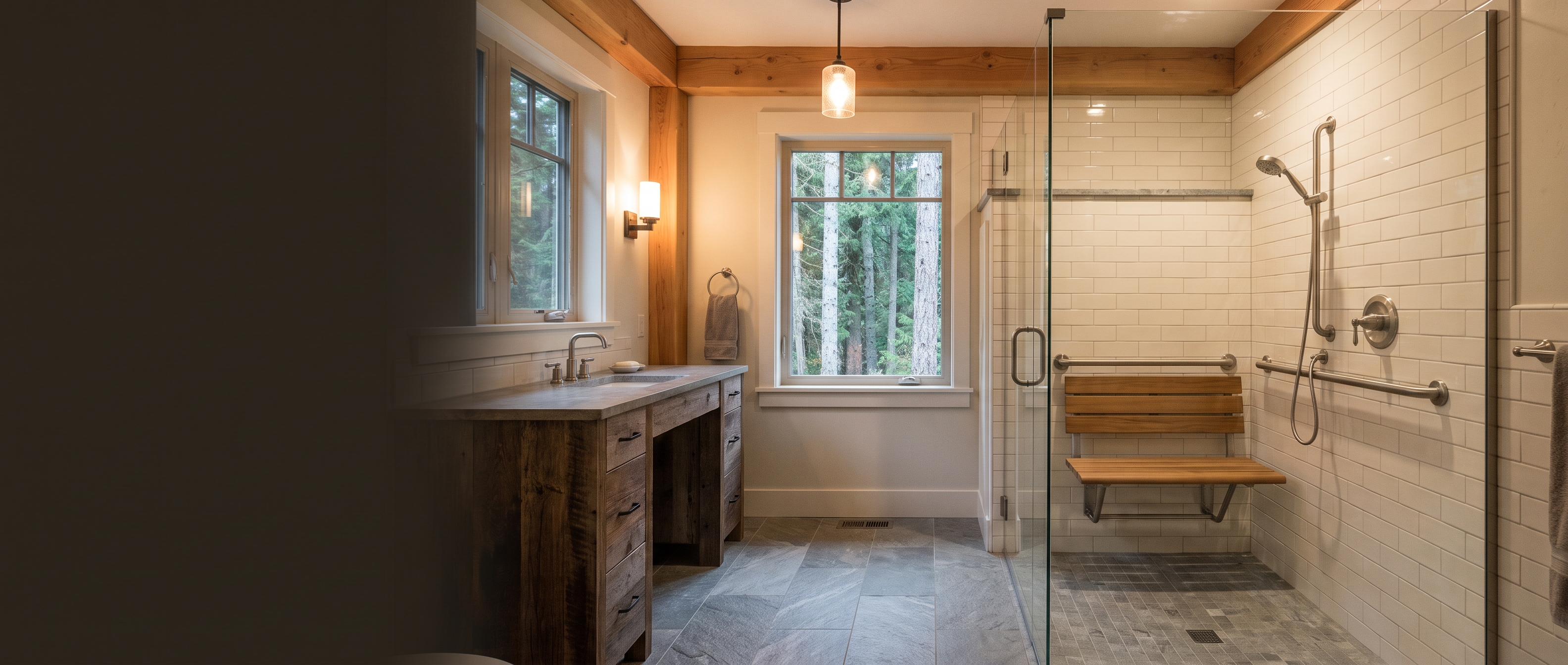
A full bathroom remodel for seniors in Pierce County runs $22,000 to $45,000 when you do it right. That covers a curbless shower, grab bars anchored into real blocking, a comfort-height toilet, non-slip flooring, better lighting, and a wider door. If your parents just need grab bars and a safer toilet, you’re looking at $1,500 to $4,000. The number swings that wide because the biggest cost is whether you move plumbing or not.
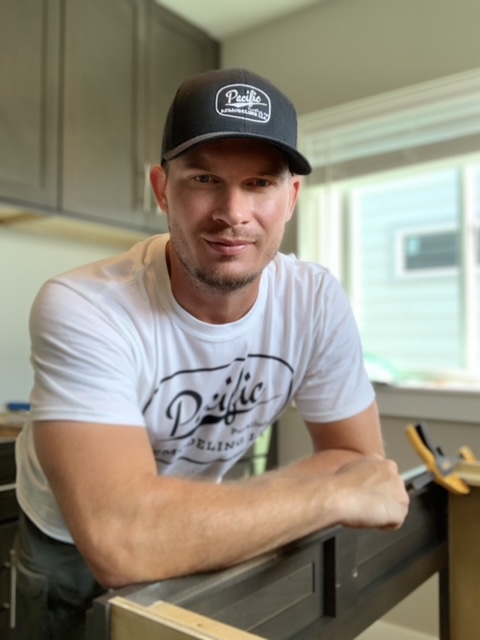
I’m Brad Zemke, owner of Pacific Remodeling in Puyallup. I’ve been in the trades for over 20 years, I’m a third-generation carpenter, and I’ve run this business in Pierce County since 2018.
Most falls in the home happen in the bathroom. Wet tile, a high tub wall, a toilet that sits too low. I’ve walked into plenty of Pierce County homes where a small, cheap change would have prevented a trip to the ER. This post breaks down what a bathroom remodel for seniors actually costs, what keeps someone safe, and where homeowners waste money.
What a Bathroom Remodel for Seniors Costs in Pierce County
Here’s the quick overview. These ranges reflect what I’m quoting and building right now across Puyallup, Tacoma, and the South Sound. They include labor, materials, and permits.
| Project | Cost Range | Timeline |
|---|---|---|
| Grab bars + comfort-height toilet (retrofit) | $1,500 - $4,000 | 1-3 days |
| Tub-to-curbless-shower conversion | $8,000 - $16,000 | 2-3 weeks |
| Walk-in tub (installed) | $6,500 - $14,000 | 1-2 weeks |
| Full aging-in-place remodel | $22,000 - $45,000 | 4-7 weeks |
| Remodel + widen door / move walls | $30,000 - $50,000+ | 6-9 weeks |
The single biggest cost driver is plumbing. If the shower, toilet, and vanity stay where they are, you land on the low end. Move a drain even 3 feet and you’re breaking into the floor, which adds thousands.
The good news for a lot of Pierce County seniors: many older homes here sit on crawlspaces, not slabs. That makes moving a drain cheaper and faster than folks expect. I’d rather work under a 1965 Parkland ranch than over a slab any day.
Cost callout: Adding blocking (wall reinforcement) for future grab bars costs almost nothing during a remodel. Retrofitting it into finished walls later roughly doubles that line item. Rough it in now even if nobody needs it yet.
Curbless Shower or Walk-In Tub: Which One Is Safer?
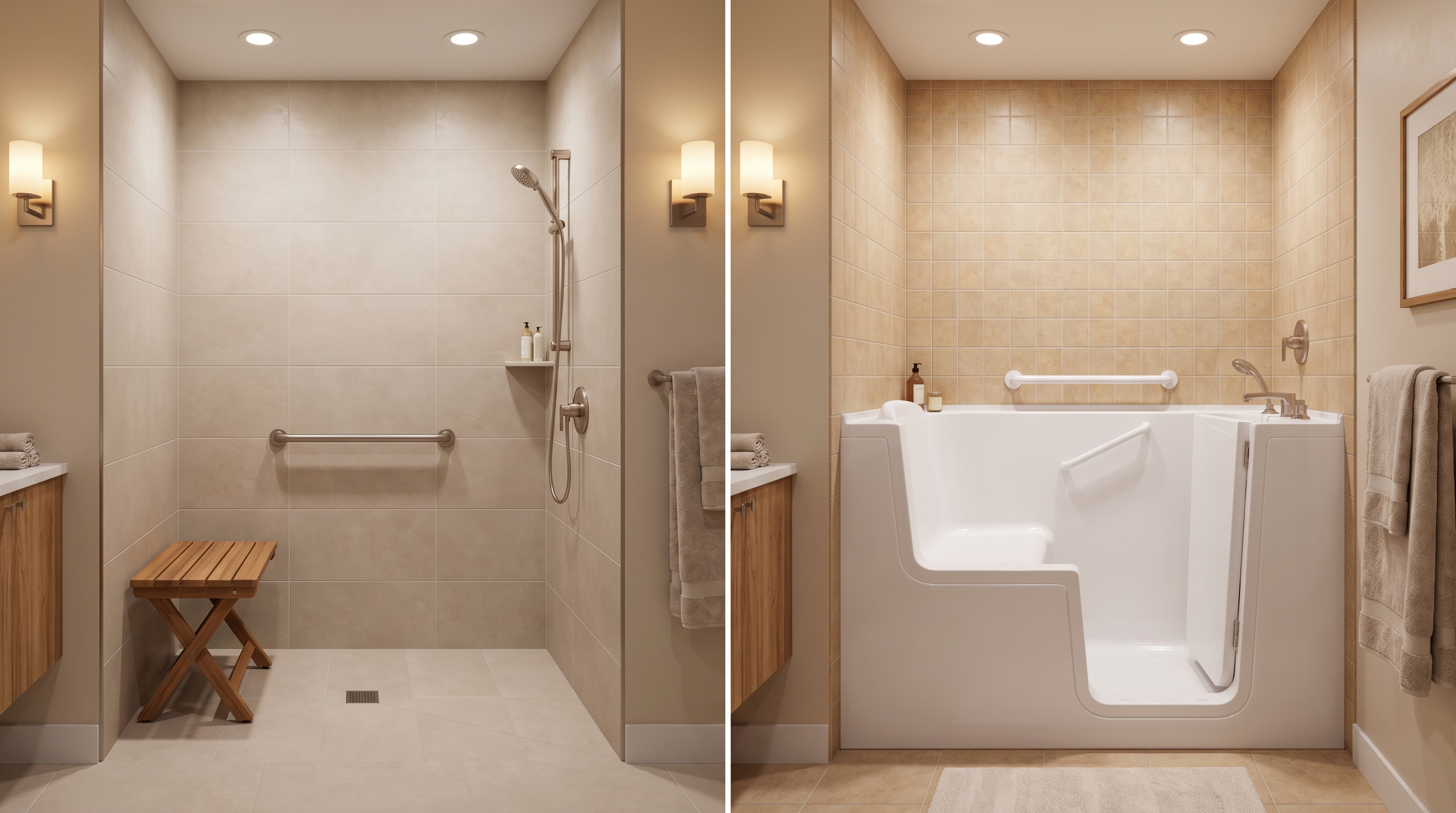
This is the first question almost every family asks me. My answer surprises people. For most seniors, a curbless walk-in shower beats a walk-in tub.
Walk-in tubs get marketed hard. You’ve seen the ads. The low step-over door looks safe. But here’s what the ads skip: you sit inside the tub while it fills and again while it drains. That’s 5 to 10 minutes combined, sitting there wet and cold, unable to get out until the water’s gone. If something goes wrong mid-bath, you’re stuck.
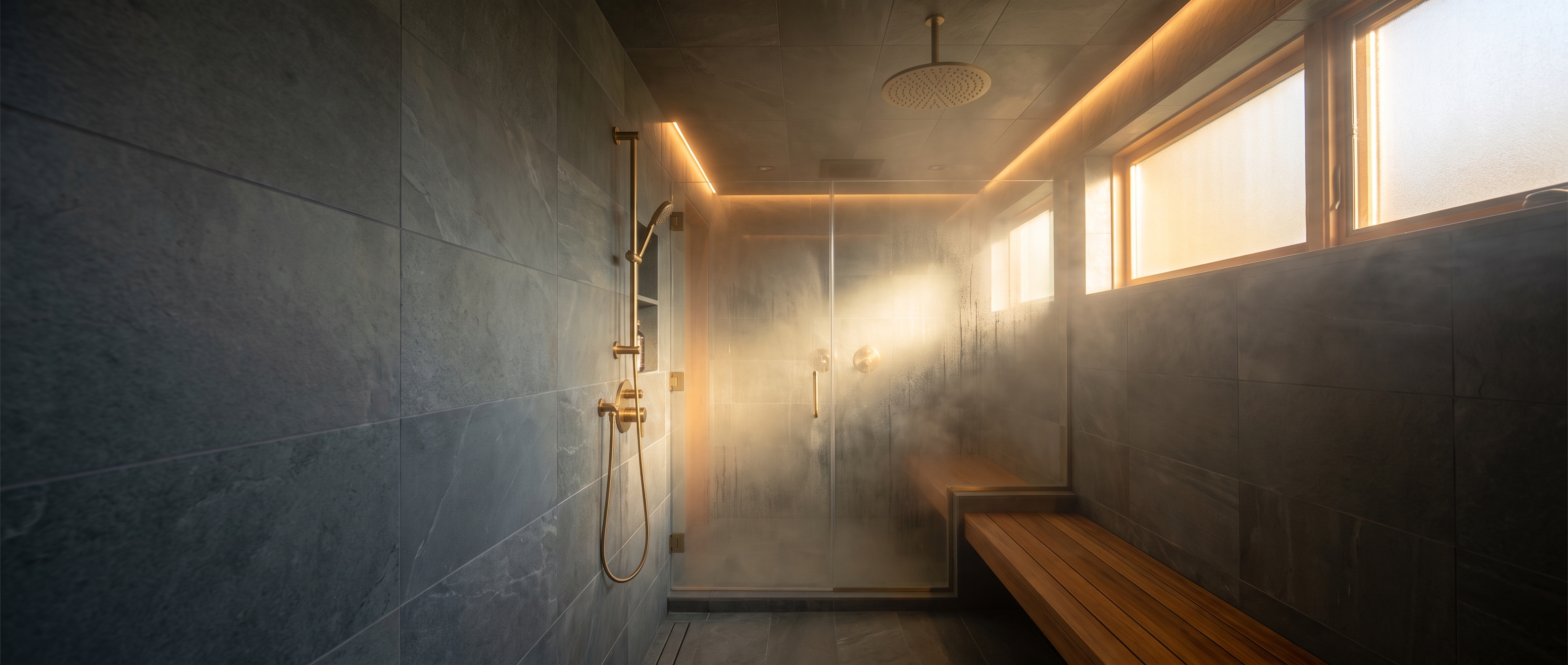
Occupational therapists and aging-in-place specialists recommend curbless showers more often now for exactly that reason. A zero-threshold shower has no wall to climb over. You walk or roll straight in. Add a fold-down seat and a handheld sprayer, and it works whether you’re standing, sitting, or being helped.
When a walk-in tub still makes sense
- The senior genuinely loves baths and will use one daily
- There’s a medical reason for hydrotherapy soaking
- Space is too tight for a proper roll-in shower
Why I steer most clients to a curbless shower
- No step-over means no fall risk at the entry
- No wait time trapped in filling or draining water
- A caregiver or walker can enter alongside the user
- It reads as modern, not medical, which protects resale
There’s a resale angle here too. Grab bars and comfort-height toilets never hurt your home value. A walk-in tub can. It’s a single-user, slow-fill fixture, and the next buyer often rips it out. If you might sell before you’re truly elderly, don’t sink $9,000 into a tub the market doesn’t want.
I go deeper on all of this in my aging-in-place bathroom remodel guide, and if you’re leaning toward a shower, my tub-to-shower conversion breakdown covers the build in detail.
The Non-Negotiables: What Every Senior Bathroom Needs
Some upgrades are style choices. These are not. I put these in every aging-in-place job I do, and I’d put them in my own mom’s house tomorrow.
Grab bars anchored into real blocking
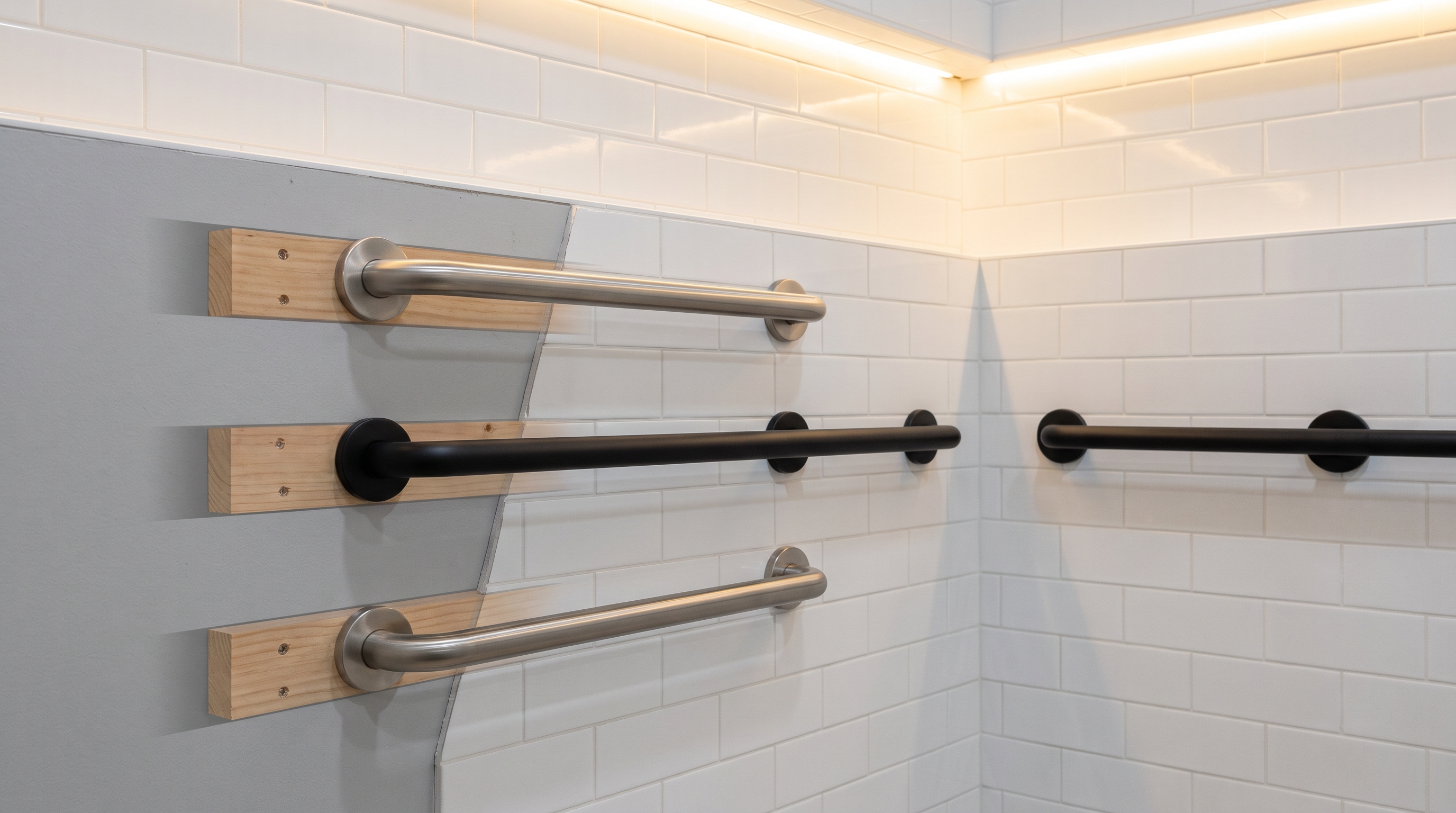
A grab bar has to hold 250 to 300 pounds of sudden, dynamic load. Someone slips, grabs, and throws their full weight sideways. A bar screwed into drywall with toggle bolts will rip out of the wall. I’ve seen it. The bar comes off in their hand right when they need it most.
Do it right. During a remodel, we open the wall and install solid wood blocking behind the tile. It’s nearly free at that stage. As a retrofit into finished walls, expect $300 to $600 per bar because we have to locate studs or add engineered backing plates.
And they don’t have to look like a hospital. Moen’s Home Care line and Delta’s Decor Assist line make grab bars in brushed nickel, matte black, and chrome that match your other fixtures. Nobody walks in and thinks “nursing home.”
Comfort-height toilet
A standard toilet sits around 15 inches. A comfort-height (ADA) toilet sits 17 to 19 inches, which is close to a normal chair. That extra height makes sitting and standing far easier on bad knees and hips. It’s a $450 to $800 swap installed. Kohler Highline and TOTO Drake II are both stocked at Pierce County suppliers. This is the highest-value cheap upgrade in the whole bathroom.
Non-slip flooring
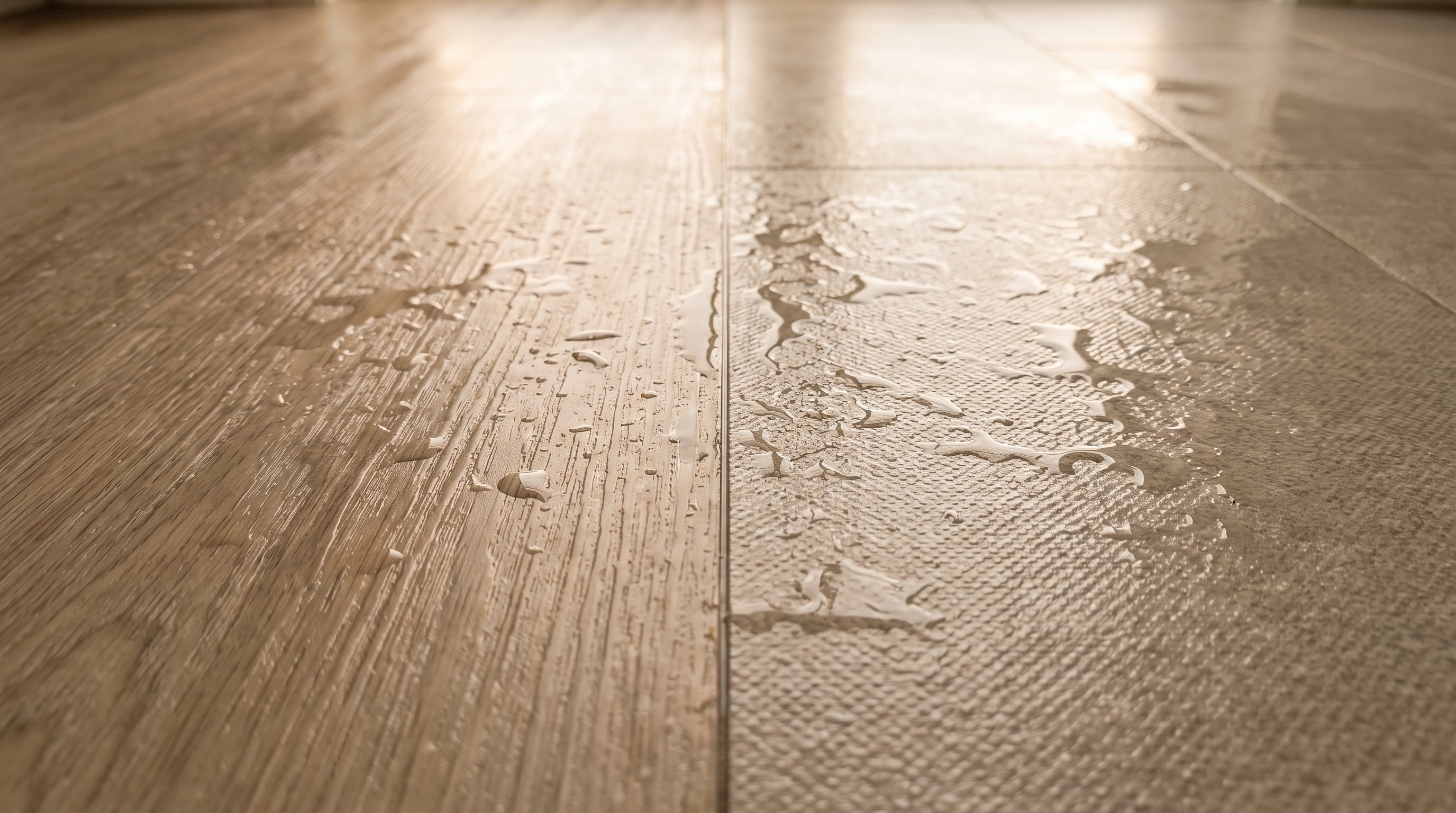
Wet porcelain is a skating rink. For senior baths specifically, I often steer clients toward textured luxury vinyl plank (LVP) rated R10 or R11 for slip resistance. It’s warmer underfoot than tile and more forgiving in a fall. If you want tile, we spec a DCOF rating of 0.42 or higher, the wet-area safety standard. My guide comparing LVP versus hardwood flooring walks through the trade-offs.
Better lighting
Aging eyes need more light. A lot of older Puyallup homes from the 1960s and 70s have one dim fixture and a tiny high window. Adding vanity sconces and task lighting at the shower runs $200 to $600 when we’re already in the electrical. Cheap, and it prevents falls you can’t see coming.
Worth knowing: Blocking, a comfort-height toilet, and non-slip flooring together cost under $2,000 on a job we’re already doing. That trio prevents most bathroom falls. Start there if the budget is tight.
A Real Pierce County Project: Full Aging-in-Place Remodel in South Hill
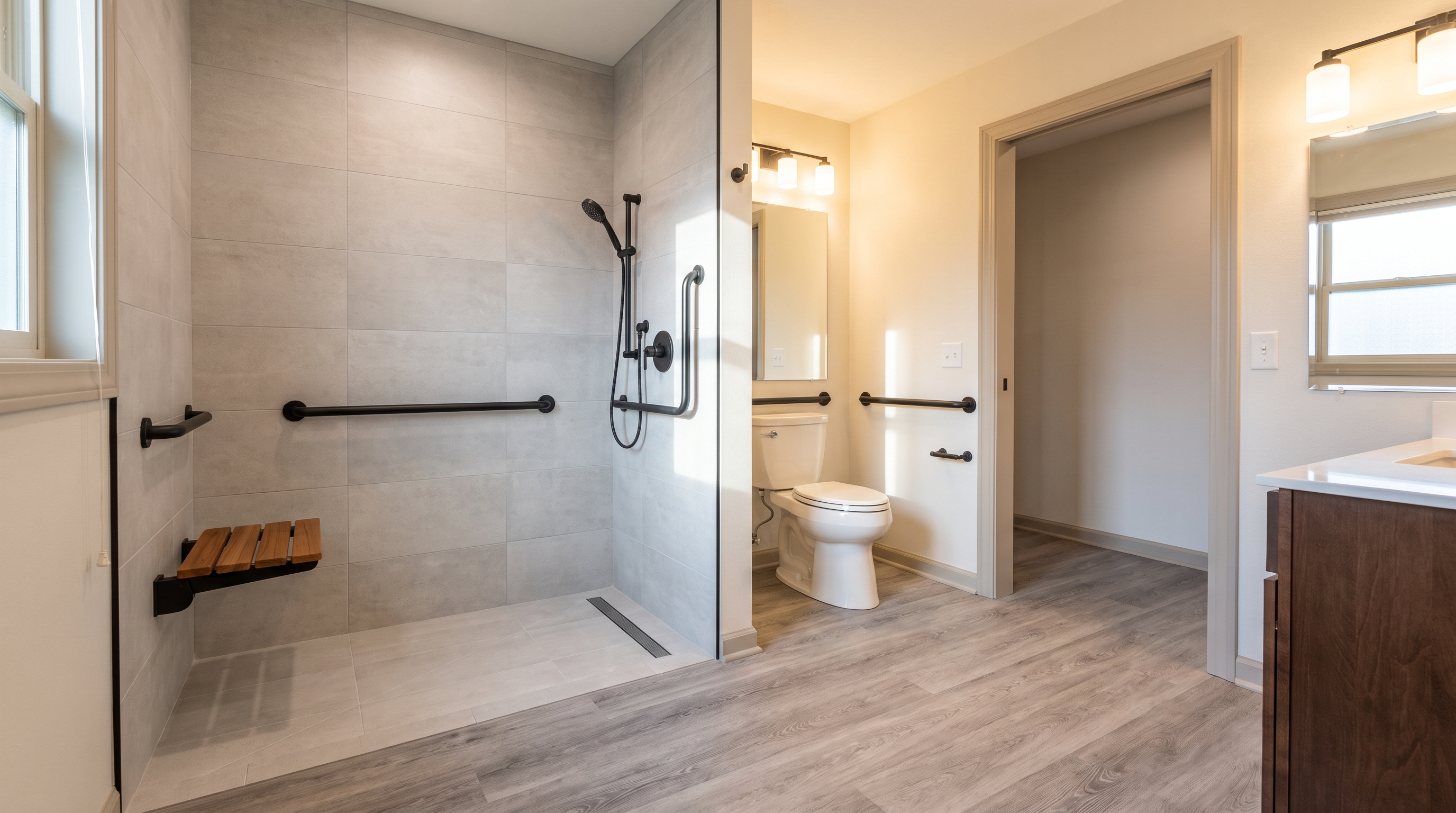
Let me walk you through an actual job so the numbers feel real.
A couple in South Hill called me about their 1998 hall bathroom. The wife had a knee replacement coming and a second one down the road. The husband used a cane. They wanted to stay in the home they’d raised their kids in. Smart goal. The bathroom was the one room fighting them.
Here’s what we did over 5 weeks:
- Demoed the old tub and 5x8 surround down to studs
- Built a curbless shower with a pre-sloped Best Bath pan and a linear drain
- Installed a fold-down teak shower seat and a handheld slide-bar sprayer
- Added three matte-black grab bars on solid blocking, shower and toilet
- Swapped in a comfort-height TOTO toilet
- Laid R11 textured LVP across the whole floor
- Widened the doorway from 28 inches to 32 inches clear
- Added vanity sconces and a brighter ceiling fixture
- Upgraded the exhaust fan to a quiet Panasonic unit ducted to the exterior
Total cost: $34,200. Timeline: 5 weeks from demo to final walk-through.
The doorway widening added about $1,800 because we had to reroute a wire. Worth every dollar. Her walker rolls straight through now. When her second knee gets done, that bathroom won’t need to change a thing.
I’ve built similar projects for homeowners in Tacoma, Bonney Lake, Sumner, and Edgewood. Single-story ranch homes in Midland, Parkland, and Spanaway are especially common for this work, since downsizing seniors buy them to avoid stairs. The bathroom is usually the last accessibility bottleneck left.
Plan It in Phases If You’re Not There Yet
You don’t have to do everything at once. Some families remodel now for a need that’s coming, not one that’s here. That’s fine. A few elements are far cheaper to rough in now and finish later.
The two big ones: grab bar blocking and curbless shower framing. Both cost little while the walls are open and roughly double to add after. So even if you’re doing a standard bathroom update in your 50s, tell your contractor to add blocking and slope the pan for zero-threshold. Future you will save thousands.
Here’s a checklist I give homeowners planning ahead:
- Add solid blocking behind shower and toilet walls for future grab bars
- Frame and slope the shower pan for a curbless entry now
- Run a dedicated circuit if you might add heated floors later
- Choose a comfort-height toilet even if knees are fine today
- Pick slip-resistant flooring (DCOF 0.42+ tile or R10+ LVP)
- Leave the door at 32 inches clear or wider if walls are already open
Think about who the bathroom actually needs to serve. A cane user needs different clearances than a wheelchair user. A 32-inch door and a 60-inch turning radius for a wheelchair is a bigger, costlier job than what a walker needs. Don’t over-build for a wheelchair if a walker is the real need, and don’t under-build and fail the actual person. Ask directly what mobility aid is coming.
For layout decisions, my master bathroom layout ideas post covers how to borrow space from a closet without adding square footage. That trick often solves a tight 1950s footprint.
PNW Details That Matter for Senior Bathrooms
Our climate changes the math. I’ve built in Hawaii, Alaska, and the desert. The Pacific Northwest has its own rules.
Moisture and ventilation. Pierce County gets over 40 inches of rain a year, and our humidity is relentless. A senior spends more time in the bathroom, slower transfers and longer showers, which means more moisture in the room. Your exhaust fan has to be sized right and ducted to the outside, never into the attic. Washington’s code requires it, and rot behind the walls proves why.
Cold, damp mornings. Heated floors aren’t just luxury here. For a senior with poor circulation standing on tile at 6 a.m. in January, radiant floor heat or a wall-mounted Cadet heater is a real comfort and safety upgrade. Budget $1,200 to $2,500 for a radiant mat.
Older housing stock. Many Puyallup, Sumner, and Graham homes from the 1940s through 70s still have galvanized plumbing and 60 to 100 amp electrical panels. Touch one system and you often have to bring another up to code. I build a 10 to 15 percent contingency into these bids for exactly that hidden scope. Rot, old wiring, out-of-code plumbing. You can’t see it until demo day.
The path to the bathroom. In split-level Puyallup homes where the accessible bathroom sits near a side or basement entry, the slip risk starts on the wet, mossy walkway outside. An honest aging-in-place plan looks at exterior lighting and handrails too, not just the bathroom door.
Frequently Asked Questions
How much does a senior bathroom remodel cost in Puyallup?
A full aging-in-place remodel runs $22,000 to $45,000 in Pierce County. That includes a curbless shower, grab bars on blocking, a comfort-height toilet, non-slip flooring, better lighting, and often a wider door. If you only need grab bars and a safer toilet, the cost drops to $1,500 to $4,000. Moving plumbing is what pushes you toward the top of the range. For a broader look at bathroom pricing, see my Puyallup bathroom remodel cost guide.
Do grab bars and accessible features hurt my home’s resale value?
Grab bars, comfort-height toilets, and curbless showers do not hurt resale, and buyers often see them as a plus. The one exception is a walk-in tub. It’s a slow-fill, single-user fixture that many buyers remove, so it can actively hurt value. If resale matters to you, put your money into a curbless shower, not a tub.
Should I hire an occupational therapist before remodeling?
For a full accessibility remodel, yes, it’s worth it. An occupational therapist home assessment runs $150 to $300 and is often partially covered by Medicare with a physician referral. An OT catches functional issues a contractor or homeowner misses, like transfer angles and turning radius for a specific mobility device. I refer clients to one when the need is significant. Pacific Remodeling doesn’t perform the assessment, but I’ll happily build to the OT’s recommendations.
Are there any grants or tax credits in Washington for accessibility remodels?
Washington doesn’t have a dedicated state grant for private aging-in-place remodels. Income-qualified homeowners in rural areas should check USDA Section 504 repair loans and grants, and everyone should call the Pierce County Aging and Disability Resources office for a screening. Qualification varies by household, so I won’t quote a number, but it’s worth a phone call before you write the check.
Can I convert my existing tub to a walk-in shower for aging in place?
Yes, and it’s one of my most requested jobs. A tub-to-curbless-shower conversion runs $8,000 to $16,000, a bit more than a standard conversion because of the sub-floor recess needed for a flush, zero-threshold entry. The result is far safer than climbing over a 15-inch tub wall. My tub-to-shower conversion page covers the process step by step.
Also Serving the South Sound
Beyond Puyallup, I build accessible and senior-friendly bathrooms across the region, including South Hill, Lake Tapps, Orting, Lakewood, and University Place. If your home is in Pierce County, I can help.
Let’s Build a Bathroom That Keeps Someone Safe
I treat every one of these jobs by one standard: if this were my mom’s house, how would I want it done? Solid blocking behind every bar. Waterproofing that lasts. A room that’s safe without looking like a hospital. That’s the work.
If you’re planning a bathroom remodel for seniors anywhere in Pierce County, call me at (253) 392-9266 or reach out through my contact page. I’ll walk your space, ask what mobility needs you’re planning for, and give you an honest estimate with no hidden change orders waiting down the road.
Brad Zemke, Owner Pacific Remodeling LLC Puyallup, WA