A kitchen electrical update in Pierce County costs between $275 for a basic GFCI outlet upgrade and $11,500 or more for a full panel upgrade with complete kitchen rewiring in 2026. Most of my clients spend $1,800 to $5,000 on the electrical portion of their kitchen remodel, depending on how many circuits they need, what the existing panel looks like, and what surprises show up once we open the walls.
I’m Brad Zemke, owner of Pacific Remodeling here in Puyallup. I’ve spent over 20 years in the trades and have run my business in Pierce County since 2018. I’m a third-generation carpenter, and I coordinate with licensed electricians on every kitchen project that involves wiring. Electrical isn’t where you cut corners. It’s where you protect your family and your investment.
This post breaks down every common kitchen electrical update with real numbers from projects I’ve managed across Puyallup, Tacoma, Bonney Lake, and the surrounding area.
Kitchen Electrical Update Cost by Project Type
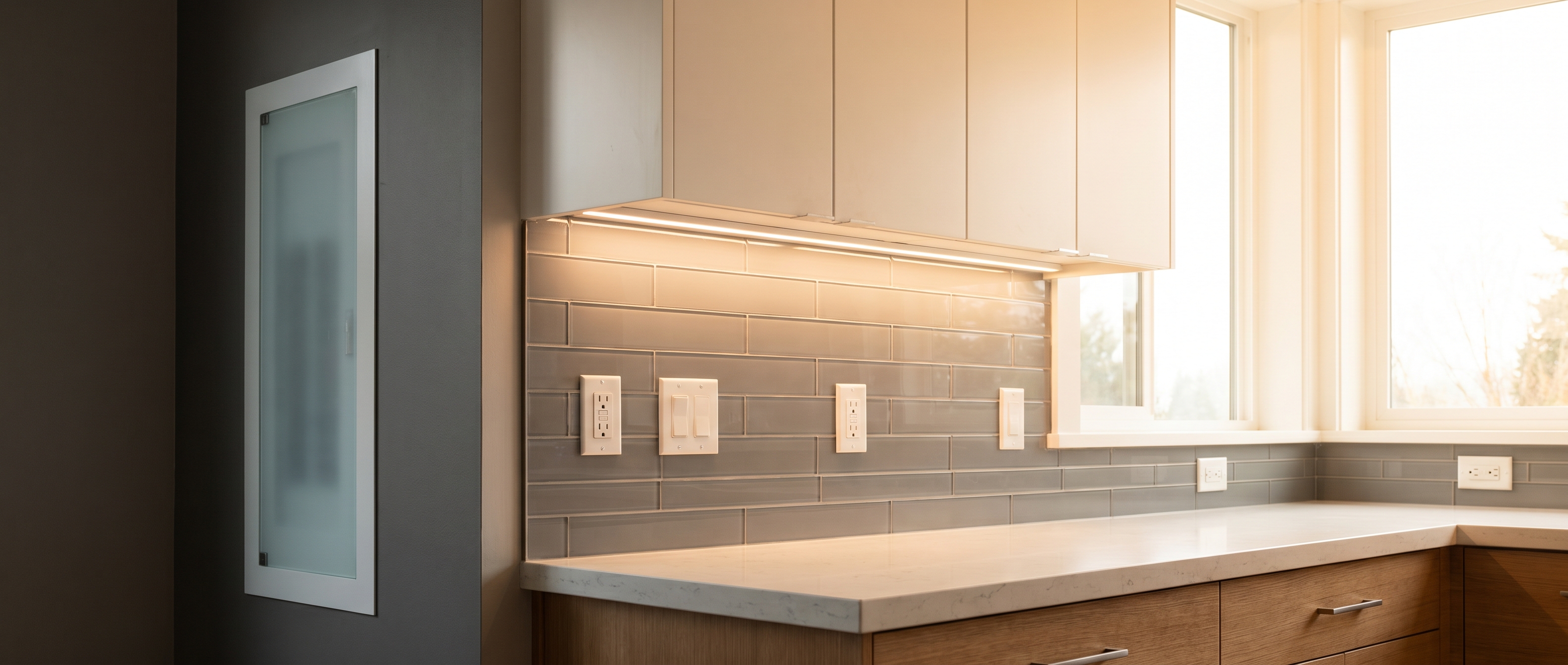
Here’s the quick reference. These numbers reflect what licensed electricians quote on my projects right now in Pierce County, including labor, materials, and permits.
| Upgrade | Cost Range (Pierce County, 2026) |
|---|---|
| GFCI outlet upgrade (per outlet) | $175-$350 |
| Dedicated 20A circuit (small appliance) | $250-$650 |
| Dedicated 40A-50A circuit (range or cooktop) | $400-$950 |
| Kitchen island electrical rough-in (outlets + circuit) | $400-$1,200 |
| Under-cabinet lighting (wiring + fixtures) | $300-$900 |
| Recessed lighting (per fixture, installed) | $150-$400 |
| Full kitchen circuit addition (6-8 new circuits) | $1,800-$4,200 |
| Panel upgrade (100A to 200A) | $2,200-$4,500 |
| Complete kitchen rewire + panel upgrade | $5,000-$11,500 |
| Whole-kitchen electrical overhaul (smart panel, all new wiring) | $10,000-$22,000 |
Pierce County runs about 10 to 18% above national averages for electrical labor. Licensed electricians in the Tacoma and Puyallup corridor bill $95 to $175 per hour depending on whether you’re working with a journeyman or master electrician. Washington state requires a licensed electrician for anything beyond a like-for-like fixture swap, and the state handles permits and inspections through L&I, not the county. That licensing adds overhead, but it also means your work gets inspected and holds up at resale.
Why the wide ranges? Your home’s age drives the final number more than anything else. Adding two circuits in a 2018 house with a 200-amp panel and accessible crawlspace takes a few hours. The same job in a 1958 Puyallup ranch with a maxed-out 100-amp Federal Pacific panel and aluminum branch wiring turns into a full panel replacement before the electrician can add a single circuit.
How Many Circuits Does Your Kitchen Actually Need?
This is the question I answer more than any other on kitchen projects. Most homeowners assume their kitchen has enough electrical capacity because the lights turn on and the fridge runs. Then we start talking about what code requires, and the math changes fast.
The 2020 National Electrical Code, which Washington adopted in 2023, requires these dedicated circuits for a code-compliant kitchen:
- 2 dedicated 20A small-appliance circuits for countertop receptacles
- 1 dedicated 20A circuit for the refrigerator
- 1 dedicated 20A circuit for the dishwasher
- 1 dedicated 20A circuit for the garbage disposal
- 1 dedicated 20A circuit for the microwave (if built-in or over-the-range)
- 1 dedicated circuit (30A, 40A, or 50A) for the range or cooktop
- 1 dedicated 20A circuit for lighting (recommended, not always required)
That’s 7 to 8 dedicated circuits for one room. I’ve opened up kitchens in Lakewood and older Puyallup neighborhoods where the entire kitchen ran on two circuits. Two. The refrigerator, microwave, toaster, and every light fixture all shared two 15-amp breakers from the 1960s.
Adding 6 to 8 new dedicated circuits to an existing panel in Pierce County typically costs $1,800 to $4,200 depending on panel capacity, wall access, and how far the panel sits from the kitchen. If your crawlspace allows easy wire routing (and most Pierce County homes have accessible crawlspaces), that saves $500 to $1,500 compared to homes on slab foundations.
What Each Circuit Costs to Add
| Circuit Type | Wire Gauge | Cost Installed (Pierce County) |
|---|---|---|
| 20A small-appliance (countertop outlets) | 12 AWG | $250-$650 |
| 20A refrigerator | 12 AWG | $250-$500 |
| 20A dishwasher | 12 AWG | $250-$650 |
| 20A disposal | 12 AWG | $250-$500 |
| 20A microwave | 12 AWG | $250-$650 |
| 30A range hood | 10 AWG | $350-$800 |
| 40A electric range | 8 AWG | $400-$950 |
| 50A induction cooktop | 6 AWG | $450-$1,000 |
The wire gauge matters because heavier wire costs more. A 50-amp induction cooktop circuit requires 6 AWG copper wire, which runs $120 to $160 for a 125-foot roll. Compare that to 12 AWG Romex for a standard 20-amp circuit at $65 to $90 per 250-foot roll. The material cost difference adds up fast when you’re running multiple heavy circuits.
When Your Panel Needs to Go Before Anything Else
Not every kitchen electrical update requires a panel upgrade. But a lot of them do, especially in Pierce County’s older housing stock.
Here’s how you know you’re looking at a panel replacement before any kitchen work can start.
Federal Pacific Electric (FPE) Stab-Lok Panels
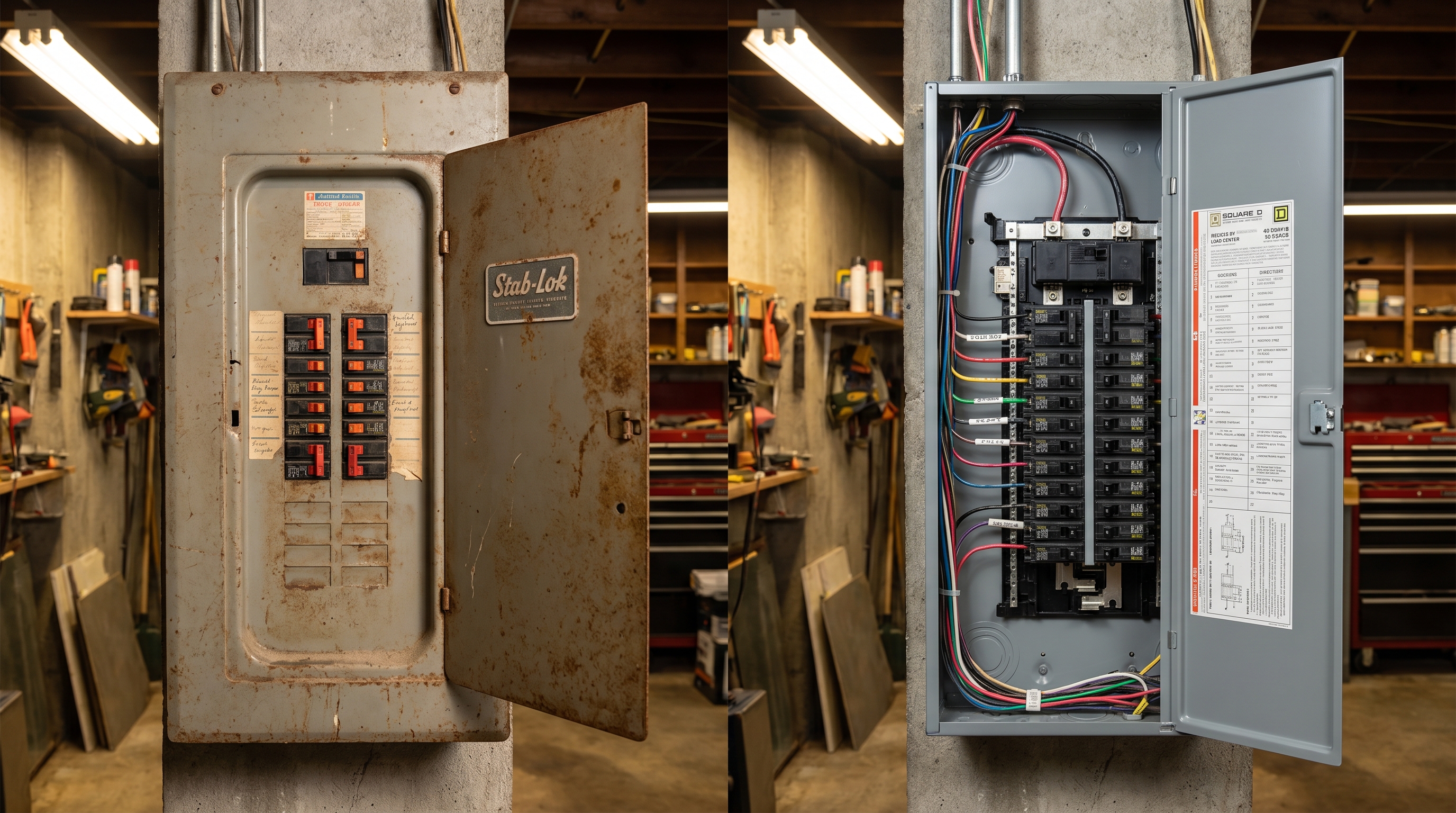
I estimate 10 to 15% of Pierce County homes built between 1955 and 1990 still have FPE panels. These are documented fire hazards. The breakers don’t trip reliably, which means an overloaded circuit can overheat without the breaker doing its job.
No licensed electrician I work with will add circuits to an FPE panel. They’ll recommend full replacement first. Cost in Pierce County: $2,200 to $4,200 for the panel swap alone.
If you spot “Federal Pacific” or “Stab-Lok” on your panel door, address it before you plan any kitchen upgrades. Your homeowner’s insurance company may already be asking about it.
Zinsco and GTE Sylvania Panels
Same problem as FPE. The breakers can weld themselves shut, which defeats the entire purpose of having a breaker. Found in some 1970s Pierce County homes, especially in Spanaway and older parts of Tacoma. Same replacement recommendation and cost range as FPE.
100-Amp or Smaller Service
A lot of homes built before 1975 in Puyallup and surrounding areas still have 100-amp panels. Some I’ve seen in Fircrest and older Tacoma neighborhoods have 60-amp service. Adding a 50-amp induction cooktop, a dishwasher, a microwave, and new lighting circuits will push a 100-amp panel past its limits.
A licensed electrician runs what’s called a load calculation (NEC Article 220) to determine whether your existing panel can handle the new circuits. If the math doesn’t work, you need a panel upgrade before the kitchen work begins.
Upgrading from 100-amp to 200-amp service in Pierce County costs $2,200 to $4,500. That includes the new panel, meter base, breakers, and all labor. It also requires coordinating with Puget Sound Energy, which adds scheduling time. PSE’s South Sound district schedules meter disconnects 3 to 10 business days out, so factor that into your project timeline. Your kitchen will lose power for 2 to 6 hours during the switchover.
Save money on the upgrade: If your electrician already has the panel open for a kitchen rewire, adding a 50-amp breaker and conduit stub-out to your garage for a future EV charger costs only $200 to $500 in marginal cost. That same project as a standalone job later runs $800 to $1,800. I mention this to every homeowner during kitchen planning because the panel is already open and the electrician is already there.
GFCI and AFCI: You Need Both Now
This trips up a lot of homeowners and even some less experienced contractors. Washington state adopted the 2020 NEC in January 2023, which changed the rules for kitchen circuits.
GFCI (Ground Fault Circuit Interrupter): Protects against electrical shock from water contact. Required for all countertop outlets within 6 feet of a sink. You’ve seen these. They’re the outlets with the test and reset buttons.
AFCI (Arc Fault Circuit Interrupter): Protects against electrical fires from damaged or deteriorating wiring. Required on all 15-amp and 20-amp kitchen branch circuits under the current code.
You need both. Not one or the other.
The good news: combo CAFCI/GFCI breakers (like the Square D QO120PDFC at $50 to $70 each) satisfy both requirements with a single device. Most Pierce County electricians now spec these for every new kitchen circuit. One breaker at the panel protects the whole circuit for both ground faults and arc faults.
The mistake I see: some contractors install GFCI outlets at the counter but skip the AFCI breaker at the panel. That won’t pass a Washington L&I inspection. The outlet-level GFCI alone doesn’t meet the arc-fault requirement. If your kitchen was permitted after January 2023, every branch circuit needs AFCI protection. This is one of those details covered in my remodeling permits guide for Puyallup.
What GFCI and AFCI Protection Costs
| Approach | Cost Per Circuit | Notes |
|---|---|---|
| GFCI outlet only (Leviton GFNT1) | $175-$350 installed | Does NOT satisfy AFCI requirement |
| AFCI breaker only | $75-$200 installed | Does NOT satisfy GFCI requirement at countertop |
| CAFCI/GFCI combo breaker (Square D QO120PDFC) | $100-$175 installed | Satisfies BOTH requirements for the entire circuit |
| Combo breaker + GFCI outlet (belt and suspenders) | $200-$400 per circuit | Maximum protection, some inspectors prefer this |
For a kitchen with 6 new circuits, the combo breaker approach adds $600 to $1,050 to your electrical budget. That’s the cost of code compliance in 2026. It’s not optional on permitted work.
What $8,565 in Kitchen Electrical Looked Like on a South Hill Project
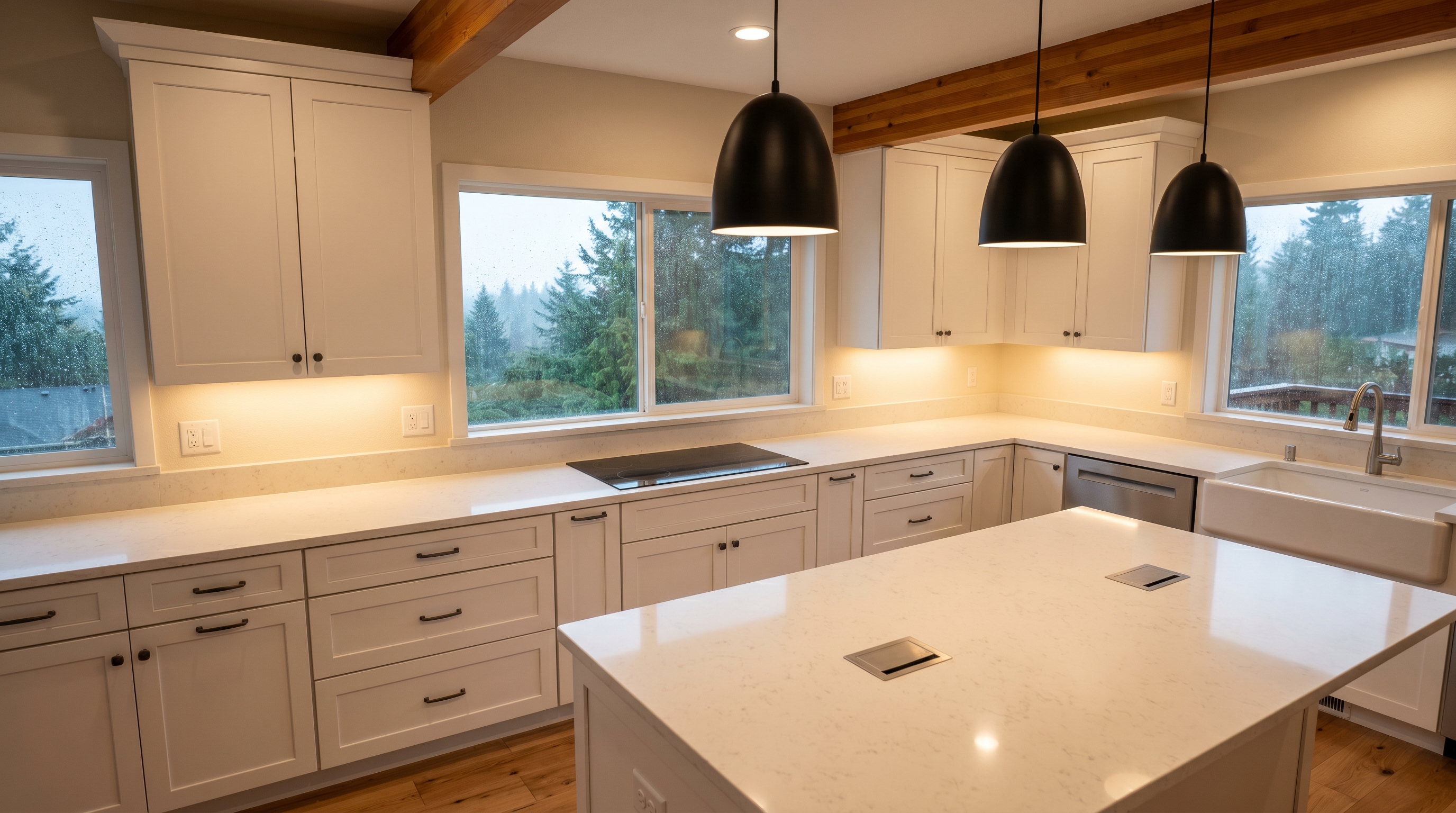
Last winter I managed a kitchen remodel on South Hill in a 1972 split-level. The homeowners wanted new cabinets, quartz countertops, an induction cooktop to replace their old gas range, under-cabinet LED lighting, and three pendant fixtures over their new island. Standard mid-range project.
Before demo, the electrician opened the panel and found a 100-amp Zinsco. Four open breaker slots. The entire kitchen ran on two shared 15-amp circuits with no dedicated lines for any appliance. The wiring to the kitchen was a mix of original aluminum branch circuits and some copper additions from a previous remodel that nobody had permitted.
None of this was visible before we looked. The lights worked. The old range worked. But every one of those issues needed to go before we could build the kitchen these homeowners wanted.
Here’s the electrical breakdown:
| Component | Cost |
|---|---|
| Zinsco panel replacement, Square D 200A (40-space) | $3,400 |
| AlumiConn remediation on 14 aluminum wire connections | $980 |
| 8 new dedicated circuits (2 small-appliance, fridge, dishwasher, disposal, microwave, 50A induction, lighting) | $2,100 |
| Island electrical rough-in (2 pop-up outlets, floor-fed through crawlspace) | $680 |
| 3 pendant light fixtures + wiring | $540 |
| Under-cabinet LED hardwire (WAC InvisiLED, 18 linear ft + driver) | $420 |
| Whole-home surge protector (Eaton CHSPT2ULTRA, installed at panel) | $280 |
| WA L&I electrical permit + inspections | $165 |
| PSE meter disconnect/reconnect coordination | $0 (no fee, but 7-day scheduling wait) |
| Total electrical cost | $8,565 |
The original electrical estimate before the panel discovery was $3,800 for the circuits, island rough-in, and lighting. The final number hit $8,565. That $4,765 difference covered a dangerous panel, fire-risk aluminum connections, and the capacity needed for a modern kitchen.
This is exactly why I tell every homeowner to budget 15 to 20% above the estimate for surprises, especially on homes built before 1980. I’ve written more about budgeting strategy in my kitchen remodel cost guide for Puyallup.
Older Wiring Hazards Common in Pierce County Homes
Pierce County’s housing stock creates specific electrical challenges. I see these on a regular basis, and all of them affect your kitchen electrical update cost.
Knob-and-Tube Wiring (Pre-1945 Homes)
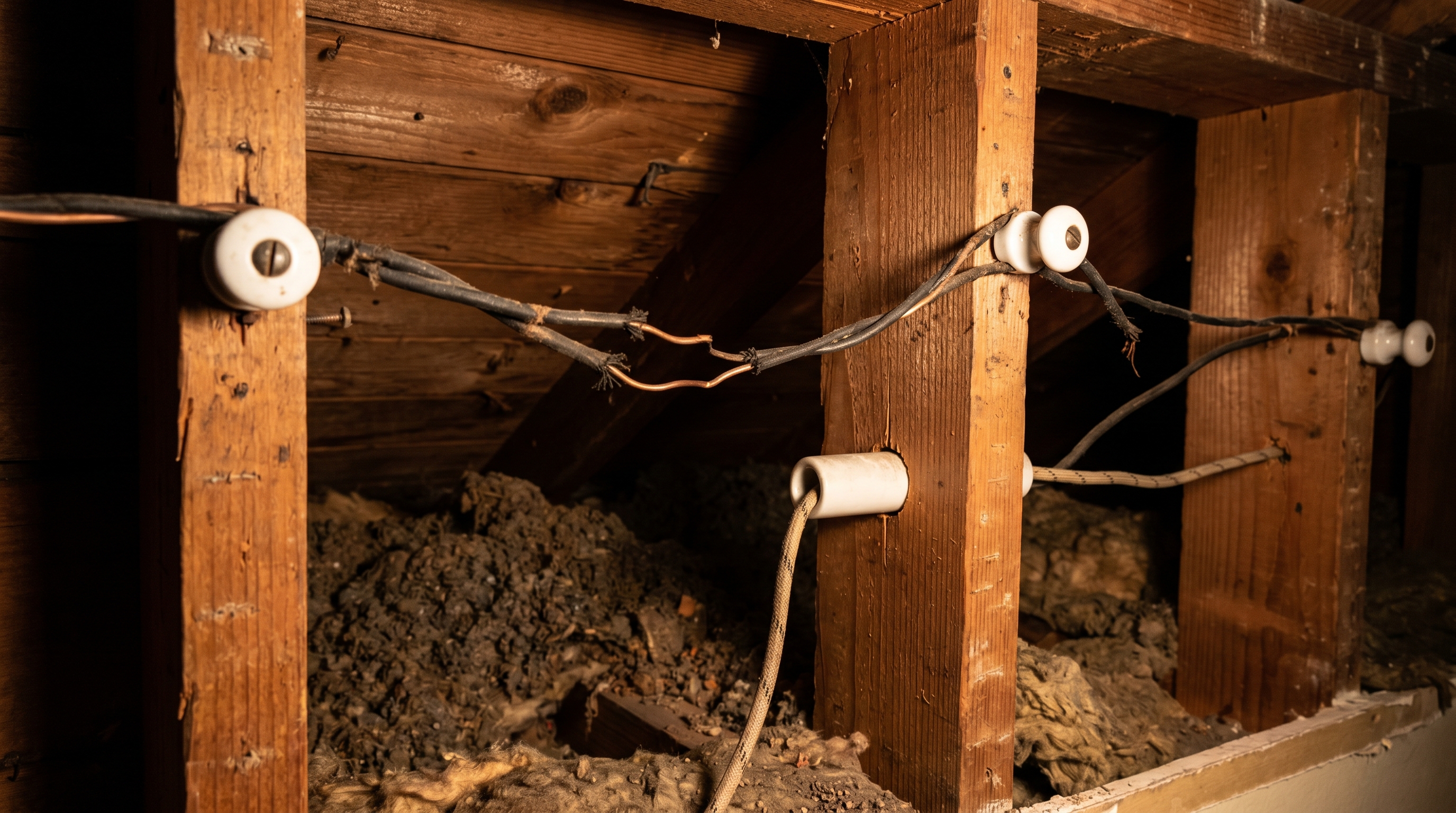
Found in older Fircrest homes, historic Tacoma neighborhoods, and some of the earliest Puyallup builds. Knob-and-tube has no ground wire, can’t support modern appliance loads, and becomes a fire risk when insulation covers it (which happens in nearly every attic and wall cavity over the decades).
Insurance companies increasingly refuse to cover homes with active knob-and-tube. State Farm, Pemco, and several other WA carriers now flag it during underwriting. A kitchen rewire to replace knob-and-tube runs $3,500 to $8,000 depending on the scope.
Aluminum Branch Wiring (1965 to 1973 Homes)
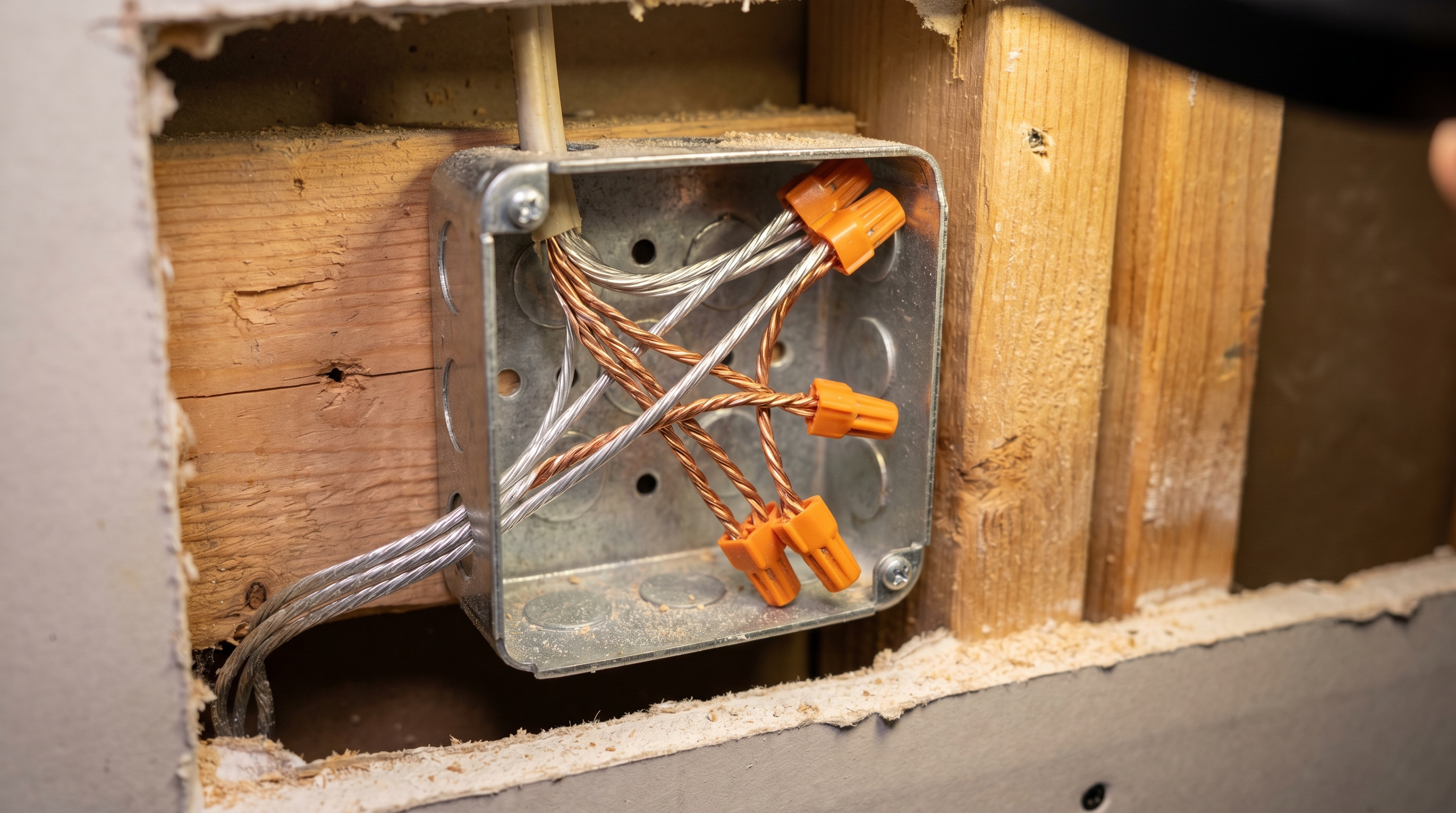
This one scares me almost as much as knob-and-tube. Aluminum wiring at receptacle and switch connections is a documented fire hazard due to oxidation and thermal expansion. The connections loosen over time, overheat, and can ignite wall framing.
Significant stock of aluminum-wired homes exists in Lakewood, Spanaway, and older Puyallup subdivisions. Three remediation options:
- CO/ALR-rated devices ($12 to $18 per device installed): The cheapest fix. Replaces standard outlets and switches with aluminum-rated versions.
- AlumiConn connectors ($80 to $120 per connection point, labor included): The most cost-effective full remediation. The electrician opens every outlet and switch box and installs a listed connector. Typical kitchen cost: $1,000 to $3,500.
- Full copper pigtailing ($150 to $200 per connection point): Most expensive but most reliable. Kitchen-only cost: $2,000 to $5,000.
On the South Hill project I described above, we used AlumiConn connectors on 14 connections for $980 total. That’s the approach most Pierce County electricians recommend for kitchen-only remediation when the rest of the house isn’t being touched.
Undersized Panels With No Room to Grow
Beyond the dangerous panels (FPE, Zinsco), plenty of Pierce County homes simply have panels that are full. Every breaker slot is taken. Your electrician can’t add 6 to 8 new kitchen circuits to a panel with zero open slots.
Options in this scenario:
- Sub-panel addition ($800 to $2,200): A 60-amp sub-panel dedicated to the kitchen. Frees up space without replacing the main panel. Works if the main panel is in good condition and has a 200-amp service.
- Full panel upgrade ($2,200 to $4,500): The better long-term investment if the main panel is older than 25 years or if you’re planning other upgrades (EV charger, heat pump, hot tub) in the next 5 years.
I always recommend going straight to 200-amp if you’re touching the panel at all. The cost difference between a 150-amp and 200-amp panel is only $200 to $400. A 150-amp panel might leave you short again in 3 years when you want to add an EV charger or convert from gas to electric heat. Don’t pay for a panel upgrade twice.
Kitchen Electrical Permits in Pierce County
This catches a lot of homeowners off guard. In Washington, electrical permits don’t come from Pierce County. They come from Washington State Labor & Industries (L&I). Different process than what most people expect.
No permit needed:
- Replacing a light fixture in the same location (like for like)
- Swapping an outlet or switch (same type, same location)
- Replacing a light switch with a dimmer on the same circuit
Permit required:
- Any new circuit
- Adding any new outlet location
- Panel upgrade or replacement
- Any new wiring run
- Adding recessed lighting or under-cabinet fixtures on a new circuit
Washington L&I charges $55 to $120 for the base electrical permit plus $10 to $25 per circuit. Your licensed electrician applies for the permit, not you (unless you’re pulling a homeowner permit and doing the work yourself, which has restrictions). The inspector must sign off before walls close, and a final inspection is required before energizing new circuits.
What Happens If You Skip the Permit
I get asked this question a lot. The answer is simple. Don’t skip it.
- Home inspectors flag unpermitted electrical work at resale. Every time.
- Title companies and lenders may require correction before closing.
- Homeowner’s insurance can deny fire claims if unpermitted wiring caused the fire.
- Retroactive permitting costs 2 to 4 times what the original permitted work would have cost.
Pierce County has increased enforcement after several house fires from unlicensed electrical work between 2022 and 2024. A $120 permit protects a $300,000+ investment. The math is obvious. For the full permit process, read my remodeling permits guide.
Can You Add Kitchen Circuits Without Ripping Open Every Wall?
Yes, in many cases. This is one of the most common concerns I hear from homeowners. Nobody wants their entire kitchen demolished just to run a few new wires.
Crawlspace routing (most Pierce County homes): The electrician runs new wire through the accessible crawlspace and up into walls at outlet and appliance locations. This is the most cost-effective approach for most 1940s to 1980s homes in Puyallup, Sumner, and the surrounding area. Adds $50 to $150 per circuit in labor compared to open-wall work, but saves thousands in drywall repair.
Attic routing: Works for outlets on exterior walls or interior walls with attic access above. Similar cost to crawlspace routing.
Targeted wall openings: For specific junction points, the electrician cuts small access holes that get patched later. Much cheaper than full demo. My guide on drywall patching covers what the repair looks like.
The tough scenario: Homes with concrete slab foundations (some 1950s Pierce County homes in the Lakewood and Tillicum area) make circuit additions significantly more expensive. The electrician has to trench through the slab or run conduit along walls, adding $500 to $1,500 per circuit.
The good news for most Pierce County homeowners: crawlspace foundations are the norm here, and that accessibility keeps your kitchen electrical update cost hundreds to thousands lower than it would be in slab-on-grade construction.
Gas-to-Induction Conversion: The Fastest Growing Kitchen Electrical Change
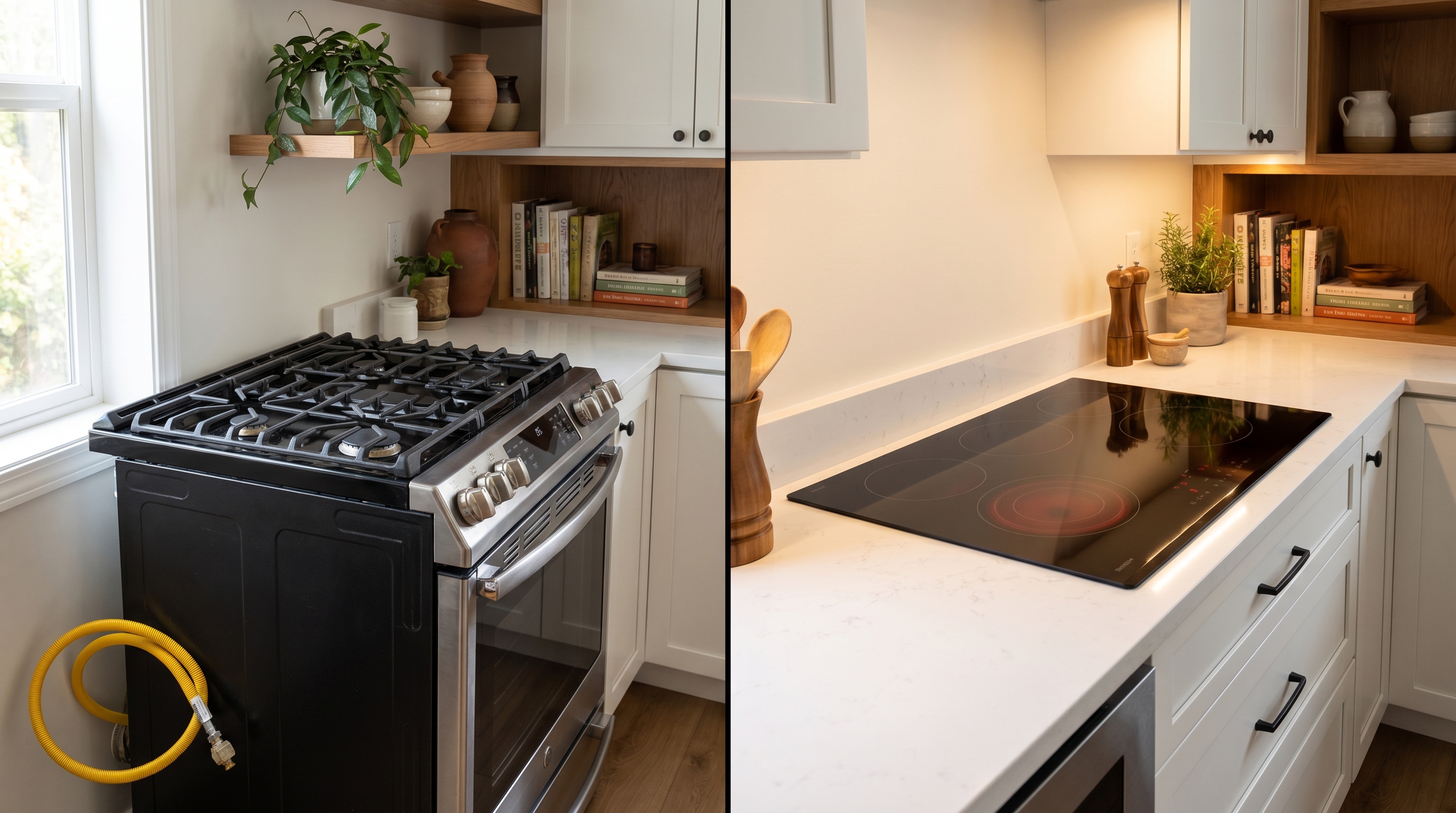
I’m seeing more homeowners in Pierce County switch from gas ranges to induction cooktops during their kitchen remodels. The reasons are health concerns about indoor gas combustion and better cooking performance. Induction is faster, more precise, and keeps the kitchen cooler.
The electrical cost to make that switch:
- If your panel has capacity: Adding a 50-amp, 240-volt circuit costs $450 to $1,000. That covers the 6 AWG wire run, a NEMA 14-50 receptacle or hardwire connection, and a new breaker.
- If your panel needs an upgrade first: Budget $2,800 to $4,500 total for the panel upgrade plus the new cooktop circuit.
Puget Sound Energy offers rebates for switching from gas to induction when a licensed electrician handles the install. Their Heat Smart program offers up to $500 toward the conversion. Check current amounts at PSE’s rebate page because these programs update periodically.
If you’re already planning a kitchen remodel that changes your layout, adding the induction circuit during construction costs a fraction of what it would as a standalone project later. The walls are already open. The electrician is already there. That’s the time to do it.
Your Kitchen Electrical Update Checklist
Here’s what I walk through with every homeowner before starting a kitchen project that involves electrical work:
- Have your electrician run a load calculation (NEC Article 220) before you commit to appliance selections
- Identify your panel brand, amperage, and available breaker slots before finalizing the project scope
- Check for aluminum wiring, knob-and-tube, or FPE/Zinsco panels, any of these changes the project significantly
- Budget 15 to 20% above the electrical estimate for hidden conditions behind walls
- Verify your electrician holds a valid WA state EL-01 or EL-02 license at lni.wa.gov
- Confirm permit requirements before work begins, not after
- Plan pop-up outlet locations on your island before cabinet installation
- Ask about running empty conduit to the island and pantry wall while walls are open ($50 to $100 now saves $500 to $1,500 later)
- Consider whole-home surge protection while the panel is open ($180 to $350 installed)
- Schedule the PSE meter disconnect early if a panel upgrade is needed (3 to 10 business day lead time)
Kitchen Electrical Update Cost vs. Kitchen Lighting Upgrade Cost
Homeowners sometimes confuse these two, so let me clarify. A kitchen electrical update covers the wiring, circuits, panel, and outlet infrastructure that powers everything. A kitchen lighting upgrade focuses on the fixtures, switches, and placement of the lights themselves.
They often happen together, but they’re priced separately. The electrical update is the foundation. The lighting upgrade is what you see every day. I recommend handling both at the same time because adding lighting circuits while the electrician is already running kitchen circuits costs significantly less than calling the electrician back for a second project.
For the full picture of what a kitchen remodel involves beyond electrical, my kitchen renovation planning guide covers every phase from design through final inspection.
Questions Homeowners Ask About Kitchen Electrical Update Cost
How much does it cost to upgrade a kitchen electrical panel in Pierce County?
Upgrading from 100-amp to 200-amp service runs $2,200 to $4,500 in Pierce County. That includes the new panel (I see Square D QO most often in this area), meter base, breakers, and all labor. If you’re replacing a dangerous panel (Federal Pacific, Zinsco), the cost falls in the same range. The most popular panel for Pierce County kitchen remodels right now is the Square D QO 200-amp, 40-space. It costs $220 to $300 for the unit and gives you plenty of room for current kitchen circuits plus future additions like an EV charger or heat pump. The 40-space version costs about $40 more than the 30-space and eliminates the problem of running out of breaker slots in 5 years.
Can I do any kitchen electrical work myself to save money?
You can swap a light fixture, replace an outlet or switch (same type, same location), and install a dimmer switch without a permit or electrician. Those are like-for-like replacements that save you $100 to $300 in labor per task.
Anything beyond that requires a permit. Washington allows homeowners to pull their own electrical permit for their primary residence, but you must do the work yourself. You can’t hire an unlicensed friend and call it a homeowner project. L&I inspectors ask who performed the work, and if the answer isn’t you or a licensed electrician, the inspection fails. For most homeowners, the risk of failing inspection and paying for corrections isn’t worth the savings.
Does a kitchen electrical update increase my home’s value?
Electrical updates protect your home’s value more than they increase it. A new panel and modern wiring don’t photograph well for listings the way a new countertop does. But the financial impact at resale is real.
An FPE or Zinsco panel flagged on a home inspection triggers immediate buyer concern and often a $3,000 to $8,000 price reduction demand. Aluminum wiring can scare buyers away entirely. Unpermitted electrical work creates title and insurance complications that delay or kill deals. Spending $3,000 to $8,000 on proactive electrical work nearly always saves you more in avoided negotiation losses at the closing table. For a broader look at which upgrades pay back the most, read my guide on kitchen remodel upgrades that add value.
How long does a kitchen electrical update take?
A simple GFCI outlet upgrade takes 2 to 4 hours. Adding 6 to 8 new circuits with accessible crawlspace takes 1 to 2 days. A full panel upgrade adds another full day. Complete kitchen rewire plus panel replacement runs 2 to 4 days of electrical work.
The schedule bottleneck isn’t usually the labor. It’s the permit timeline and the PSE coordination. Washington L&I typically turns around an electrical permit in 1 to 3 weeks. PSE schedules meter disconnects 3 to 10 business days out. Plan these early in the project timeline, not the week you want work to start. My kitchen remodel timeline guide covers how electrical scheduling fits into the bigger project calendar.
Should I upgrade my kitchen electrical during a remodel or as a separate project?
During the remodel. Always. The walls are open, the electrician has clear access to run wire, and you’re already paying for permits and inspections. Adding circuits and upgrading the panel during a remodel costs 30 to 50% less than doing it as a standalone project after everything is buttoned up. Once the drywall is up and the cabinets are in, running new wire means cutting access holes, fishing wire through finished walls, and patching everything afterward. That labor premium is significant.
If you’re considering a full kitchen remodel, tackle the electrical while you’re at it. You won’t get a cheaper opportunity.
Don’t Let Electrical Be the Trade That Catches You Off Guard
The biggest mistake I see homeowners make is treating electrical as an afterthought in their kitchen remodel budget. They’ll agonize over cabinet door styles and countertop edges for weeks, then allocate $500 for “electrical” and hope for the best.
Electrical is the safety system of your kitchen. Every appliance, every outlet, every light depends on it. An overloaded circuit that doesn’t trip the breaker starts a fire inside your wall where you can’t see it. Old aluminum connections that loosen over time create heat at every junction box. A panel with no room for modern circuits forces your kitchen to run on infrastructure from 1965.
I’d rather have a homeowner spend less on countertop upgrades and more on getting the electrical right. The countertop is what you see. The electrical protects everyone in the house.
If this was my mom’s kitchen, I’d make sure the panel was right, every circuit was dedicated and properly protected, and every connection was solid before I worried about anything cosmetic. That’s the standard I hold for every client.
I serve homeowners across Tacoma, Sumner, Bonney Lake, Edgewood, South Hill, Orting, Lakewood, Spanaway, University Place, and the surrounding communities.
Call me at (253) 392-9266 or schedule a consultation online and let’s talk about your kitchen.
Brad Zemke, Owner Pacific Remodeling LLC Puyallup, WA