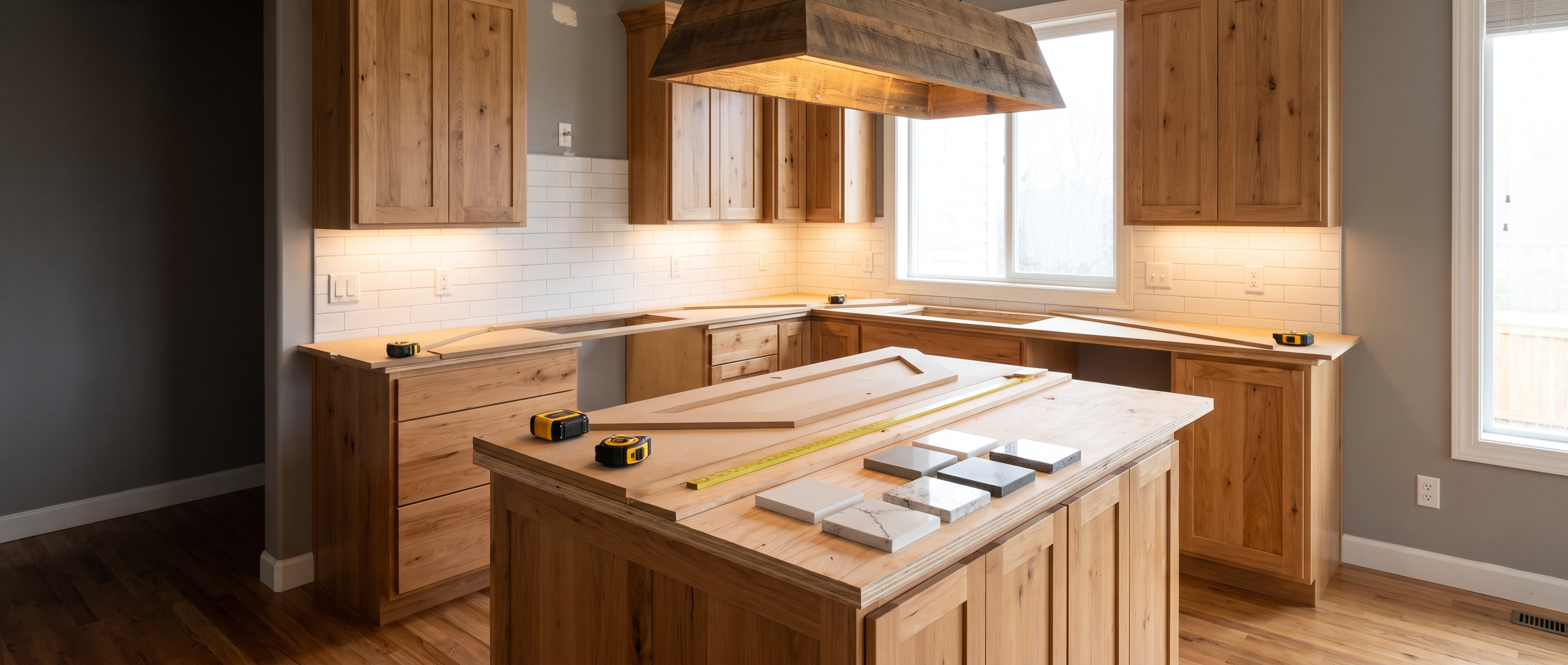
A kitchen range hood installation in Pierce County costs between $695 for a direct swap on an existing duct and $7,500 or more for an island hood with a new ceiling duct chase in 2026. Most of my clients spend $1,200 to $3,500 on their hood installation, depending on hood type, duct routing, and what the existing setup looks like. That range covers the hood unit, ductwork, electrical, exterior termination, and permits.
I’m Brad Zemke, owner of Pacific Remodeling here in Puyallup. I’ve spent over 20 years in the trades and have run my business in Pierce County since 2018. I’m a third-generation carpenter, and I coordinate with licensed HVAC contractors and electricians on every kitchen ventilation project. A range hood is one of those things most people don’t think about until the kitchen fills with smoke. Then it becomes the most important appliance in the room.
Kitchen Range Hood Installation Cost by Hood Type
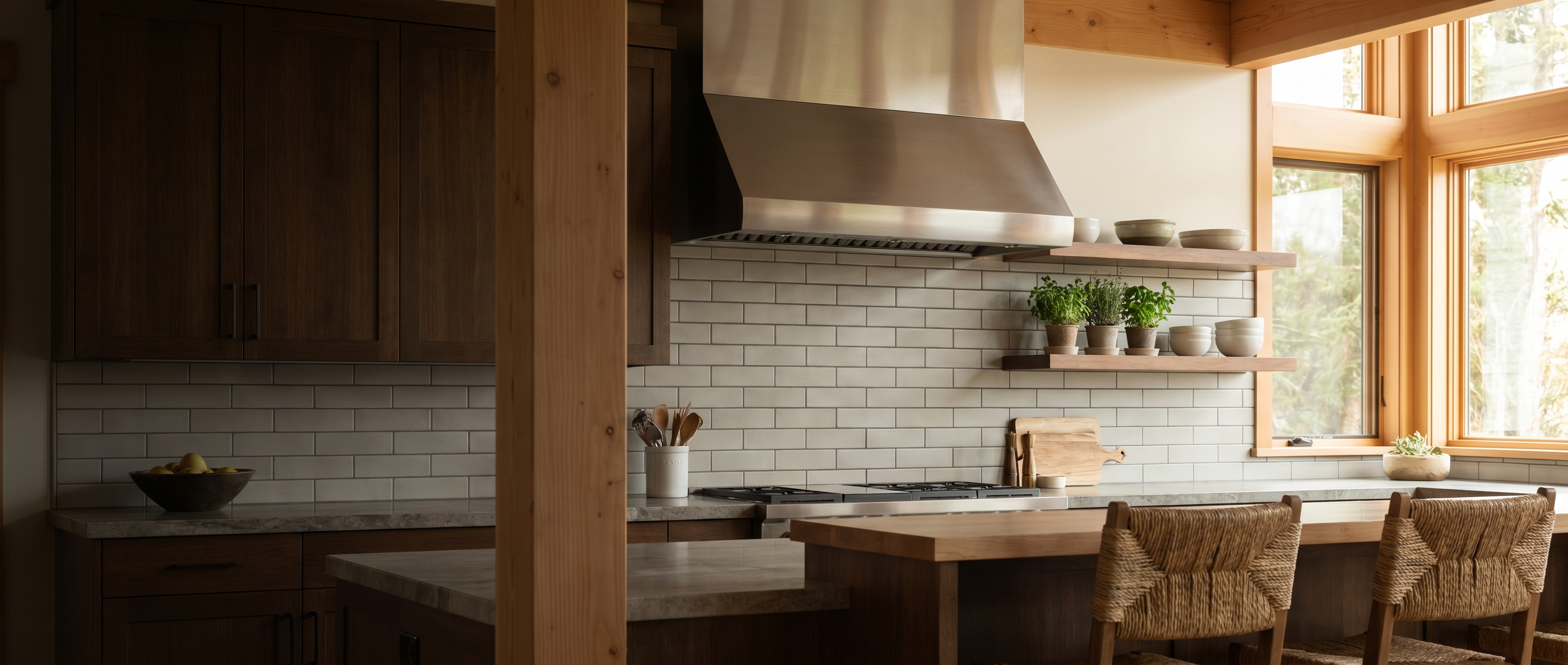
Here’s the quick reference. These numbers reflect installed costs on my projects right now in Pierce County, including the hood unit, labor, ductwork, and permits where required.
| Hood Type | Installed Cost (Pierce County, 2026) |
|---|---|
| Under-cabinet hood swap (existing duct) | $695 - $1,120 |
| Under-cabinet hood (new duct to exterior wall) | $1,100 - $2,200 |
| Wall-mount chimney hood (mid-range, new duct run) | $2,450 - $4,000 |
| Wall-mount chimney hood (premium) | $3,500 - $5,500 |
| Island/ceiling-mount hood (with duct chase) | $4,200 - $7,500 |
| Insert/liner hood (into custom cabinetry) | $1,200 - $2,800 |
| Downdraft/pop-up ventilation | $1,800 - $3,500 |
| Custom built-in hood (integrated into cabinetry) | $3,500 - $10,000+ |
Pierce County runs about 10 to 15% above national averages for this work. Licensed HVAC contractors in the Tacoma and Puyallup corridor bill $85 to $130 per hour. Electricians bill $110 to $160 per hour. Washington state requires licensed tradespeople for ductwork modifications and new electrical circuits, and the state handles inspections through L&I. That licensing adds overhead, but it also means your work passes inspection and holds up at resale.
Why the wide ranges? Duct routing is the single biggest cost variable. Replacing a hood in the same spot with an existing duct run to the exterior wall takes 2 to 3 hours. Running new ductwork through a ceiling, building a chase, and terminating through the roof can take 2 to 3 days. Same hood. Completely different installation cost.
What Drives the Cost: Duct Routing Is Everything
I tell every homeowner the same thing. The hood itself is usually the smaller part of the bill. The ductwork is where the money goes.
Here’s what each duct scenario actually costs in Pierce County:
| Duct Scenario | Labor Estimate | Notes |
|---|---|---|
| Swap hood, same location, existing duct | $150 - $350 | 2-3 hours total |
| New hood, reuse existing ductwork | $300 - $600 | Reconnect, seal, test |
| New duct run through exterior wall (short) | $400 - $800 | Core drill, cap, flash, seal |
| New duct run through interior wall/soffit | $600 - $1,400 | Per linear foot of duct plus penetrations |
| Island hood with ceiling duct chase | $1,200 - $3,000 | Framing, drywall, duct, finishing |
| Downdraft vent through crawlspace | $800 - $2,000 | Common in Pierce County pier-and-beam homes |
| New dedicated electrical circuit | $250 - $500 | WA-licensed electrician required |
I worked on a kitchen remodel in Bonney Lake last fall where the homeowner picked out a beautiful 36-inch wall-mount chimney hood. The hood itself cost $1,100. But the home was a 1970s split-level with no existing ductwork to the exterior. We had to route 12 feet of rigid galvanized duct through the soffit, cut a new exterior wall penetration, install a stainless cap with proper flashing for our PNW rain, and run a new dedicated circuit from the panel. The ductwork and electrical cost more than the hood. Total installed: $3,400. The homeowner was surprised, but once I walked through each line item, the numbers made sense.
That’s the story on most hood installations I do. The hood is $300 to $1,800 for most residential projects. The installation is $400 to $5,000+, depending entirely on how far and how hard the duct run is.
Duct Material Costs Per Linear Foot
| Duct Type | Cost/LF (installed) | When to Use |
|---|---|---|
| Flexible aluminum (4”-6”) | $8 - $18 | Short connections only, never long runs |
| Rigid galvanized round (6”-8”) | $15 - $30 | Standard residential, best airflow |
| Rigid galvanized rectangular | $20 - $40 | Inside soffits and cabinetry chases |
| Stainless steel (exposed) | $35 - $75 | Open-concept kitchens, industrial look |
| Insulated duct (attic/crawl runs) | $20 - $40 | Required in unconditioned spaces in PNW |
One thing I see contractors skip that I never skip: insulating duct runs in unconditioned spaces. In the Pacific Northwest, warm moist exhaust air condenses inside cold uninsulated duct during winter. Water drips back into the hood. Mold starts in the duct within a year or two. Always insulate duct runs through attics and crawlspaces. It adds $150 to $400 to the project and saves thousands in problems down the road.
How to Pick the Right Range Hood for Your Kitchen
Not every kitchen needs the same hood. The right choice depends on your cooktop, your kitchen layout, and your budget. Here’s how I help my clients think through it.
Match CFM to Your Cooktop
The rule of thumb is simple. For gas ranges, take the total BTU output and divide by 100. That’s your minimum CFM.
- A 40,000 BTU gas range needs at least 400 CFM
- A 60,000 BTU pro-style gas range needs at least 600 CFM
- Electric and induction ranges need 150 to 300 CFM
Most homeowners buy too little CFM or too much. Too little and the hood can’t keep up with a stir-fry on high heat. Too much and you trigger a makeup air requirement that adds $500 to $2,000 to the project.
Washington State Energy Code note: Homes built or substantially renovated under the WSEC require makeup air systems when exhaust exceeds 400 CFM in tightly sealed homes. A passive makeup air damper costs $300 to $800 installed. An active system runs $800 to $2,000. I’ve seen homeowners buy a 900 CFM hood for a kitchen that only needed 400 CFM, then get hit with the makeup air requirement at inspection. Match the hood to the cooktop, not to the biggest number on the shelf.
Hood Types and What They Cost
Under-cabinet hoods mount under your wall cabinets above the range. Simplest install. Best for kitchens where the range sits against an exterior wall. The duct run is usually short and straight.
- Budget: Broan-NuTone 413004, $60 to $90 (300 CFM)
- Mid-range: Zline KB-30, $300 to $400 (400 CFM, baffle filters)
- Premium: Bosch HUI54452UC, $600 to $750 (400 CFM, whisper-quiet at 48 dBA)
Wall-mount chimney hoods make a visual statement. The exposed chimney looks sharp in an open kitchen, but you need enough wall space above the range and a clear path to route the duct.
- Budget: Cosmo COS-668WRCS75, $200 to $280 (380 CFM)
- Popular mid-range: Zline KL3-30, $350 to $500 (400 CFM)
- Premium: Zephyr Brisas ZBR-E30AG, $1,000 to $1,400 (700 CFM)
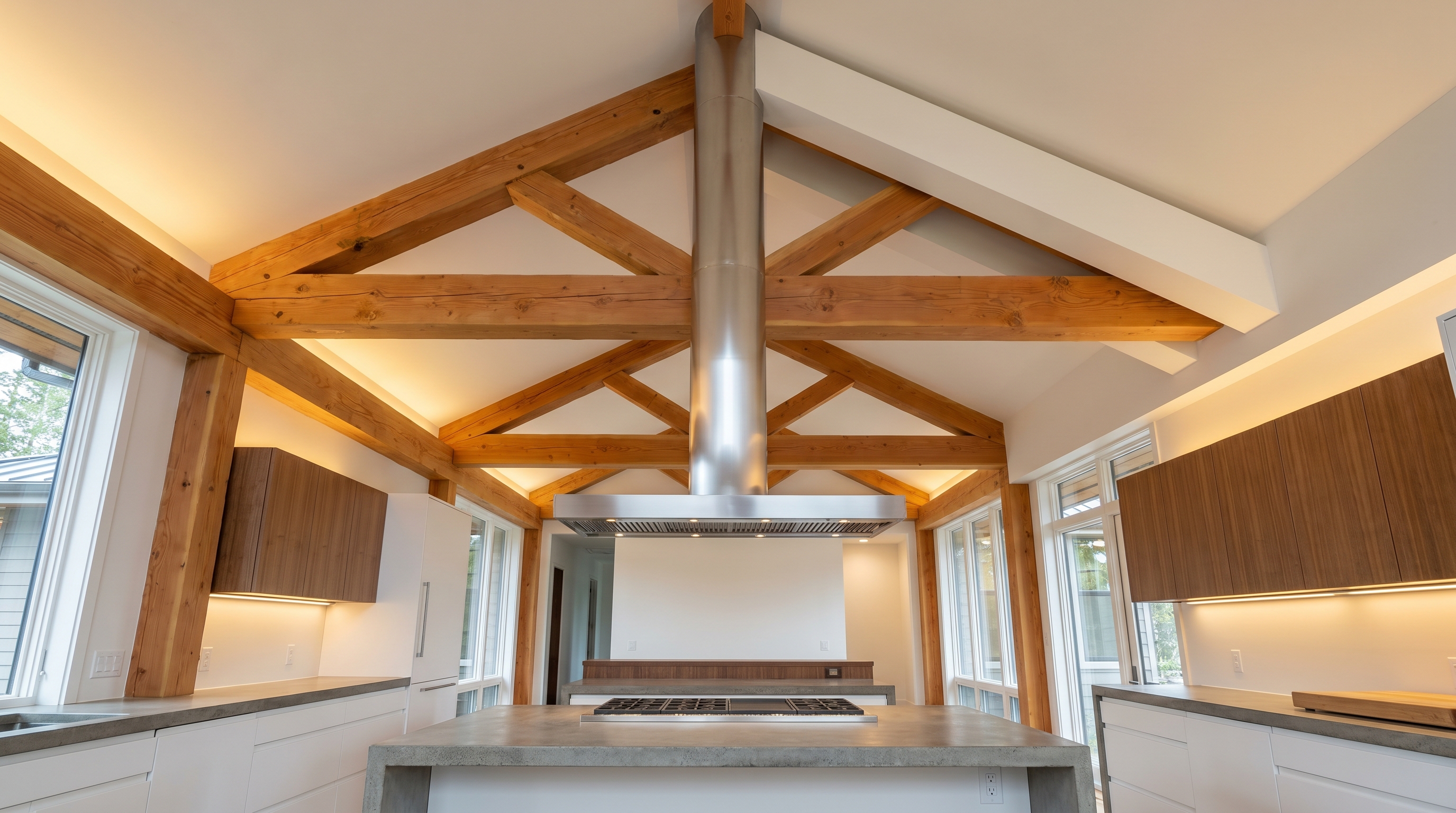
Island hoods hang from the ceiling over a cooktop in a kitchen island. These are the most expensive to install because you need a ceiling duct chase and a long duct run to the exterior or roof. I covered island cooktop costs in detail in my kitchen island remodel cost post.
- Budget: Cosmo 668ICS75, $350 to $450 (380 CFM)
- Mid-range: Zephyr Milano ZMI-M90AG, $1,200 to $1,800 (600 CFM)
- Premium: Vent-A-Hood PRPH18-236, $2,000 to $2,800 (600 CFM, quietest on the market)
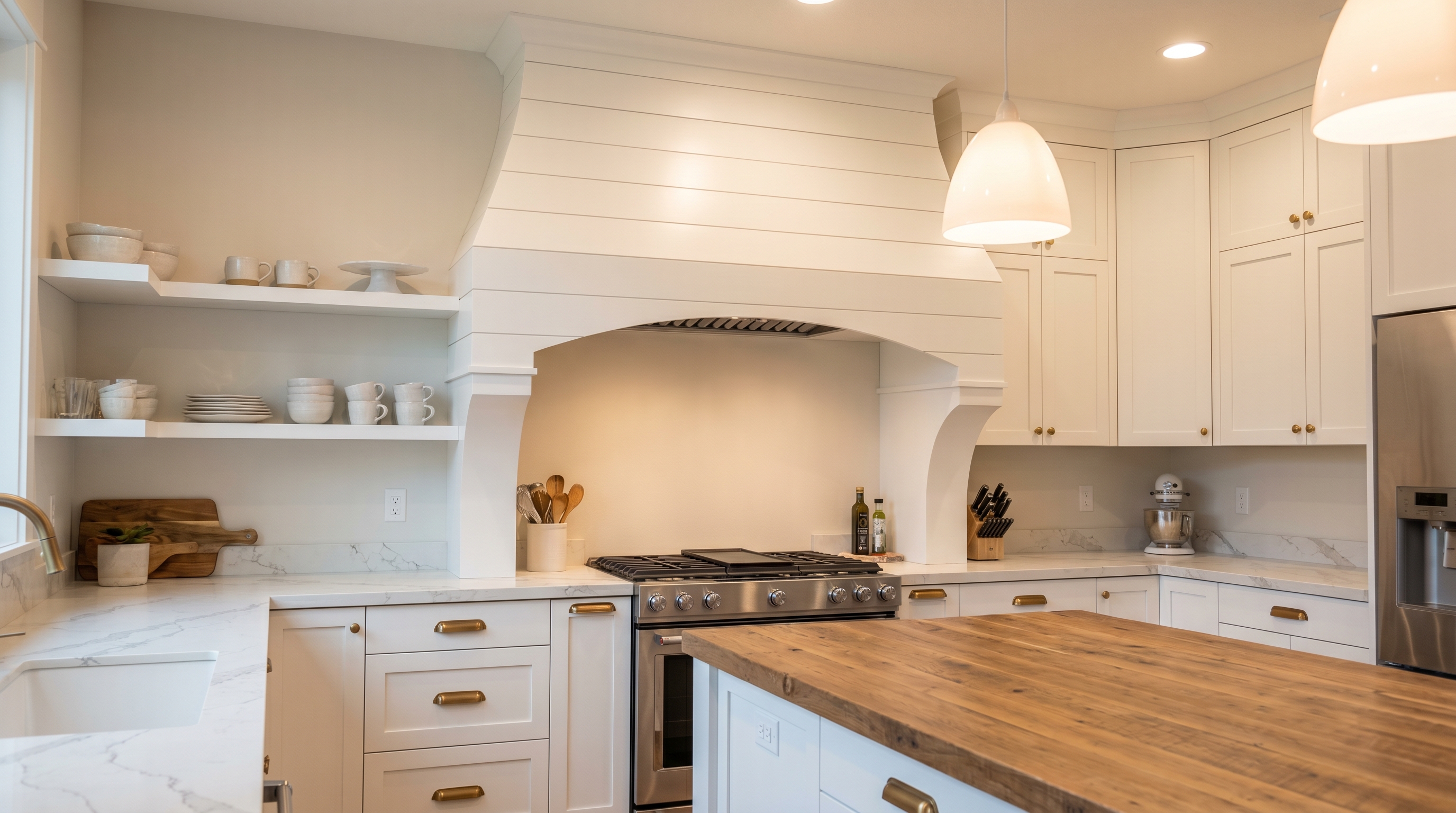
Insert/liner hoods hide inside custom cabinetry or a decorative wood hood surround. You see the cabinetry, not the hood. Popular in farmhouse and transitional kitchens. I see a lot of these on farmhouse kitchen remodels in our area.
- Mid-range: Faber IN-SERT30SS, $400 to $550 (600 CFM)
- Premium: Vent-A-Hood SLH18-236, $700 to $950 (600 CFM)
Downdraft ventilation rises from behind or beside the cooktop and pulls air down instead of up. Useful when a ceiling hood isn’t practical, like under a vaulted ceiling or in an island where you don’t want the visual bulk of a hanging hood.
- Budget: Broan RM519004, $250 to $350 (300 CFM)
- Mid-range: KitchenAid KVUB606DSS, $900 to $1,200 (585 CFM)
Real Project: Wall-Mount Hood Install in a 1960s Tacoma Ranch
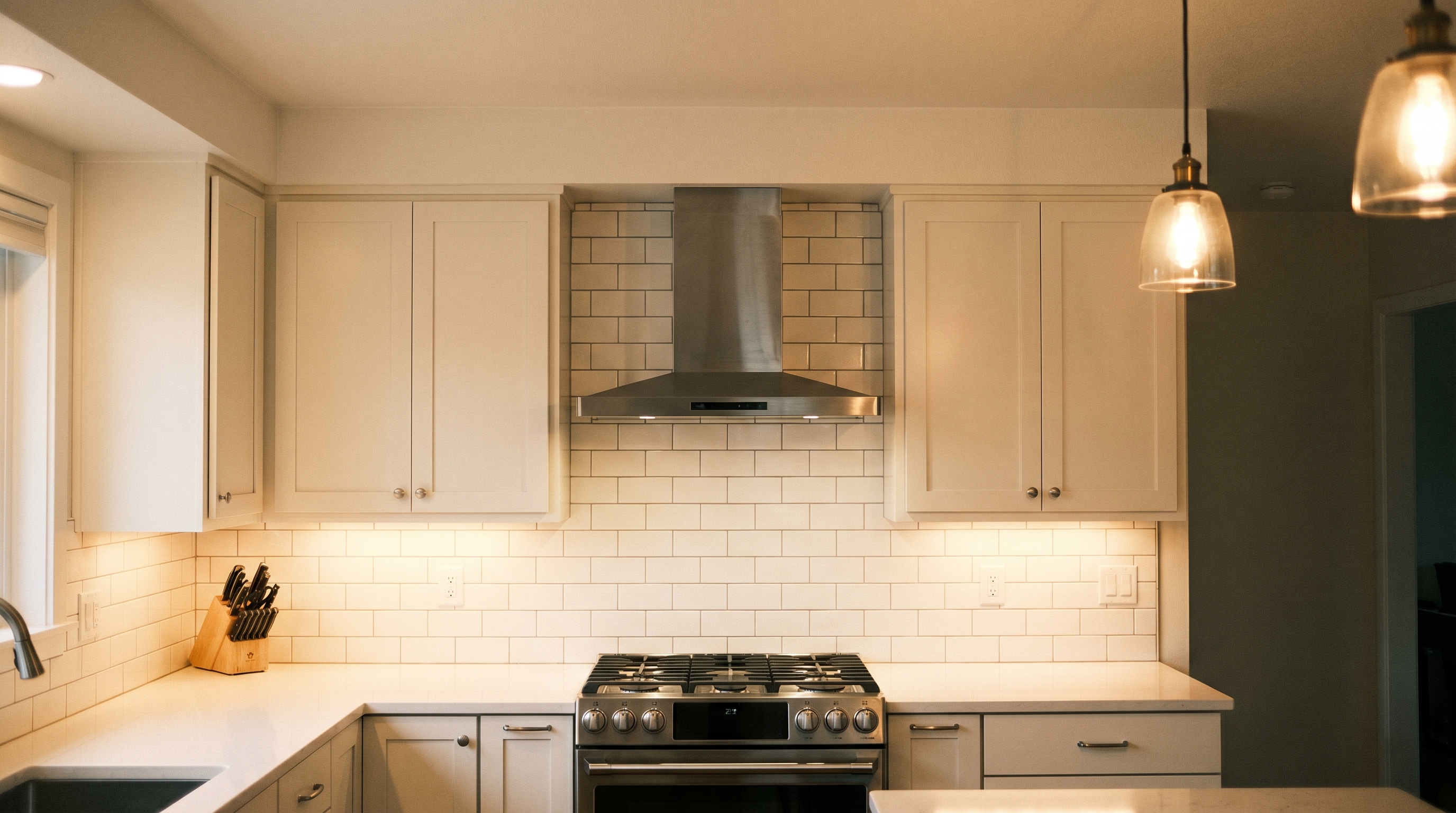
I want to walk through a real project so you can see exactly where the money goes. This was a kitchen remodel in Tacoma I completed last year. The homeowners were upgrading from a 25-year-old recirculating hood that did nothing but make noise. They wanted a proper ducted wall-mount chimney hood.
The home: 1962 ranch, original galvanized plumbing (mostly replaced), 100-amp panel upgraded to 200-amp during a previous remodel. Kitchen against an exterior wall. No existing ductwork for the range hood because it had always been recirculating.
The hood: Zline KL3-36 (36-inch, 400 CFM, stainless steel). Cost: $520.
The work:
| Line Item | Cost |
|---|---|
| Zline KL3-36 hood unit | $520 |
| Rigid 6” galvanized duct (10 LF) | $180 |
| Duct fittings, mastic sealant, tape | $45 |
| Exterior wall penetration (core drill, flashing) | $380 |
| Stainless steel exterior wall cap | $75 |
| Hood mounting and duct connection | $450 |
| Drywall patch and paint (where soffit was opened) | $320 |
| Mechanical permit (Pierce County) | $120 |
| Total | $2,090 |
No new electrical circuit was needed because the previous recirculating hood had a dedicated outlet. If we’d needed to add a circuit, that would have added $300 to $500.
The homeowners were cooking on a 40,000 BTU gas range. The 400 CFM hood matched the output perfectly without triggering the makeup air requirement. They noticed the difference immediately. No more grease film on the cabinets above the stove. No more smoke lingering when they sear steaks. The kitchen actually stays clean now.
That $2,090 total is right in the middle of what I see for wall-mount chimney hood installations in Pierce County. It’s a real number from a real project.
PNW Problems: Why Your Range Hood Matters More Here
I’ve built and remodeled in Hawaii, Alaska, Louisiana, Colorado, and Washington. Every climate has its issues. In the Pacific Northwest, moisture is the enemy of everything, and your range hood is a front-line defense.
Cooking Moisture in an Already-Humid Climate
PNW kitchens already operate in high ambient humidity, 40 to 70% indoors during winter. Every pot of boiling water, every steaming pan adds more moisture to air that’s already saturated. Without proper exhaust ventilation, that moisture settles into your cabinetry, your ceiling, and your walls. I’ve pulled down kitchen soffits in Lakewood and Spanaway homes and found mold growing behind the drywall directly above where the range sat. The homeowner had been using a recirculating hood for 15 years. It filtered grease but pushed all that moisture right back into the room.
A ducted hood sends moisture, grease, and combustion gases outside. Period. In the PNW, that’s not a convenience upgrade. It’s a moisture management strategy.
Gas Ranges Need Ducted Hoods
A lot of Pierce County homes built before 2000 have natural gas ranges. Gas combustion produces carbon dioxide and water vapor. A recirculating hood with a charcoal filter catches some grease particles but does nothing for combustion gases or moisture. For gas range kitchens, a ducted hood isn’t optional. It’s a health issue.
If you’re planning a full kitchen remodel and switching from gas to induction, your ventilation needs drop significantly. But if you’re keeping gas, invest in proper ducted exhaust. I wrote about the full electrical picture in my kitchen electrical update cost post, including what it costs to run the circuits for induction cooktops.
Duct Routing in Older PNW Homes
Pierce County’s housing stock creates specific challenges for range hood ductwork:
-
1940s to 1970s ranches with crawlspaces (common in Puyallup, Lakewood, Spanaway): Routing duct through the floor to the crawlspace works for downdraft vents, but the duct must be insulated. Uninsulated flex duct in a wet PNW crawlspace develops condensation problems within 2 years. I add $150 to $400 for proper insulated duct wrap on every crawlspace run.
-
Homes with vaulted ceilings (common in 1970s and 1980s Pierce County construction): Island hoods under vaulted ceilings need extended chimney sections. That’s an extra $100 to $300 for the extension kit, plus the decorative soffit or exposed chase adds $500 to $2,000.
-
Flat and low-slope roofs (mid-century homes in University Place and parts of Tacoma): Vertical roof termination requires a special cap with a proper flashing boot, $80 to $150 for the cap plus $300 to $600 for installation. Roof penetrations in PNW demand careful sealing. A sloppy install becomes a leak source within a year.
10 Mistakes I See Homeowners Make on Range Hood Projects
I’ve seen every one of these. Some I’ve fixed on other contractors’ work. A couple I learned the hard way early in my career.
-
Buying a hood based on looks instead of CFM. That slim European-style hood looks great on Pinterest. But if it only moves 200 CFM over your 60,000 BTU gas range, it’s decoration, not ventilation. Always match CFM to cooktop output first.
-
Using flexible duct for long runs. Flex duct is cheaper and easier to install. It also reduces effective airflow by 20 to 40% on runs longer than 8 feet because of the corrugated interior. I use rigid galvanized for anything over 6 feet and only transition to short flex at connection points.
-
Skipping the makeup air requirement. Hoods over 400 CFM in homes built or renovated to current Washington energy code require makeup air. Without it, the hood can depressurize the house and backdraft your furnace or water heater. That’s carbon monoxide in your home. I’ve watched inspectors red-tag kitchen remodels over this.
-
Installing a recirculating hood over a gas range. Charcoal filters do not capture combustion gases or moisture. In a tight PNW home, this is a real air quality problem, not a minor inconvenience.
-
Running uninsulated duct through the attic. In Pierce County winters, warm exhaust air condenses inside cold uninsulated duct. Water drips back down into the hood and promotes mold in the duct. Always insulate.
-
Using the wrong duct diameter. Most 400 to 600 CFM hoods require 6-inch or 7-inch round duct. I’ve seen homeowners connect a new hood to old 4-inch duct and wonder why it doesn’t work. Undersized duct chokes airflow and can void the manufacturer’s warranty.
-
Forgetting the exterior damper. Without a working damper on the wall or roof cap, outdoor air, insects, and birds enter the duct when the hood is off. PNW humidity causes dampers to seize over time. Clean or replace them yearly.
-
Mounting the hood too high. best height is 28 to 36 inches above the cooktop for gas ranges, 20 to 24 inches for electric. Too high and the hood misses grease and smoke. I see wall-mount hoods installed at 40 inches or higher because the homeowner wanted more headroom. At that height, a 400 CFM hood barely catches anything.
-
Ignoring hood depth versus cooktop depth. The hood should be at least as wide as your cooktop, and ideally 3 to 6 inches wider on each side. A standard 24-inch deep cabinet-depth hood doesn’t always capture rear burner smoke on a 30-inch deep pro-style range.
-
Never cleaning or replacing filters. Grease-caked filters cut airflow by 50% or more and become a fire hazard. Baffle filters go in the dishwasher monthly. Mesh filters need cleaning every 2 to 3 weeks in an active kitchen. Carbon filters on recirculating hoods need replacement every 3 to 6 months.
Do You Need a Permit for a Range Hood in Pierce County?
It depends on scope. Here’s the breakdown:
- Replacing a hood in the same location with no duct changes: Typically no permit required. Straight swap.
- Adding ductwork or cutting a new exterior wall penetration: Mechanical permit required from Pierce County, approximately $85 to $150.
- Adding a new dedicated electrical circuit: Electrical permit required, approximately $85 to $150, and the work must be done by a WA-licensed electrician.
- Any gas line work (if you’re relocating the range): Licensed plumber or gas fitter required, separate permit.
I covered the full permit process in my remodeling permits guide for Puyallup. The short version: unpermitted penetrations and electrical work discovered during a home inspection at resale can trigger required remediation. Pull the permit. It’s $85 to $150 for the permit versus thousands in remediation if a buyer’s inspector flags unpermitted work.
Checklist before you start your range hood project:
- Measure your cooktop width and total BTU output (gas) or wattage (electric/induction)
- Calculate minimum CFM: total BTU divided by 100 for gas, 150-300 CFM for electric
- Check your electrical panel for available circuit capacity
- Identify the shortest duct path to an exterior wall or roof
- Measure clearance between cooktop and bottom of cabinets or ceiling
- Check whether your home’s energy envelope triggers the makeup air requirement (400+ CFM)
- Verify your contractor’s WA L&I registration at lni.wa.gov
- Budget 15-20% above the quoted price for surprises behind walls
Range Hood Installation as Part of a Bigger Kitchen Remodel
Most of the hood installations I do happen during a larger kitchen remodel. When you’re already tearing out cabinets and opening walls, adding or upgrading a range hood is significantly cheaper because the access is already there. No separate drywall patching. No separate painting. The electrician is already on site running circuits for outlets and lighting.
If you’re planning a kitchen remodel anyway, that’s the time to upgrade your ventilation. Doing it as a standalone project after the remodel is finished costs 30 to 50% more because you’re paying for access twice, opening finished walls, patching, painting, and touching up work you already paid for once.
Here’s how range hood installation fits into common kitchen remodel scenarios:
- During a full gut remodel: Hood install adds $800 to $2,000 to the project because duct routing is easy with walls open. I build this into every kitchen remodel timeline.
- During a cabinet replacement: Good time to upgrade to a chimney hood or insert hood since the upper cabinets are coming down anyway. Adds $1,200 to $3,500.
- As a standalone project (no other work): Expect $1,500 to $5,000+ because you’re paying separately for access, patching, and finishing.
If you’re weighing whether a kitchen remodel is worth the investment, I broke down the numbers in my kitchen remodel ROI guide. Proper ventilation is one of those upgrades that doesn’t show up on a spreadsheet but absolutely affects how the kitchen lives day to day.
Frequently Asked Questions
How much does it cost to install a range hood in Pierce County in 2026?
Expect $695 to $1,120 for a basic under-cabinet hood swap with existing ductwork. A new wall-mount chimney hood with a new duct run costs $2,450 to $4,000 installed. Island hoods that need a ceiling duct chase run $4,200 to $7,500 or more. The biggest cost variable is duct routing, not the hood itself.
Should I get a ducted or ductless range hood?
Ducted, almost always. A ductless recirculating hood filters grease but pushes moisture, odors, and combustion gases right back into your kitchen. In the Pacific Northwest where indoor humidity is already high, that’s a recipe for mold in your cabinetry and walls. I’ve pulled apart kitchens where a recirculating hood ran for a decade and the damage behind the drywall was serious. If you have a gas range, ducted ventilation is the only safe option. The only time I recommend ductless is when exterior venting is genuinely impossible, like in a condo where the HOA prohibits exterior penetrations.
Can I install a range hood myself?
A direct swap in the same location with an existing outlet and existing duct, yes, most handy homeowners can handle that. But anything involving new ductwork, wall penetrations, or electrical circuits requires permits and licensed tradespeople in Washington state. Duct modifications need a mechanical permit and inspection. Electrical work requires a WA-licensed electrician. DIY duct penetrations done without proper flashing are one of the most common leak sources I see during kitchen remodels in older Pierce County homes.
How long does range hood installation take?
A direct swap takes 2 to 3 hours. A new wall-mount chimney hood with a short duct run to an exterior wall takes a full day. An island hood installation with a ceiling duct chase takes 2 to 3 days. If you need a new electrical circuit, add half a day for the electrician. Most projects I manage land between 1 and 2 days total.
What CFM range hood do I need?
For gas ranges, divide total BTU output by 100. A standard 40,000 BTU gas range needs 400 CFM. A pro-style 60,000 BTU range needs 600 CFM. For electric and induction cooktops, 150 to 300 CFM handles most residential cooking. Keep in mind that Washington energy code requires makeup air systems for hoods over 400 CFM in tightly sealed homes. Oversizing your hood means extra cost for the makeup air system, so match the hood to the cooktop rather than just buying the most powerful option available.
Ready to Upgrade Your Kitchen Ventilation?
If you’re thinking about a range hood upgrade or you’re planning a kitchen remodel that includes new ventilation, I’d like to help you figure out the right hood and the real cost for your specific home. Every house is different. The age of the home, the location of the range, the existing ductwork, and the electrical panel all affect the final number.
I serve homeowners across Pierce County, including Puyallup, Tacoma, Sumner, Bonney Lake, Edgewood, South Hill, and the surrounding areas.
Call me at (253) 392-9266 or contact us online to set up a free consultation. I’ll walk through your kitchen, assess your ductwork options, and give you a straight answer on what the project will cost. No surprises. No hidden fees.
If this were my mom’s kitchen, I’d want someone to be honest about the cost and do the work right. That’s the standard I hold for every project.
Brad Zemke, Owner Pacific Remodeling LLC Puyallup, WA