The remodel vs ADU vs addition decision starts with one question: what problem do you need to solve? Choose a remodel if your house has enough space but works poorly, with a mid-range kitchen running $35,000 to $88,000. Choose an addition if your household needs more room in the main house. Choose an ADU if someone needs a separate home on your lot, from $65,000 for a basement conversion to $400,000+ for a new detached unit.
I’m a third-generation carpenter and Air Force veteran with 20+ years in the trades. I started Pacific Remodeling in Puyallup in 2018, and I’ve finished more than 500 projects since then, from large remodels to small fixes.
Remodel vs ADU vs Addition: Where’s the Line Between Them?
Homeowners call me with this exact question. Two tests settle most of it. Does the project add a new structure? Can someone live in the space on their own, with a place to sleep, cook, and bathe?
| Project | Adds New Structure? | Creates a Separate Home? |
|---|---|---|
| Remodel | No | No |
| Addition | Yes | No |
| ADU in an existing garage or basement | No | Yes |
| New attached or detached ADU | Yes | Yes |
Here’s what each one means in plain language:
- Remodel: You change space you already have. New cabinets, a moved wall, and a bigger shower all count.
- Addition: You make the main house bigger by building out or up. Everyone still lives as one household.
- ADU: You create a second home on the same lot. ADU stands for accessory dwelling unit, and a detached one often goes by DADU.
Where the Line Gets Blurry
- Garage conversion. Turn a garage into a family room and you have a remodel, but add a kitchen, a bathroom, and a place to sleep and you have an ADU with a different permit path. Same walls, different project.
- Basement. The same test applies. A rec room stays part of the house. A unit with its own kitchen and bath counts as an ADU.
- Attached ADU. From the street, it can look exactly like an addition. The separate living setup changes what the code calls it.
- Bedroom suite with a kitchenette. This one sits closest to the line. Ask your plan reviewer before you finalize drawings, because a cooking setup can change how your jurisdiction classifies the space.
The label matters. It decides your permit path, your fees, and the rules you build under, so settle it before anyone draws a plan.
Do I Build Additions and ADUs?
Yes, I do home additions. I also build ADUs and detached accessory dwelling units, in compliance with the new state laws that make it easier for you to build a detached unit, even on a smaller lot. You can see the rest of my work on my remodeling and construction services page.
What Does Each Option Cost in Pierce County?
Here’s the remodel vs ADU vs addition cost comparison I’d want in front of me if I owned your house. The remodel and ADU numbers come from my own price ranges.
| Project | Cost Range | Construction Time |
|---|---|---|
| Kitchen refresh | $14,000 to $35,000 | 2 to 3 weeks |
| Guest or hall bath remodel | $13,000 to $32,000 | 3 to 5 weeks |
| Mid-range master bath remodel | $43,000 to $72,000 | 3 to 5 weeks, 6 to 8 if complex |
| Mid-range full kitchen remodel | $35,000 to $88,000 | 6 to 10 weeks |
| Basement ADU conversion | $65,000 to $160,000 | 8 to 14 weeks, plus 4 to 8 for permits |
| Garage ADU conversion | $78,000 to $190,000 | 8 to 14 weeks, plus 4 to 8 for permits |
| New detached ADU | $155,000 to $400,000+ | 12 to 20 weeks, plus 4 to 8 for permits |
| Ground-level addition | $150 to $350 per sq ft (published Seattle-area range) | Depends on the plan |
| Second-story addition | $200 to $600 per sq ft (published Seattle-area range) | Depends on the plan |
Read the addition numbers carefully. I don’t have a Pierce County average for additions, and I won’t make one up. Those figures come from published Seattle-area guides, so use them for rough planning and get an itemized local bid before you set a budget.
At $150 to $350 per square foot, a 300-square-foot ground-level addition pencils out to $45,000 to $105,000. Your foundation, roofline, and existing systems can push that number around, so ask for a written schedule with any addition bid.
Whatever number you land on, add 15% to 20% for surprises. On a $100,000 project, that means holding back another $15,000 to $20,000. There will be surprises.
Why Real Timelines Run Longer Than TV
TV shows compress a 3-month job into a 30-minute episode and skip the permits, the inspections, the wait for materials, and the surprises behind the walls, which is why real timelines shock so many homeowners. Three things eat the calendar:
- Design and selections. You make these decisions before anyone swings a hammer.
- Permits and inspections. Inspectors come out multiple times, and that step isn’t optional.
- Material lead times. Custom cabinets and specialty tile can take 4 to 8 weeks to arrive.
Add it up and a garage conversion runs 12 to 22 weeks from permits to finish. A new detached ADU runs 16 to 28 weeks. Design time comes on top of that.
Good, fast, or cheap. Pick two. I say that regularly, because setting the expectation early saves everyone grief.
When a Remodel Beats Adding Square Footage
Start here. I look at the house you already own before I talk about pouring a foundation, because the cheapest square foot is usually the one you already paid for.
A remodel usually wins if:
- You have enough bedrooms, but the kitchen feels cramped.
- A wall separates your kitchen from a dining room nobody uses.
- Your master bath has the space but a bad layout.
- Your real complaint involves worn-out finishes, not a shortage of rooms.
Run the math before you build out. Removing a load-bearing wall adds $4,000 to $13,000 to a kitchen project, and that can solve the same crowding problem as a 300-square-foot addition at $45,000 or more. Look at what an open concept kitchen remodel costs first, and check my Puyallup bathroom remodel cost guide if the bath drives your frustration.
What Living Through a Remodel Feels Like
You can stay in your home during a kitchen remodel. I set up dust barriers, but you’ll still go without a working kitchen for weeks. That part hits hardest, so plan for it.
You don’t need to move out for a bathroom remodel if you have a second bathroom. A remodel does have one hard limit. It can’t create a bedroom where no room exists.
Resale check: A mid-range kitchen returns 60% to 80% at resale, a minor refresh returns 75% to 85%, and a mid-range bath returns 60% to 70%.
When an Addition Makes More Sense
An addition fits when your family has truly outgrown the house and you want everyone under one roof. Another bedroom, a primary suite, or a bigger family room all point this way.
On the flip side, additions cost more than most people expect, because you pay for things a remodel skips:
- A new foundation, or engineering to carry a second story
- Framing and a roof that ties into the old one
- Siding and roofing that match the existing house
- Extended heat, plumbing, and electrical
- A bigger electrical panel, if your old one can’t carry the load
Building Out or Building Up
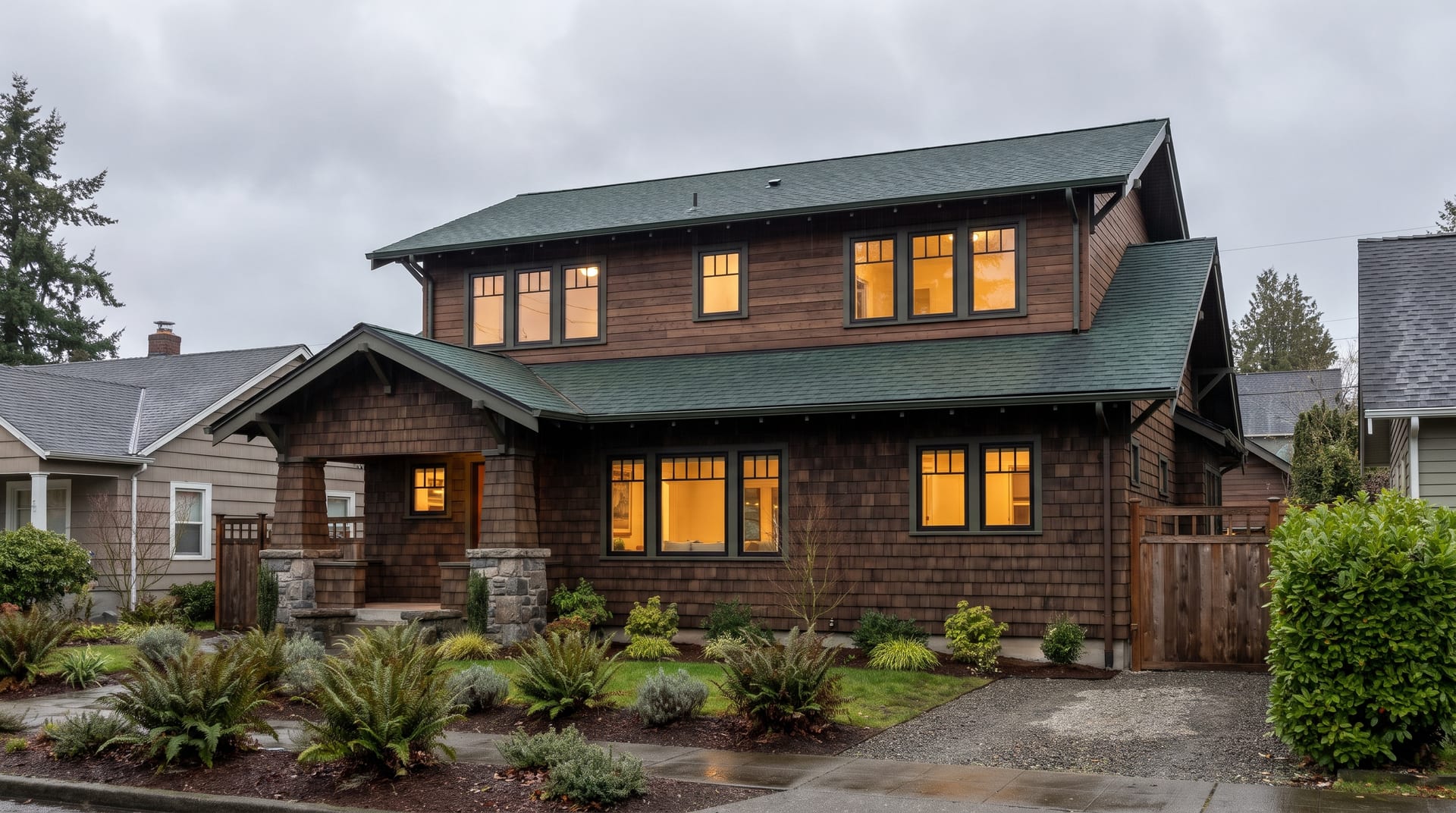
Building out costs less per square foot in the published ranges, but it eats yard and has to clear your setbacks. Building up keeps your yard, but your existing foundation and framing have to carry the new load, and you’ll live under a construction zone.
On older Pacific Northwest houses, I want to see the foundation and framing before I’d talk about a second story at all. Touch one old system and you often have to bring others up to current code. That’s a common surprise in older homes around Tacoma and Lakewood, and it belongs in your budget from day one.
The Joint Between Old and New
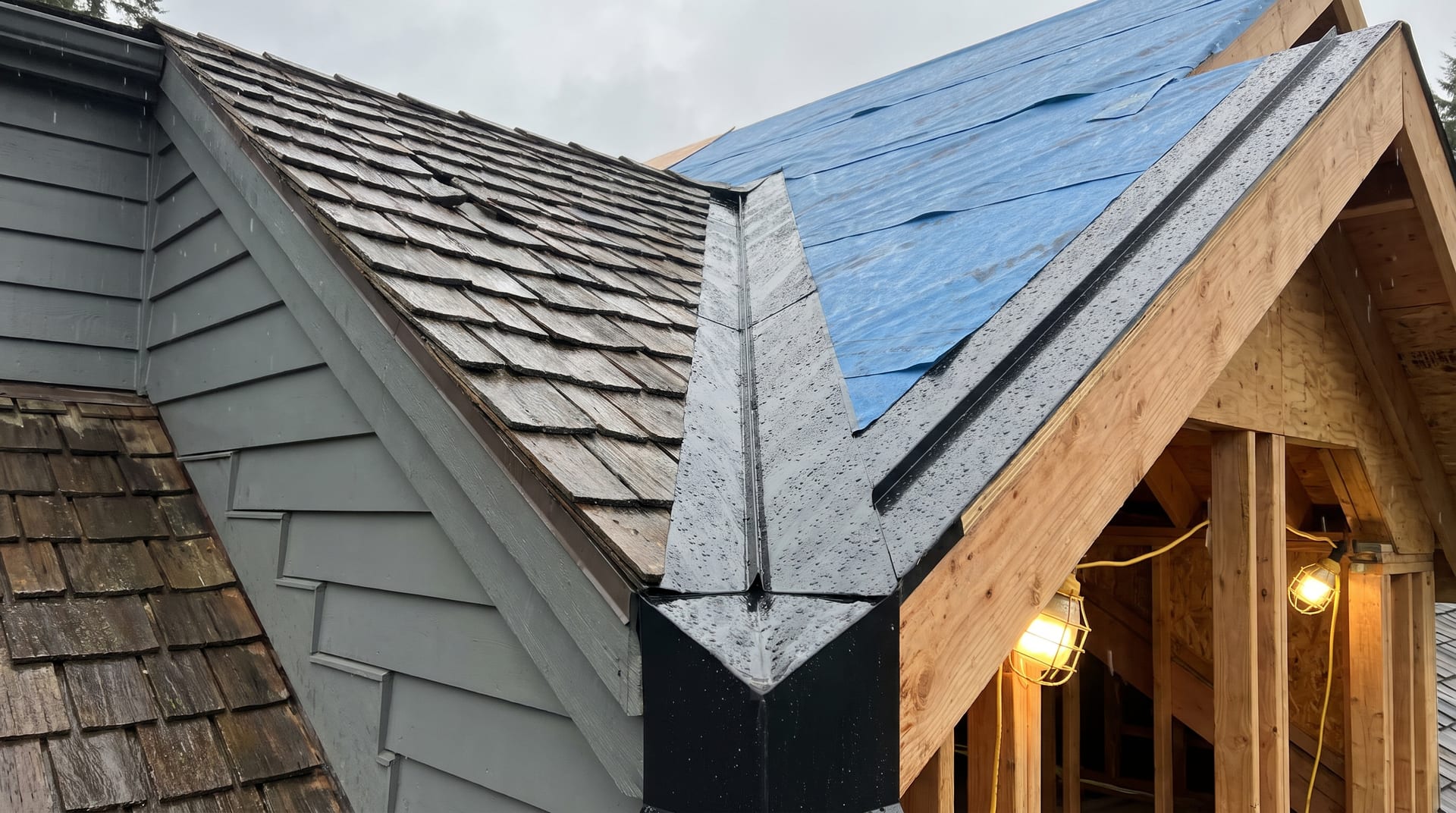
In Western Washington, water goes straight for the joint between the old roof and the new one. I spent 5 years as a B-52 crew chief in the Air Force, and I still treat flashing like a checklist item. You don’t skip steps.
I’ve worked from Alaska to Guam, and every climate teaches you something different about materials. Here, moisture and rot stay the #1 enemy.
Don’t build an addition for resale alone. One 2024 Portland data set showed a primary suite addition recouping about 24% of its cost. Portland isn’t Puyallup, so pull local comps, but I’d build an addition because your family needs the room, not for the payback.
When an ADU Is the Right Call
An ADU wins when someone needs their own front door.
It fits best if:
- An aging parent wants to live close and keep their independence.
- An adult child needs a place to land.
- You want rental income, which typically runs $1,200 to $2,000 a month.
- You want a property value boost in the $100,000 to $200,000 range.
Run the rental math honestly. A $190,000 detached ADU that rents for $1,600 a month grosses $19,200 a year, which means roughly 10 years just to gross the build cost, and that’s before loan interest, taxes, insurance, vacancy, and maintenance.
Garage, Basement, or Detached?
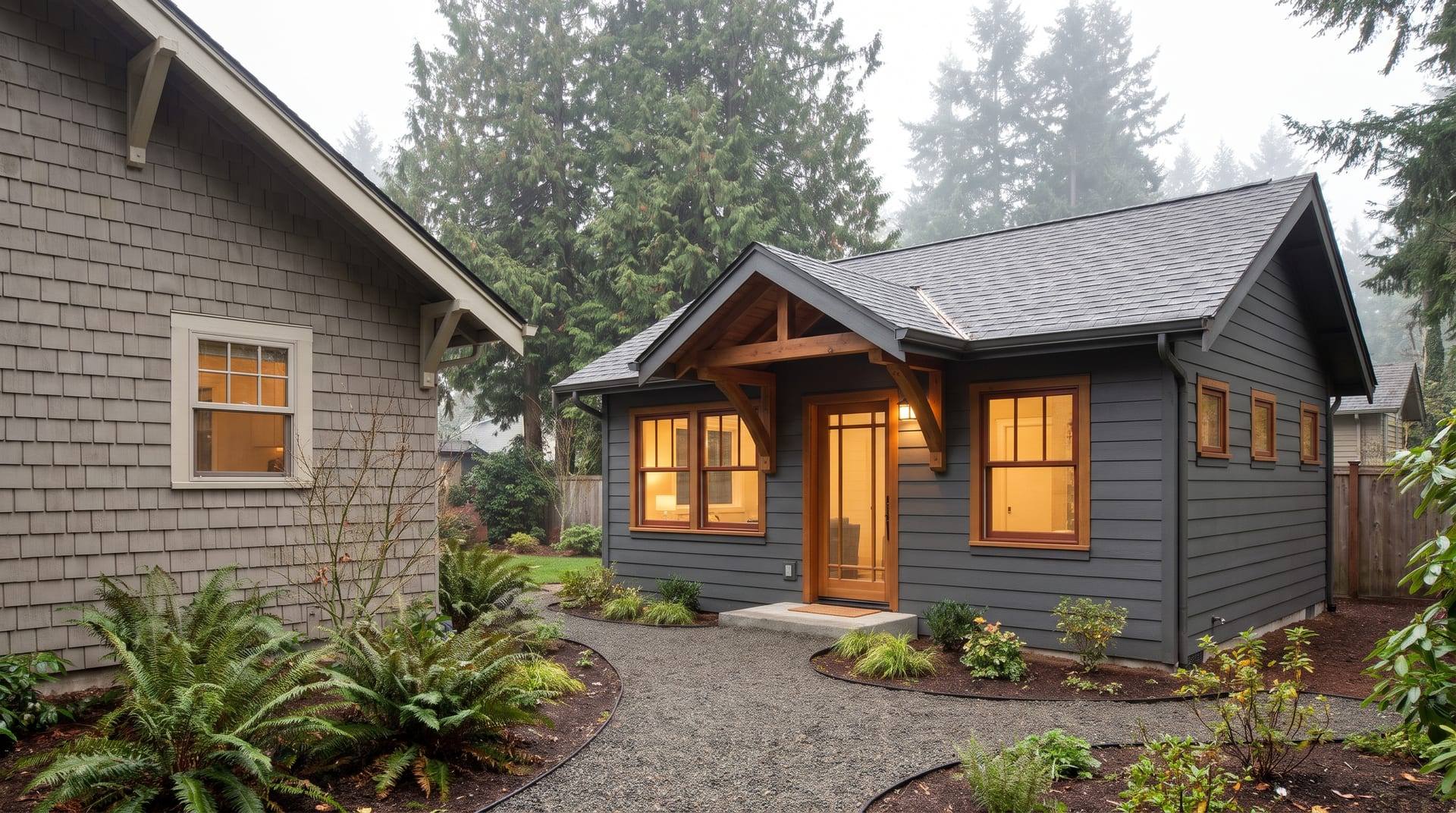
- Basement conversion ($65,000 to $160,000). You already have the shell. Plan for egress, ceiling height, and moisture control, because Pacific Northwest basements don’t stay dry on their own.
- Garage conversion ($78,000 to $190,000). The structure already stands, but you lose the parking and storage. You also need heat. Published pricing puts a single-zone Mitsubishi ductless mini split at about $3,800 to $6,800 installed.
- New detached ADU ($155,000 to $400,000+). You get the most privacy and the least disruption inside your main house, and your kitchen keeps working. You also pay for a new foundation, a new roof, and utility work across your yard.
I’d price a conversion first if you already have a usable garage or basement. If you want more detail on the build itself, start with my page on ADU construction in Puyallup.
The Pierce County Rules That Can Decide for You
If your lot runs on septic, sits inside a hazard zone, or lacks room for setbacks, the rules can knock out your favorite option before you spend a dollar on drawings. Check these first.
Find Out Who Controls Your Lot
Your mailing address may say Puyallup while your lot sits in unincorporated Pierce County, and that one detail decides which code, which fee schedule, and which permit counter you deal with for the whole project.
Much of South Hill and Graham falls under county rules. Tacoma, Sumner, Bonney Lake, Edgewood, and Lakewood each have their own city rules. If you run on septic, which I’d check on any rural lot out toward Graham, ask whether the system can carry another unit.
Puyallup’s ADU Rules
- Washington’s HB 1337 took effect in 2025, and Puyallup adopted Ordinance 3324 in June 2025.
- You can build an ADU up to 1,000 square feet.
- You don’t have to live on the property.
- State law caps ADU impact fees at 50% of what the primary home would pay.
Check this first in Puyallup: The city prohibits ADUs in its lahar (volcanic hazard) zone, except within 1/2 mile of the valley base. Confirm your parcel with city planning staff before you pay for plans.
Fees in Unincorporated Pierce County
- On February 1, 2026, most county fees rose about 20%, and flat-rate building and fire fees rose 15%.
- The county also added a 3% technology fee and a $150 administrative base fee.
- The county’s park impact fee sits at $4,010 as of that date.
- The county passed Ordinance O2026-531 on June 30. It moves school and park impact fees to bedroom-based rates, phasing in through 2030, so your bedroom count can change what you pay.
- Your application vests when you pay, not when you submit. Pay once your plans are final.
Remodels usually face less of this. Bathroom permits run $250 to $1,500, and kitchens need permits for wall moves, plumbing relocation, and electrical work. My guide to remodeling permits in Puyallup covers the details.
Which One Fits Your Situation?
- The space exists, but it works poorly: Remodel.
- Your family needs another bedroom or a bigger living area: Addition.
- A parent or adult child needs their own front door: ADU.
- You want rental income: ADU. Price a garage or basement conversion first.
- You want the least disruption inside the house: Detached ADU, if your lot allows it.
- Your budget tops out under $65,000: Remodel, since that sits below the low end of my ADU ranges.
If this was my mom’s house, I’d start with the least expensive project that solves the real problem. Most remodel vs ADU vs addition debates end right there.
I’d rather lose a job than sell you the wrong one. That’s the Golden Rule, and it’s how I run every consultation.
Five Mistakes That Blow Up the Budget on All Three
- Budgeting from a per-square-foot average. Published numbers swing widely between Tacoma and Seattle, and none of them know your lot. Get 2 to 3 itemized local bids.
- Assuming another city’s rules apply. Puyallup, Tacoma, and unincorporated Pierce County all differ. Confirm your jurisdiction and zoning first.
- Skipping a close look at the existing house. Check the electrical panel, plumbing, foundation, and moisture before you lock in a scope. Older homes can also hide lead paint and asbestos.
- Spending your whole budget on paper. Hold back 15% to 20%. You’ll probably need it.
- Choosing on price alone. Some contractors underbid on purpose, then hit you with change orders after demo, when you can’t easily switch. You get what you pay for.
I know hidden work from the other side of the bid. I’ve underbid jobs where the hidden scope blew up once the walls came open, and the cause usually came down to rot, old wiring, plumbing that wasn’t up to code, or a structural problem nobody knew about.
You can’t always see it before demo day. An experienced contractor plans for it.
My dad drilled one thing into me: take pride in your work, even where nobody will ever look. Colossians 3:23 sets the same standard for me, and it applies to the framing behind the drywall just as much as the tile out front.
Your Checklist Before You Call Any Contractor
- Write down the real problem in one sentence
- Set your real budget, then add 15% to 20%
- Confirm whether your lot sits in a city or unincorporated Pierce County
- Ask city planning staff about the lahar zone if you live in Puyallup
- Find out whether you run on sewer or septic
- Note your electrical panel size and the age of your plumbing
- Look for moisture, rot, and foundation cracks
- Collect photos of what you like, because indecision during the job costs money
- Get 2 to 3 bids that cover the same scope
- Verify each contractor’s license, insurance, and bond
- Ask each contractor how they handle change orders and what their warranty covers
Common Questions About Remodels, ADUs, and Additions
Do you do additions? Yes, I do home additions. I also build ADUs and detached ADUs, and I remodel kitchens and bathrooms.
Where’s the line between a remodel, an ADU, and an addition? A remodel changes existing space. An addition enlarges the main house for the same household. An ADU creates a separate home on the same lot, with its own place to sleep, cook, and bathe. Your jurisdiction’s code has the final word, so confirm the classification before you draw plans.
Can I build an ADU in Puyallup? Yes, unless the lahar zone restriction covers your parcel. Puyallup allows ADUs up to 1,000 square feet with no owner-occupancy requirement. Confirm your specific lot with city planning staff first.
Which option costs the least? A remodel usually has the lowest total cost. A kitchen refresh or guest bath starts around $13,000, while my ADU ranges start at $65,000. A small addition falls somewhere in between or above, and a 300-square-foot example runs $45,000 to $105,000 using published Seattle-area rates.
Is an ADU or an addition the better investment? An ADU gives you two ways to get money back: $1,200 to $2,000 a month in rent and a $100,000 to $200,000 value boost. An addition pays you back mostly in daily use. In any remodel vs ADU vs addition comparison, pull local comps and rent data before you count on a return.
Do I need a permit for all three? Plan on permits for any ADU or addition. Remodels depend on the work, and moving walls, relocating plumbing, or changing electrical all call for one. Inspectors will visit multiple times on the bigger projects.
Also Serving Homeowners Across Pierce County
I work with homeowners in Puyallup and across Pierce County, including South Hill, Tacoma, Sumner, Bonney Lake, and Edgewood, plus Lakewood and Graham. Each area has its own mix of lots, older homes, and local rules, so the first step stays the same: find out who controls your lot.
Get Your Free Estimate Before You Commit to Any of the Three
You don’t need a finished plan to call me, even if you still can’t decide between a remodel, an ADU, or an addition. I’ll look at your house and your lot, then give you a straight answer on the remodel vs ADU vs addition question with real numbers.
Here’s what to expect from a free remodeling estimate if you’ve never been through one. Get your free estimate or call me at (253) 392-9266.
Brad Zemke, Owner Pacific Remodeling LLC Puyallup, WA