Porcelain countertops pros and cons come down to one trade. Porcelain beats quartz on heat, stains, and sunlight, and you never have to seal it. The catch is brittleness: a dropped cast iron skillet can chip an edge or a corner, and you can’t always fix that chip on porcelain without it showing.
National pricing guides put installed porcelain at $50 to $120 per square foot. That lands roughly level with mid-grade quartz in those same guides, so porcelain isn’t the budget pick.
I’m Brad Zemke, a third-generation carpenter with 20+ years in the trades. I’ve run Pacific Remodeling in Puyallup since 2018 and finished more than 500 projects, including more than 20 kitchens.
“We received 3 bids and his was clear, easy to understand and fair.” (JB S., Google review)
That’s the standard I’m holding this guide to. You get the good, the bad, and real numbers, so you can decide before anyone cuts a slab for your kitchen.
Porcelain Countertops Pros and Cons at a Glance
A lot of homeowners hear “porcelain countertop” and picture bathroom floor tile. It’s a different animal.
A porcelain countertop is a large, thin slab of ceramic. Manufacturers fire it in a kiln at more than 2,200°F, and that heat leaves a dense, non-porous surface. Most kitchen slabs run 12 mm thick, about half an inch, and the marble, concrete, or stone look comes from a pattern the manufacturer prints on the face.
What Porcelain Does Well
- It takes the heat. That 2,200°F firing means a hot pan won’t scorch it.
- It shrugs off stains. Coffee, red wine, and cooking oil sit on top instead of soaking in.
- It never needs sealing. Not once a year. Not ever.
- It holds its color in the sun. UV light won’t fade it, so it works beside a big west-facing window.
- It handles freeze-thaw cycles. That makes it a real option for an outdoor kitchen.
- It comes in huge slabs. Some brands make slabs 126 inches long, so a long run or a double vanity can go without a seam.
Where Porcelain Falls Short
- Edges and corners chip. A hard hit, like a dropped pan, can knock a chip out of an edge.
- Repairs rarely disappear. You’ll usually see a patched chip, and a bad crack can mean replacing the whole slab. That costs more and takes longer.
- The pattern sits on the surface. On most slabs the veining doesn’t run through the body, so a chip can expose plain porcelain underneath.
- You get fewer edge choices. Most fabricators offer square or mitered edges, with fewer profiles than natural stone.
- Fabrication takes the right shop. Cutting porcelain calls for porcelain-rated blades, slow saw speeds, and full support under the slab. The wrong tools leave micro-chips along every cut.
- Resale is a question mark. Some buyers still prefer real stone. I haven’t seen solid data on how much that matters.
My one-line take: Porcelain is the counter for people who cook hot and hate scrubbing stains. It’s the wrong counter for a household that’s rough on edges.
If you’re still comparing every option, my 10 kitchen countertop materials compared guide puts the pros, cons, and costs of each one side by side.
What Do Porcelain Countertops Cost in 2026?
One honest note before the numbers. My quartz, granite, marble, butcher block, and laminate prices come straight from my own Puyallup bids. The porcelain ranges below come from national pricing guides, so treat them as a starting point, not a quote.
National guides put installed porcelain at $50 to $120 per square foot. The look you choose drives most of that spread.
Price by Look
| Porcelain look | Installed, per sq ft (national guides) |
|---|---|
| Solid colors | $50-$70 |
| Concrete looks | $55-$80 |
| Marble looks | $65-$100 |
| Natural stone looks | $70-$110 |
| Premium or specialty | $90-$120 |
Marble-look porcelain deserves a close look if you love veining. You get the pattern without the sealing schedule real marble needs. My marble countertops pros and cons breakdown covers what the real stone asks of you.
Price by Brand
National guides price the major brands like this, installed per square foot:
- Dekton (Cosentino, Spain): $55-$120
- Neolith (TheSize, Spain): $60-$110
- Lapitec (Italy): $65-$120
- Laminam (Italy): $50-$100
- SapienStone (Iris Ceramica, Italy): $45-$90
Brand matters less than the shop that cuts it. I’d take a mid-priced slab in the hands of a fabricator with real porcelain experience over a premium slab from a shop that mostly cuts granite and treats porcelain like just another stone.
Porcelain Next to My Local Countertop Prices
| Material | Installed price per sq ft | Where the number comes from | Upkeep |
|---|---|---|---|
| Porcelain | $50-$120 | National guides | No sealing, ever |
| Quartz | $165-$230 | My Puyallup bids | No sealing |
| Granite | $165-$205 | My Puyallup bids | Seal once a year |
| Marble | $80-$240 | My Puyallup bids | Regular sealing |
| Butcher block | $45-$120 | My Puyallup bids | Regular oiling |
| Laminate | $20-$65 | My Puyallup bids | Wipe and go |
Read this before you compare: National guides run well below my local bids on quartz and granite, because they leave out local labor, insurance, and contractor overhead. Don’t hold a national porcelain number up against my local quartz number and call porcelain the bargain, because the two numbers don’t include the same costs. Get both bids locally and compare those.
You’ll find more on what I charge for each surface on my Puyallup countertop installation page.
What a Typical Kitchen Runs
Most kitchens I bid have 45 to 75 square feet of counter. In quartz, that runs $9,000 to $15,500 installed, and a small 40-square-foot kitchen runs $6,600 to $9,200. Use those numbers as your yardstick, and if a porcelain bid on the same square footage comes in far below them, sit down with the contractor and find out exactly what the bid leaves out. My kitchen countertop replacement cost guide walks through the rest of the budget.
Line Items a Complete Porcelain Bid Should Show
- The slab itself
- Fabrication, including cutting, polishing, and seams
- Edge treatment
- The sink cutout, plus any cooktop cutout
- Installation
- A subtop or support panel under the slab
- Tear-out and disposal of your old countertops
On my jobs, I remove and haul away the old countertops at no extra charge. Ask every contractor you talk to whether their price covers that.
Watch for the missing support panel. In one national sample bid, the subtop or support line ran $200 to $500. A contractor can drop it to make a bid look cheaper, then add it back as a change order once your old counters sit in the dumpster. Without full support, a thin porcelain slab can flex and snap.
Porcelain vs. Quartz: Which One Wins Where?
Quartz is the most popular countertop in my business. Like porcelain, it never needs sealing. So for most Puyallup homeowners, the real decision isn’t porcelain vs. granite. It’s porcelain vs. quartz.
| Factor | Advantage | Why |
|---|---|---|
| Heat resistance | Porcelain | Kiln firing tops 2,200°F |
| Stain resistance | Porcelain | Non-porous surface |
| Sun and UV | Porcelain | Won’t fade, works outdoors |
| Sealing | Tie | Neither one ever needs it |
| Edge toughness | Quartz | Forgives a hard knock better |
| Installer experience | Quartz | More installers know it well |
| Local installed price | Get both quoted | My quartz bids run $165-$230/sq ft |
Choose Porcelain If…
- You cook hot and set pans down without thinking.
- Your kitchen takes direct afternoon sun.
- You’re planning an outdoor kitchen under a covered patio.
- You want the thin, modern look of a 12 mm slab.
- You never want to think about stains again.
Choose Quartz If…
- Your household is hard on edges, with cast iron pans and bar stools bumping the overhang.
- You want more edge profiles to choose from.
- You want the widest pool of installers who know the material.
Still sorting out quartz against natural stone? My quartz vs. granite countertop comparison covers cost and durability side by side. My quartz countertop colors and patterns guide covers the looks.
A Real Pierce County Kitchen With Quartz Countertops
Quartz is porcelain’s main competition, so here’s what it looks like in a real kitchen I remodeled. My green cabinet kitchen remodel in Pierce County pairs green shaker cabinets with quartz countertops, a herringbone marble tile backsplash, and a stainless steel range hood.

A countertop never stands alone. It has to work with the cabinet color, the backsplash pattern, and the metal finishes around it. Bring photos like these when you look at porcelain samples, so you judge each slab against a finished kitchen and not just showroom lighting.
Thickness, Slab Size, and Edges: What to Ask For
Pick the Right Thickness
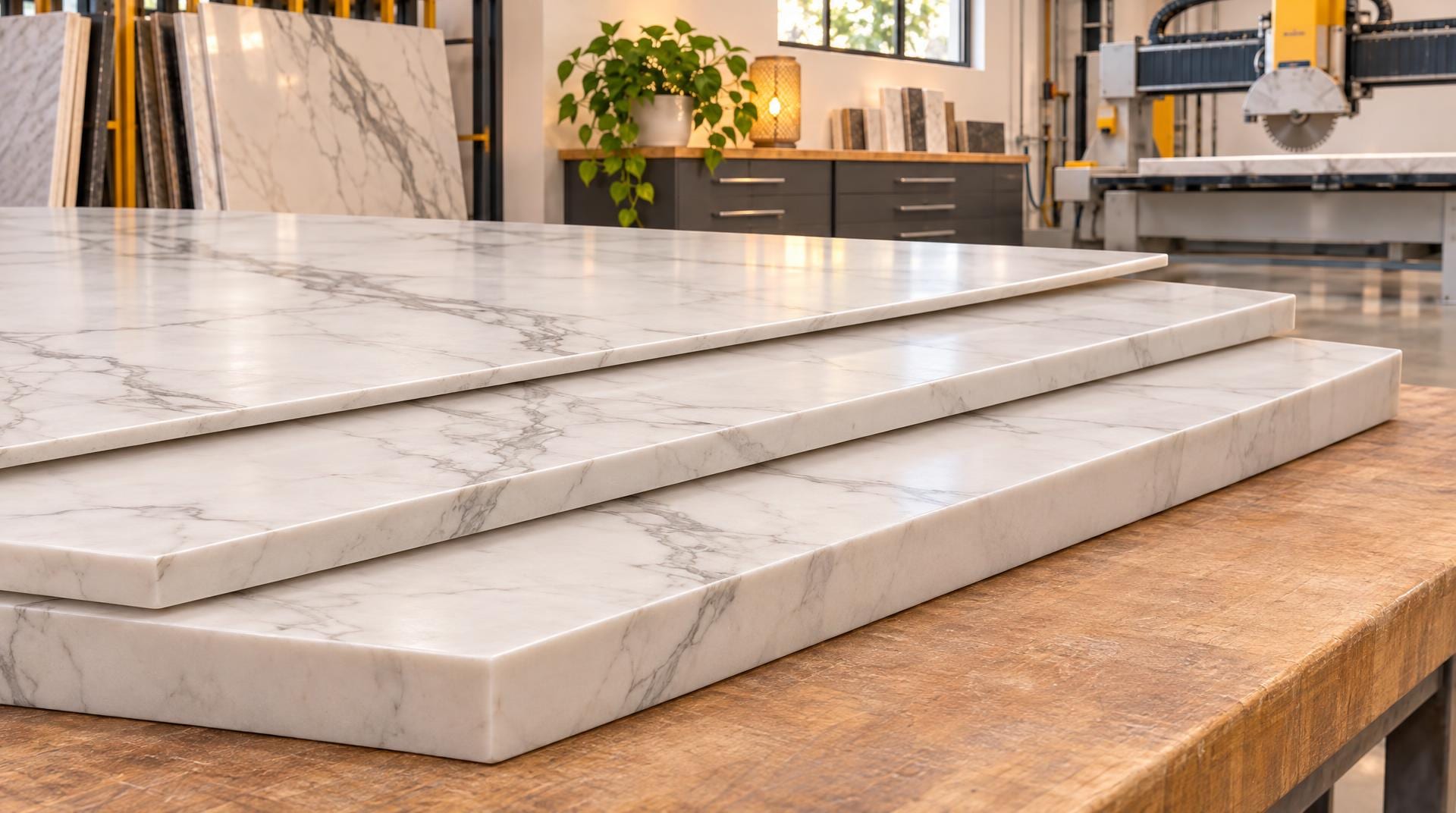
- 6 mm (about 1/4 inch): wall cladding and light-duty use. Skip it for a main counter.
- 12 mm (about 1/2 inch): the standard for kitchens and baths, and the most popular choice.
- 20 mm (about 3/4 inch): heavy use and islands. It costs the most.
For a main kitchen run, I’d start at 12 mm. For a busy island where you roll out dough and the kids spread out their homework, 20 mm earns its extra cost.
Slab Sizes by Brand
| Brand | Largest slab | Thicknesses |
|---|---|---|
| Dekton | 126 x 56 in | 8, 12, 20, 30 mm |
| Neolith | 126 x 60 in | 6, 12, 20 mm |
| Lapitec | 118 x 60 in | 12, 20, 30 mm |
| Laminam | 118 x 59 in | 5, 12, 20 mm |
| SapienStone | 126 x 60 in | 12, 20 mm |
A 126-inch slab runs 10.5 feet long. That’s great for a long run with no seam. It also has to make it through your front door and down your hallway, so ask how the crew plans to carry it in.
The Pattern Only Goes Skin Deep
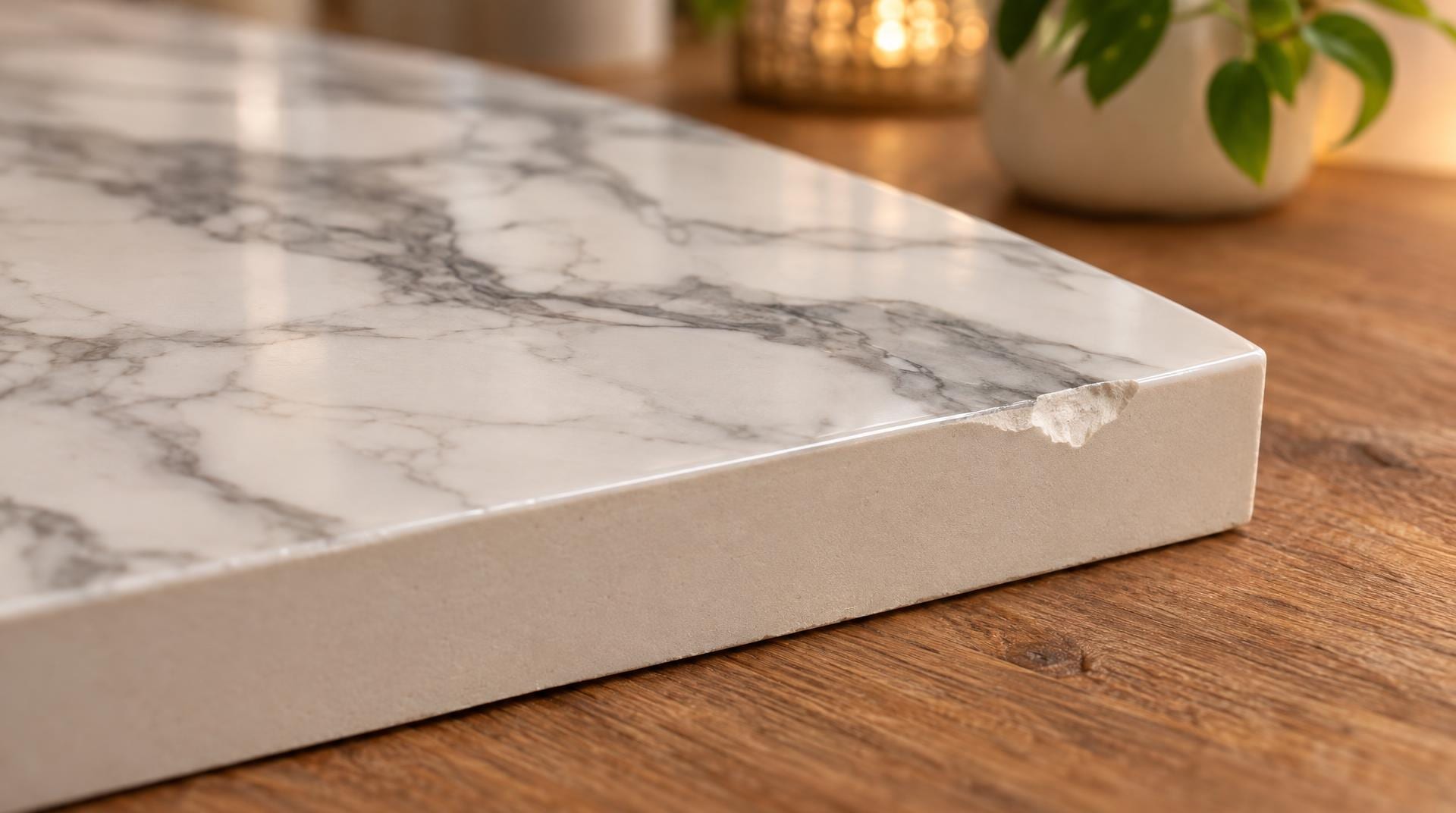
On most porcelain slabs, the manufacturer prints the veining on the face. Ask to see a cut edge sample from the exact product line you’re considering, not just the polished top. That cut edge shows you what a chip would reveal.
Fewer Edge Profiles to Choose From
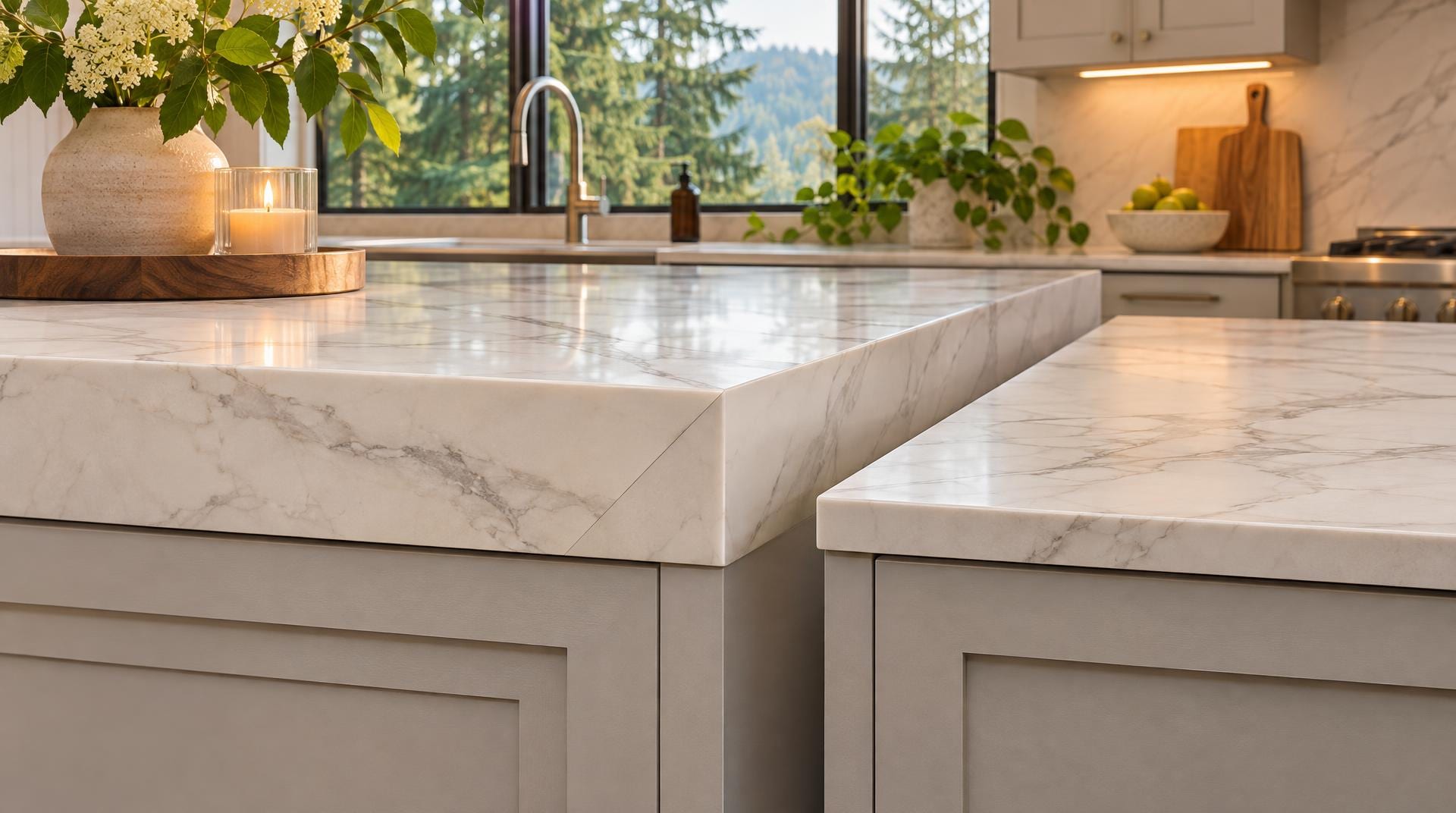
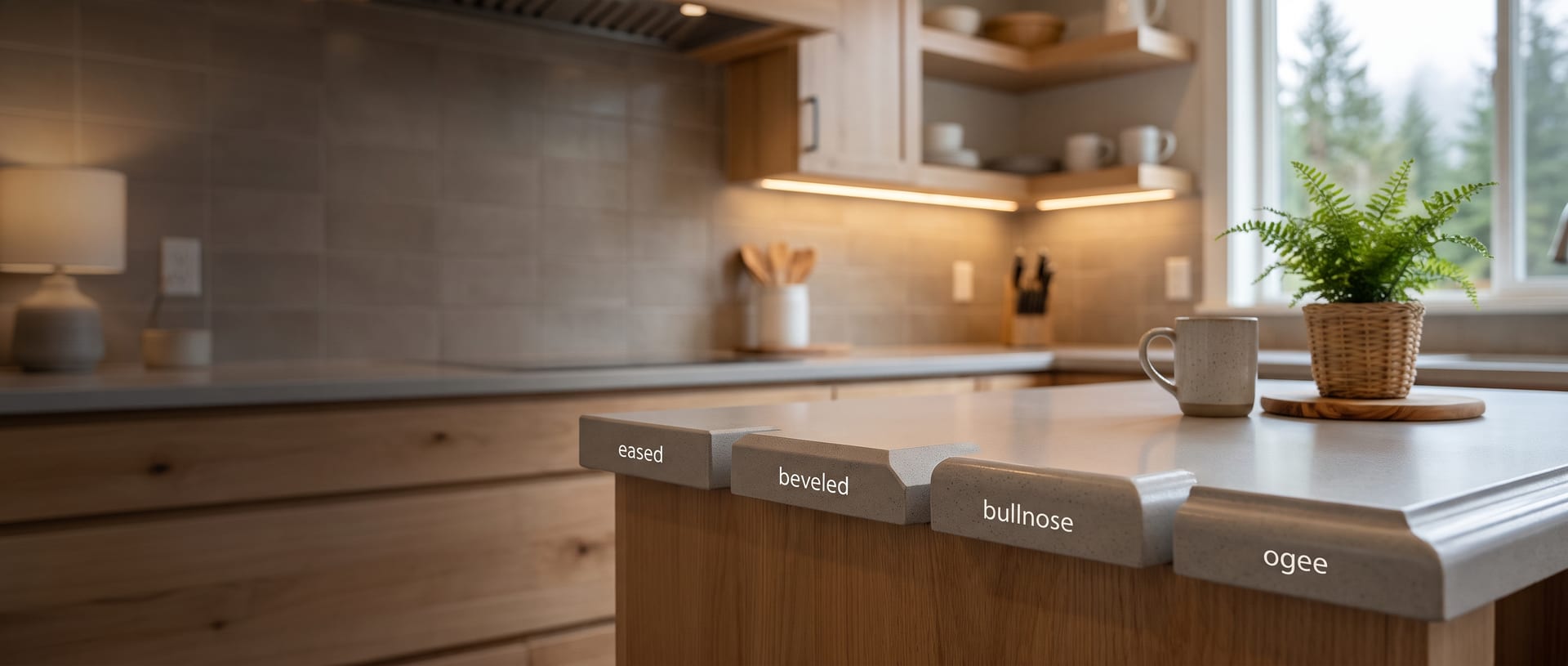
Most fabricators offer square or mitered edges on porcelain. For corners in a high-traffic spot, like the end of an island everyone walks past, pick a mitered or rounded edge. My countertop edge profiles guide shows what each profile looks like.
Why the Install Makes or Breaks a Porcelain Countertop
This is the part I care about most as a carpenter. Porcelain leaves very little room for error, and a lot of the risk sits in work you’ll never see.
When I served as a B-52 crew chief in the Air Force, we followed the checklist every single time. Skipping a step on a bomber wasn’t an option. A porcelain install deserves the same discipline.
Level and Square the Cabinets Before Templating
Many Puyallup and Tacoma homes from the 1940s through the 1970s have walls and cabinets that run out of level and out of square, and a thin porcelain slab won’t forgive that the way you’d hope. Level the cabinets first. Then template once the cabinets sit level and tight.
Measure twice, cut once matters double here. No one can repair a porcelain slab that breaks during fabrication. It’s a total loss.
Full Support and the Right Adhesive
Thin porcelain needs full support underneath, often from a subtop or support panel. Without it, the slab can flex and snap. The installer should also use a flexible adhesive that moves with thermal expansion, not standard stone seam epoxy, and you should ask how they’ll support any overhang at your island.
My dad drilled one thing into me: take pride in your work, even the parts nobody sees. A level cabinet and a full support panel disappear once the top goes on. They still decide whether that top lasts.
Sink and Cooktop Cutouts
Cutouts need slow routing with full support under the slab. Ask the shop what corner radius it uses on cutouts, and what happens if a slab breaks on its table.
For the sink, ask for adhesive mounting. If an installer cranks the sink clips down too tight, the clips put point loads on the porcelain and can crack it. If you’re swapping the sink at the same time, my kitchen sink replacement cost guide covers what that adds.
Check the Sink Base for Water Damage First
Porcelain doesn’t care about water. The cabinet under it does. In older Pierce County homes, I see water damage under kitchen sinks all the time.
If the sink base has soft spots or rot, fix it before the new slab goes on. Setting a $9,000 counter on a rotted cabinet floor makes no sense.
Porcelain in Pacific Northwest Kitchens and Patios
A few porcelain countertops pros and cons hit differently in the Pacific Northwest.
Damp Climate, No Sealer
Western Washington stays damp most of the year. A non-porous counter that never needs sealing takes one more maintenance chore off your list.
I’ve lived and worked from Guam and Hawaii to Alaska. Tropical humidity, arctic cold, Pacific Northwest rain. In every one of those places, materials that don’t soak up water save you headaches.
Covered Outdoor Kitchens
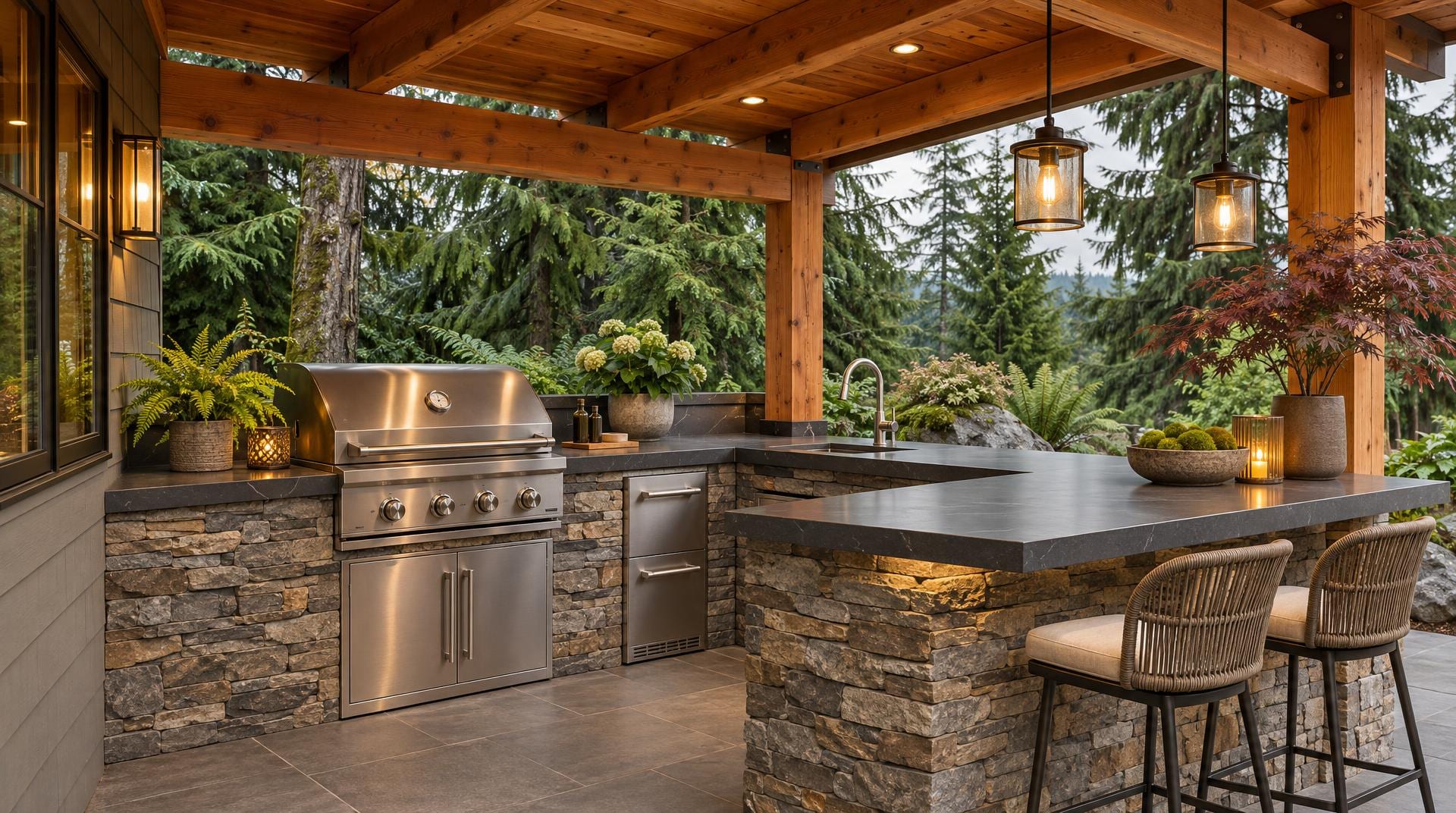
Porcelain stays UV-stable and handles freeze-thaw cycles, so it makes a strong pick for a covered patio kitchen. If you’re planning one in Bonney Lake or Graham, ask the manufacturer what its warranty says about outdoor use before you buy.
Do You Need a Permit for New Countertops?
A countertop swap by itself usually counts as finish work under the model building code many Washington cities follow. Moving the sink or adding electrical work changes that, because plumbing relocation and electrical work need permits.
Confirm with the City of Puyallup before you start. If you live outside city limits, in places like South Hill or Graham, Pierce County handles permits. My guide to remodeling permits in Puyallup covers the details.
8 Porcelain Countertop Mistakes I’d Steer You Away From
The cons list gets a lot longer with a sloppy install. Here’s what I’d watch for.
- Hiring a shop with no porcelain track record. Natural-stone blades leave micro-chips along every cut line. Ask how many porcelain jobs the shop has done, and with which brands.
- Putting 6 mm on a main counter. That thickness belongs on walls and light-duty surfaces. Go 12 mm or thicker for anything you’ll cook on.
- Cranking down the sink clips. Too much clamping pressure can crack the slab. Mount the sink with adhesive instead.
- Using standard stone seam epoxy. Porcelain needs a flexible adhesive that moves as the slab expands and contracts.
- Skipping full support. A thin slab riding on uneven cabinets can flex and snap.
- Rushing the cutouts. Sink and cooktop cutouts need slow routing. A slab that cracks in the shop goes straight to the scrap pile.
- Leaving sharp corners in the traffic lane. Pick a mitered or rounded edge for corners people bump every day.
- Choosing on price alone. The cheapest porcelain bid can skip the support panel, the right adhesive, or an experienced shop. You get what you pay for, and with porcelain, you pay for shortcuts in chips and cracks.
Questions to Ask Before You Sign a Porcelain Bid
Bring this list to every shop and contractor you talk to.
- How many porcelain jobs has your shop done, and with which brands?
- Do you cut porcelain with porcelain-rated blades and bits?
- What thickness are you quoting: 6, 12, or 20 mm?
- Does the bid include a subtop or support panel?
- What adhesive do you use for seams and sink mounting?
- Will you mount the sink with adhesive instead of clips?
- What corner radius do you use on cutouts?
- If the slab breaks during fabrication, who pays for the replacement?
- Can I see a cut edge sample from this product line?
- How will your crew get a full-length slab into my house?
- Will you level the base cabinets before templating?
- What warranty comes with the slab, and does it cover outdoor use?
- What’s your lead time from template to install?
How I’d Decide if This Were My Mom’s Kitchen
Here’s how I weigh porcelain countertops pros and cons for a real family. I ask the same question on every job: if this were my mom’s house, how would I want it done?
If she cooked hot and fast, had a kitchen full of afternoon sun, or wanted a counter out on a covered patio, I’d steer her toward porcelain without much hesitation. I’d insist on 12 mm or thicker, mitered or rounded edges on the corners she walks past, and a shop that could show me finished porcelain jobs.
If her kitchen took a beating from cast iron pans and bar stools bumping the overhang, I’d point her to quartz. It forgives a hard knock better, and more installers know it well.
Good, fast, or cheap. Pick two. Porcelain cuts slower than granite, because the saw has to crawl through it. On a porcelain job, I’d give up fast before I’d ever give up good.
Porcelain Countertop Questions Homeowners Ask
Is porcelain better than quartz for a kitchen? It depends on how you use your kitchen. Porcelain resists heat, stains, and UV better than quartz. Quartz forgives a hard knock on the edge better, and more installers know how to cut and set it, which is part of why quartz stays the most popular counter in my business.
Do porcelain countertops chip easily? The edges and corners can chip from hard impacts, like a dropped pan. A mitered or rounded edge on busy corners and an experienced fabricator both help. So does treating the edges with a little respect.
Can you repair a chipped or cracked porcelain countertop? Sometimes, but you’ll usually see the repair. Because the pattern sits on the surface, a chip can expose plain porcelain underneath. A serious crack can mean replacing the whole slab, which costs more and takes longer than a repair.
Cost check: Weighing the cost of a repair against a new slab? National guides price porcelain at $50 to $120 per square foot installed, so a full replacement on a 45-square-foot kitchen adds up fast.
Do you have to seal porcelain countertops? No. Porcelain is non-porous, so it never needs sealing. Granite, by comparison, needs sealing once a year.
Can I use porcelain for an outdoor kitchen? Yes. It stays UV-stable and handles freeze-thaw cycles, which makes it one of the better picks for a covered patio kitchen in Pierce County. Ask what the warranty says about outdoor use before you buy.
How long does a porcelain countertop project take? My standalone countertop jobs run 2 to 3 weeks from templating to install, and the install itself takes about 1 day for a standard kitchen. Porcelain cuts slower than granite, so ask your fabricator for its own lead time before you plan a party around the date.
Countertop Work Across Pierce County
I install countertops for homeowners in Tacoma, Sumner, Bonney Lake, South Hill, Edgewood, and Lakewood, plus Graham and the rest of Pierce County. The same rules apply in every one of those kitchens: level cabinets, a dry sink base, and a fabricator who knows the material.
Get Your Free Countertop Estimate
“Every day I come downstairs I have a smile on my face looking at my new kitchen.” (Thomas R., Google review)
The fastest way to settle porcelain vs. quartz for your kitchen is a real measurement and a real number. I’ll walk your kitchen, measure your counters, look at your cabinets and sink base, and give you a clear, line-item estimate you can compare against any other bid.
Get your free estimate or call me directly at (253) 392-9266.
I’ll treat your kitchen the way I’d want my own family’s kitchen treated. That’s the only way I know how to work.
Brad Zemke, Owner Pacific Remodeling LLC Puyallup, WA