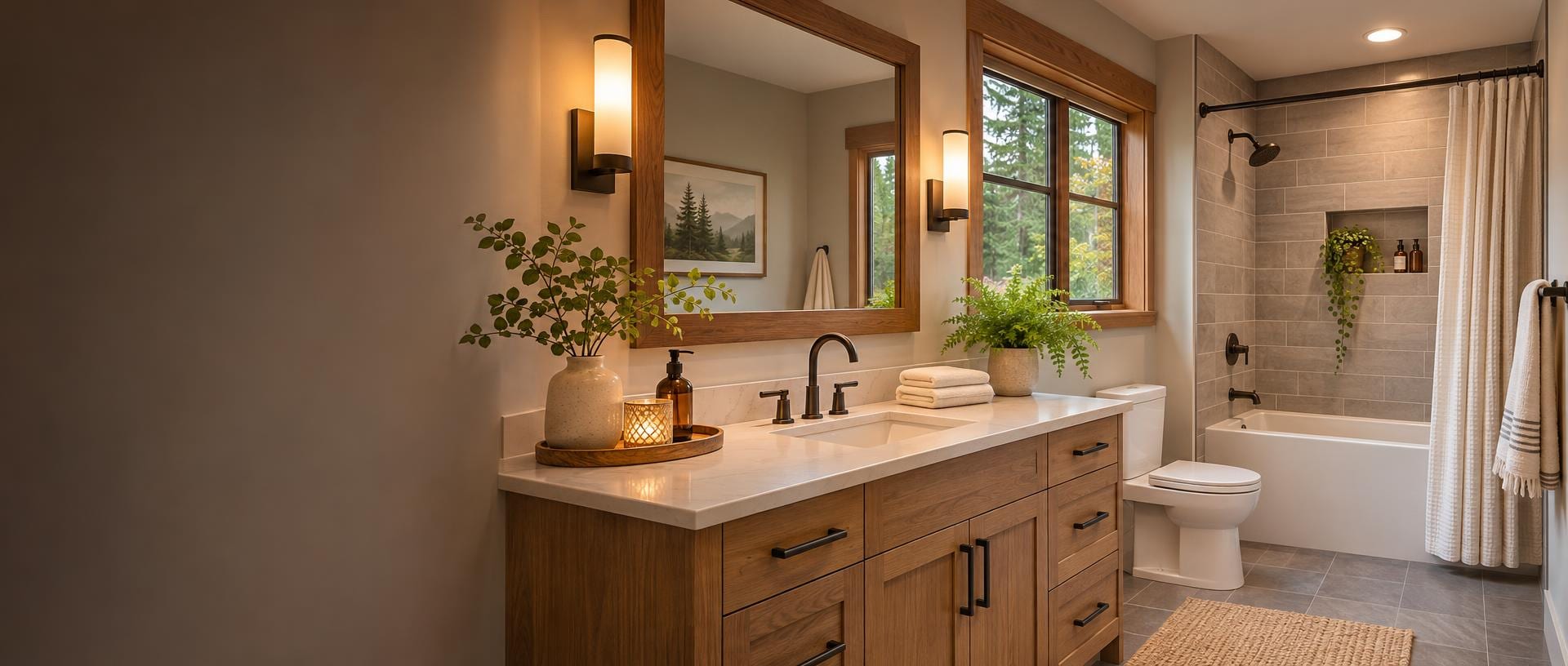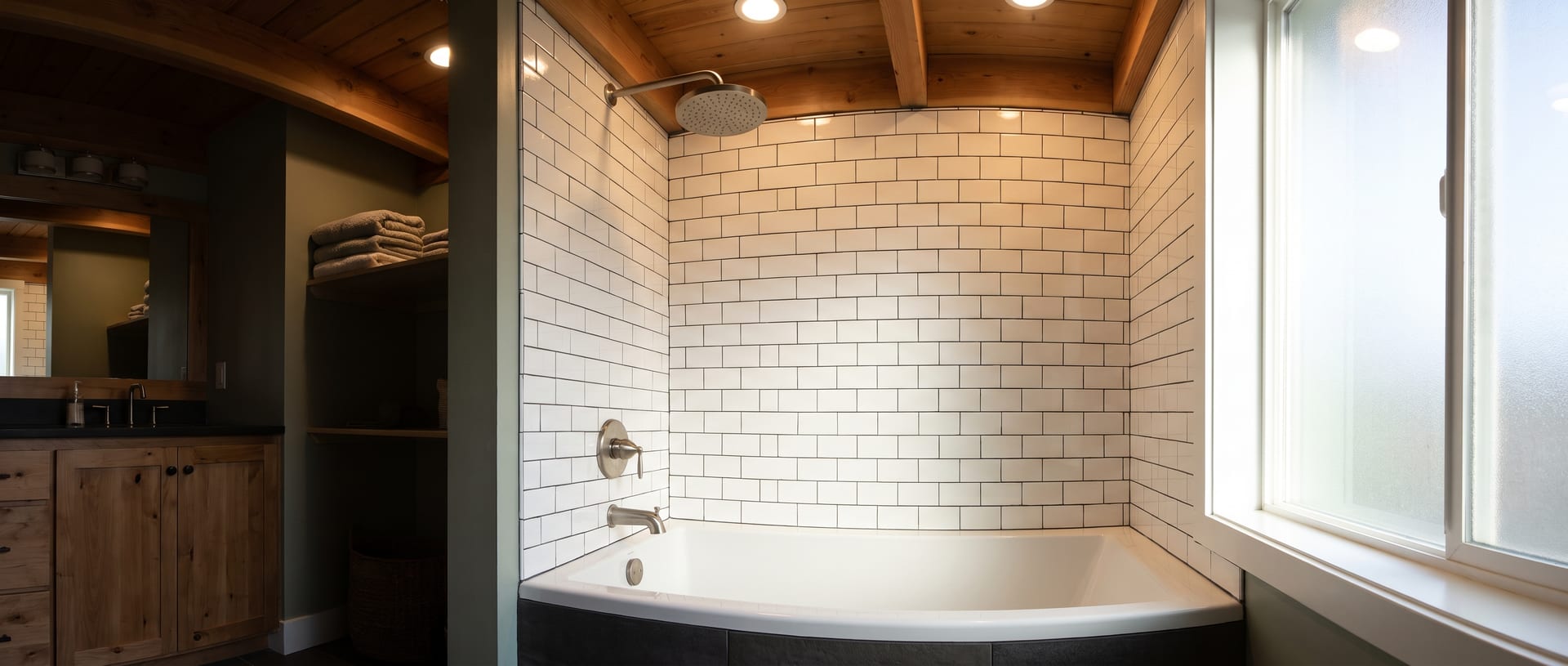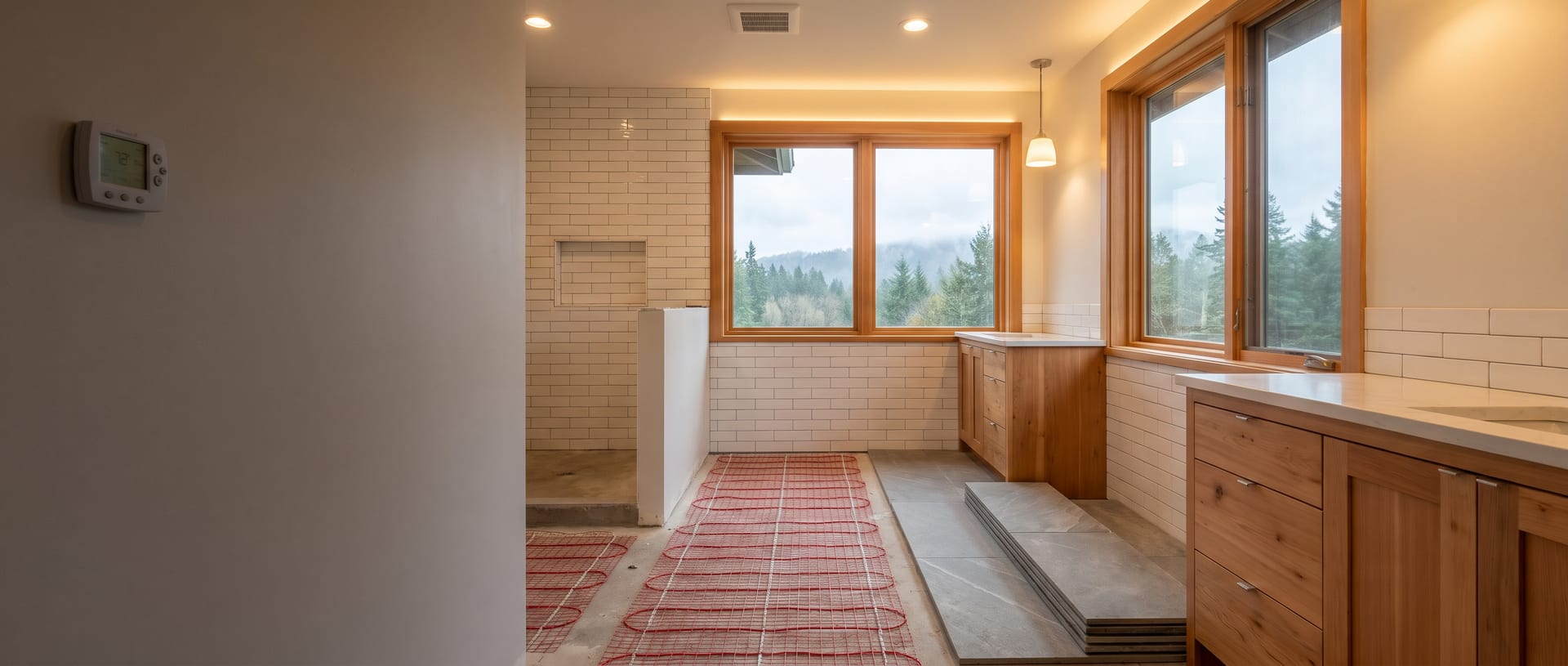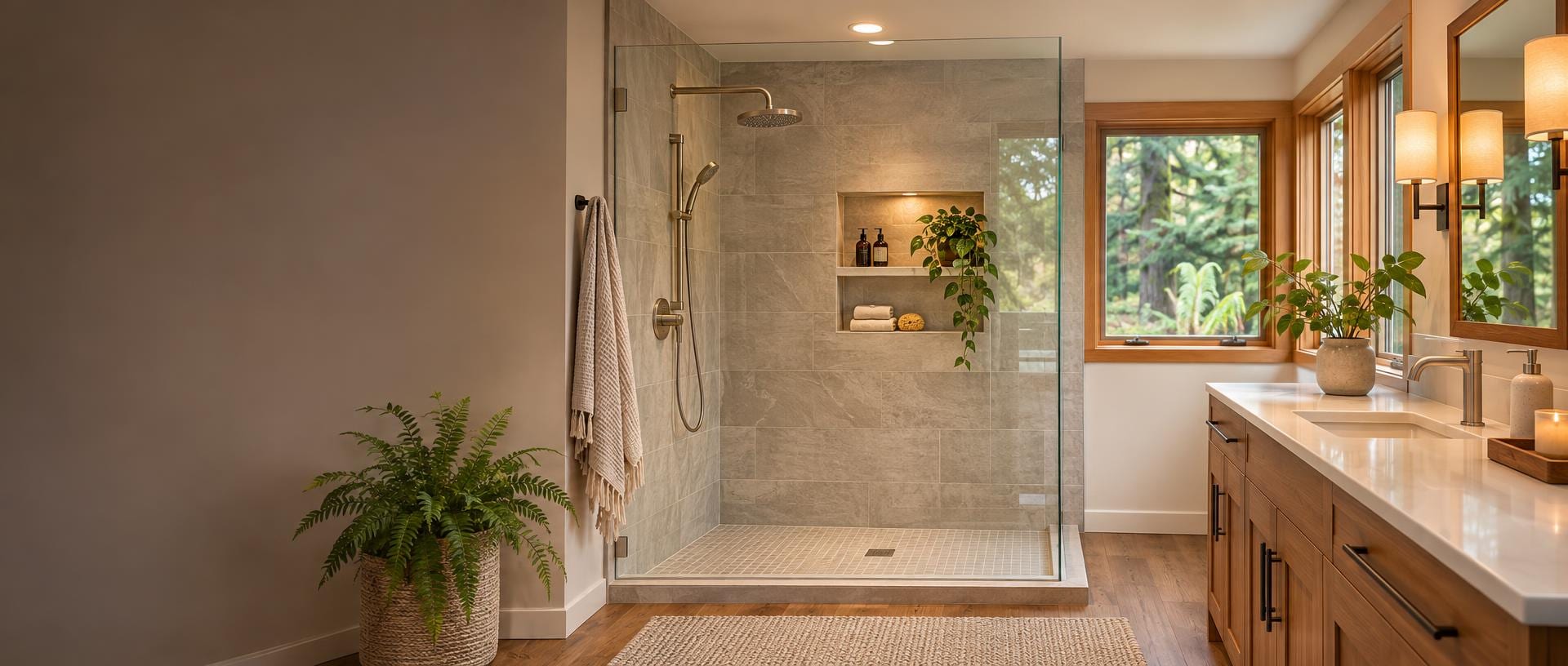
A tub to shower conversion in Puyallup costs $8,000 to $22,000 for a standard tiled walk-in shower. Mid-range conversions with upgraded tile and frameless glass run $16,000 to $29,000. High-end builds with natural stone, a curbless entry, or body jets run $23,000 to $40,000 or more.
The build takes 7 to 10 business days. Plan on about 2 weeks total once the custom glass arrives.
I’m a third-generation carpenter with 20+ years in the trades, and I’ve run Pacific Remodeling in Puyallup since 2018. These numbers come straight from my own 2026 bids, not a national average.
Budget rule of thumb: Take the price range that fits your project and add 15% to 20% for what’s hiding behind the old tub. In Pierce County, there’s almost always something.
Here’s what one client wrote after I took their master bath down to the studs and rebuilt the shower:
“He had to take the master bathroom down to the studs, move plumbing, electrical fixtures, do a lot of tile work which you know he did well when the glass contractor for the shower doors compliments the work as some of the best he’s seen.” (JB S., Google review)
How Much Does a Tub to Shower Conversion Cost in Puyallup?
I price every job in EstimationPro, the estimating software I built for myself after too many late nights doing bids by hand. The ranges below come from real Pacific Remodeling estimates from January through October 2026. They show what a Puyallup-area homeowner pays before sales tax.
| Project Level | What You Typically Get | Cost Range |
|---|---|---|
| Standard conversion | Tub removal, drain relocation, new shower valve, full waterproofing, porcelain tile walls and floor, one niche, glass door, new fixtures | $8,000 to $22,000 |
| Mid-range conversion | Everything above plus large-format porcelain or mosaic accents, frameless glass, rain head, upgraded trim | $16,000 to $29,000 |
| High-end conversion | Natural stone, curbless entry, body jets, multiple niches, premium fixtures | $23,000 to $40,000+ |
The ranges overlap on purpose. A standard shower in a tight 1960s rambler with rot behind the tub can cost more than a mid-range shower in a newer house with clean framing.
Common Add-Ons and Their Prices
| Upgrade or Item | Cost |
|---|---|
| Curbless (zero-threshold) entry | +$1,000 to $2,000 |
| Frameless glass enclosure | $1,500 to $3,500 |
| Framed glass door | $400 to $1,200 |
| Shower wall tile with waterproofing | $34 to $55 per sq ft installed |
| Heated floor (electric radiant mat) | $36 to $51 per sq ft, plus $950 to $1,400 for the circuit and thermostat |
| Plumbing or electrical permit | $250 to $400 |
| Building permit (layout or structural changes) | $750 to $1,450 |
One thing my price always includes: the drain relocation. A tub drain sits at one end of the alcove. A shower drain almost never lands in that same spot, so every conversion I build needs the drain moved.
Why Online Tub to Shower Prices Look Lower Than Mine
Search this topic and you’ll see national cost guides quoting $2,000 to $12,000. One Seattle plumbing company lists $3,000 to $8,000. Then you get a local bid for $14,000 and wonder if someone’s taking you for a ride.
Here’s why the gap exists:
- National averages lump in prefab stalls. A one-piece acrylic unit dropped into the old tub space costs far less than a tiled, waterproofed shower. Those cheap installs drag the average down.
- Cheaper markets pull the number down. Labor runs 40% to 60% of a shower project. Seattle-area plumbers bill $95 to $175 an hour, and Pierce County labor isn’t far behind.
- Low quotes leave things out. Permits, glass, the new valve, subfloor repair, and contingency often go missing from a bare-bones number.
- Overhead is real. Insurance, licensing, a truck, tools, and a warranty all live inside that hourly rate. None of it is profit sitting in a pocket.
I’ve watched homeowners pick the lowest bid and then get buried in change orders once the tub came out. By then they can’t switch contractors because their only shower is a pile of studs.
This is how one client described picking a contractor after collecting bids:
“We interviewed 5 companies for our bathroom remodel. Brad wasn’t the highest or the lowest bid, but we are so grateful we chose Brad.” (Jerda B., Google review)
You don’t need the most expensive bid. You need the one that covers the full scope.
Where Your Money Goes on a Tub to Shower Conversion
Five pieces of work drive almost every conversion budget. Here’s what each one involves and why it costs what it costs.
Demo and What’s Behind the Tub
Tearing out a steel or cast iron tub is heavy, ugly work. Once it’s out, I find out what the last 30 years of water did to the framing and subfloor.
In the Pacific Northwest, moisture is the number one enemy of a bathroom. I’ve underbid jobs before where rot behind the walls blew up the scope, and that lesson stuck. I’d rather have an honest contingency conversation on day one than a surprise conversation on day three.
Plumbing: The Drain and the Valve
The drain moves on every conversion. The valve usually changes too, because a tub valve sits low for the spout and a shower valve needs to sit at a comfortable height for you to reach while you stand.
If your house sits on a crawlspace, I can reach the drain from below. On a slab foundation, the drain move means cutting and patching concrete, which pushes your project toward the top of the range.
Waterproofing
This is the part you never see, and it’s the part that matters most. Every shower I build gets Schluter KERDI or RedGard. Cement board alone is not waterproof, and drywall has no business behind shower tile.
Warning: If a bid says “cement board and tile” with no membrane listed, ask what’s stopping water from soaking into the studs. In a Puyallup winter, that question is worth thousands.
Tile
Shower wall tile with waterproofing runs $34 to $55 per square foot installed. A standard 60” x 30” alcove with tile running to about 7 feet has roughly 70 square feet of wall tile. That works out to about $2,380 to $3,850 for the walls alone, before demo, plumbing, the pan, or glass.
Tile size, pattern, and layout all move that number. A herringbone floor or a mosaic accent band takes far more cuts and hours than a straight-set large-format porcelain.
Glass
A framed glass door runs $400 to $1,200. A frameless enclosure runs $1,500 to $3,500. The glass company can’t measure until the tile is done, so glass usually becomes the last piece of the project. I break down the options in my frameless glass shower enclosure cost guide.
Prefab Pan and Panels vs. Custom Tile
Not every conversion needs tile. A solid-surface pan and wall panel system can work well, especially in a hall bath or a rental.
Here’s what current manufacturer listings show for one popular brand:
- Swanstone SS-60-3 wall kit (30” x 60”): $1,646 on the Swanstone site. One plumbing retailer listed it for $856. Prices swing a lot by seller.
- Swanstone SBF-3060 alcove shower pan (30” x 60”): $1,767.
- Swanstone NexTile 60” x 30” direct-to-stud kit: $850.
Watch this trap. Those wall kits are panels only. You still need a pan underneath, and a lot of homeowners buy the walls and forget the base.
| Factor | Prefab Pan and Panels | Custom Tile |
|---|---|---|
| Seams to maintain | Few | Grout lines throughout |
| Design choices | Limited colors and textures | Nearly unlimited |
| Install time | Faster | Slower, with cure times between steps |
| Niches, benches, custom sizes | Limited | Built to fit your space |
| Labor cost | Lower | Higher |
My honest take? Prefab makes sense when budget and speed matter most. Tile makes sense when this is your primary bathroom and you want a shower you’ll love for 20 years.
Tub to Shower Conversion Ideas Worth the Money
Homeowners ask me what’s worth spending on. These are the upgrades I’d put in my own house. For more design inspiration, see my walk-in shower ideas and costs post.
A Recessed Niche
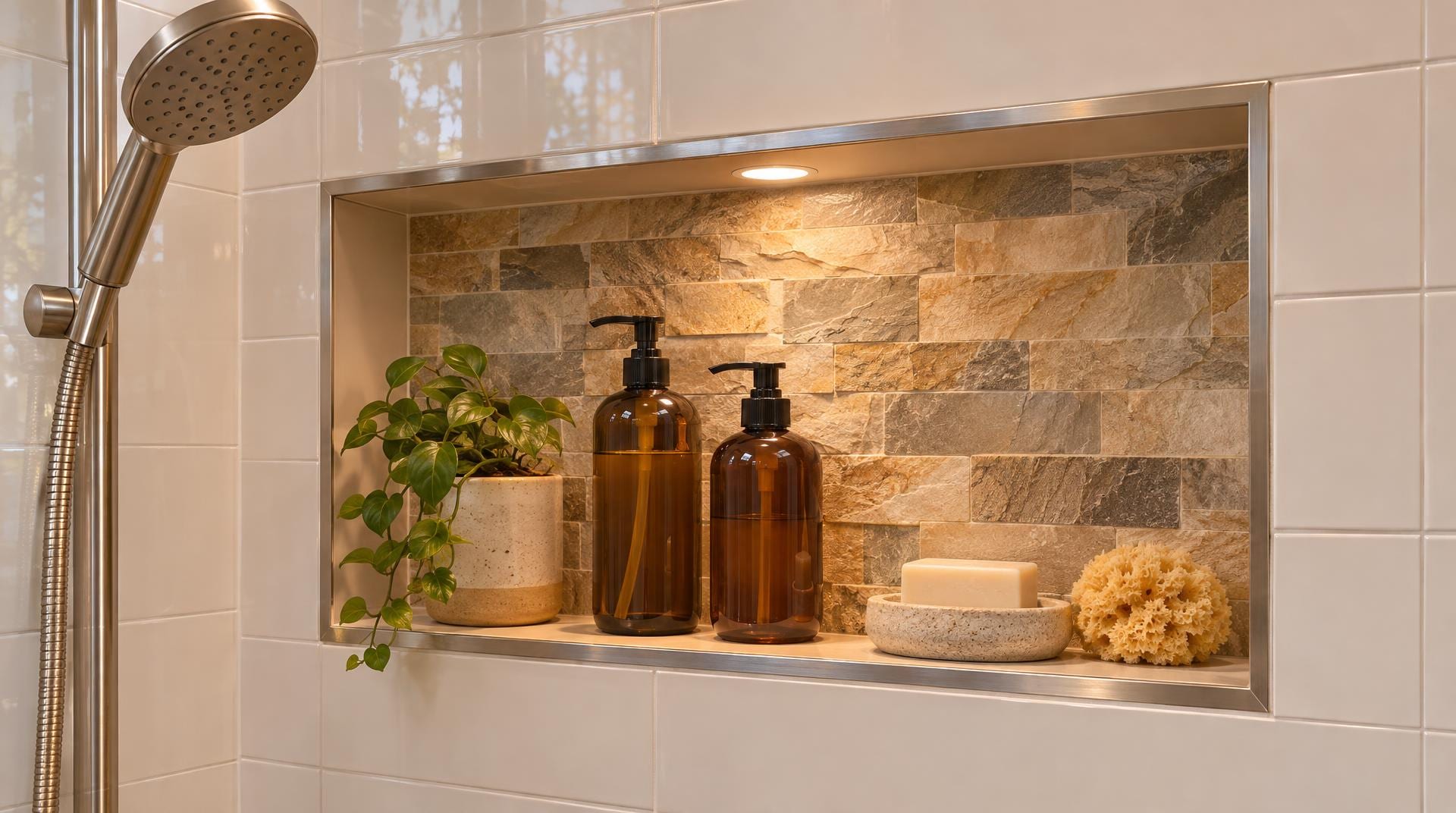
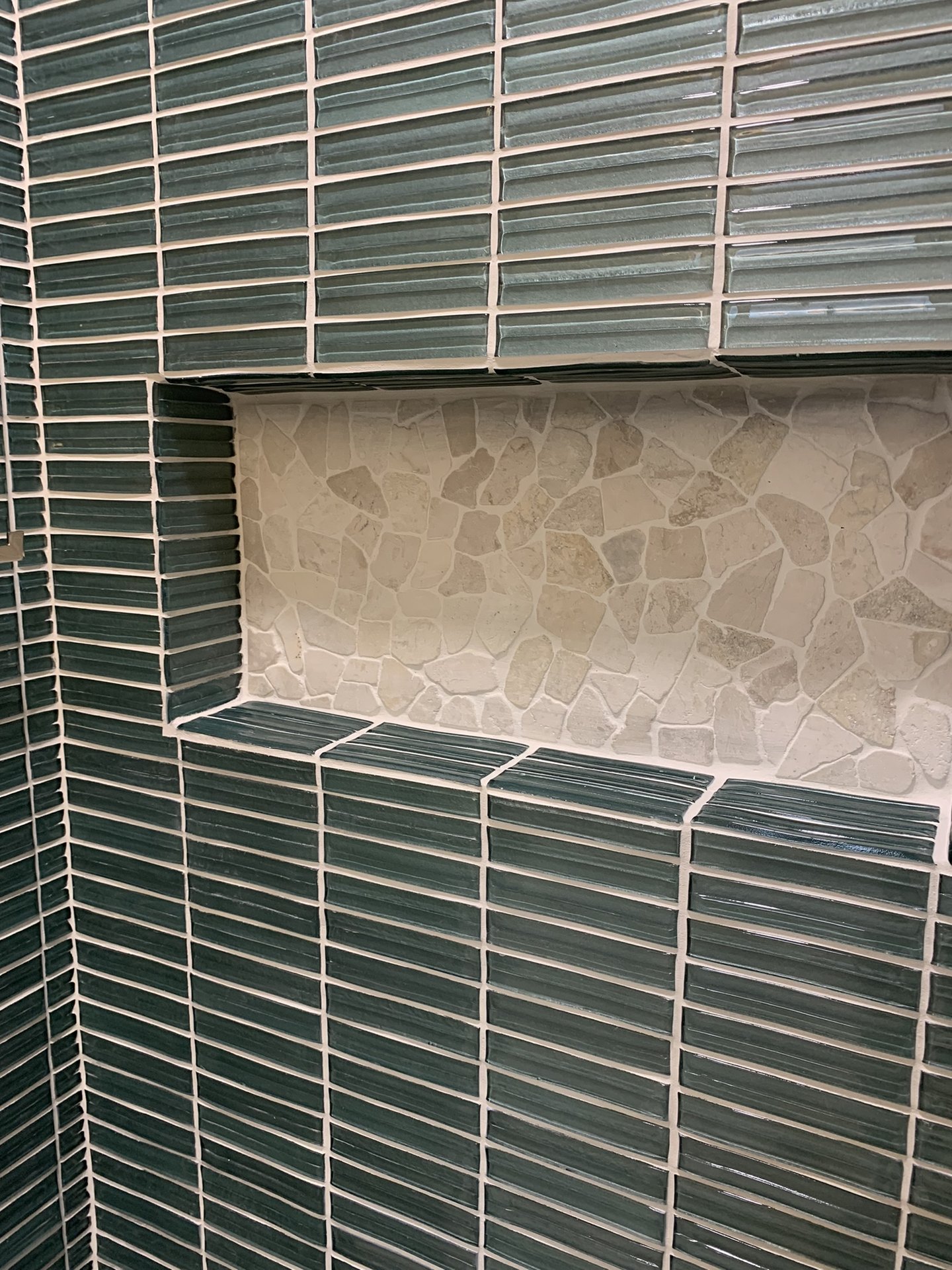
A built-in niche gets your shampoo bottles off the floor and off a rusty caddy. I treat it as standard on a tiled shower. A stone mosaic or contrasting tile in the back of the niche turns a storage spot into a focal point.
Large-Format Porcelain
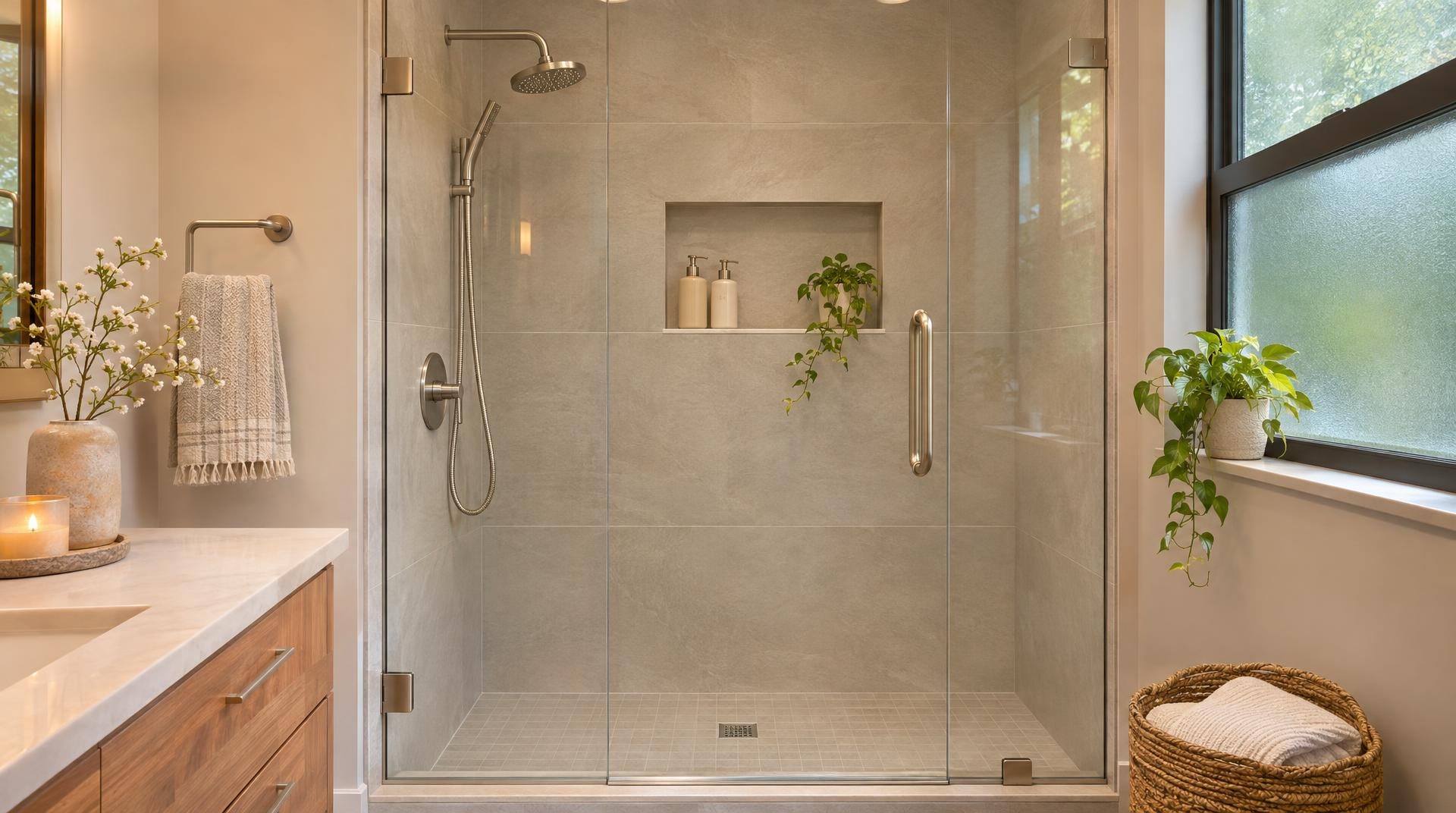
Large-format porcelain means fewer grout lines and less scrubbing. It’s my top tile pick for bathrooms. It also makes a 60” alcove feel bigger than it is.
Frameless Glass
If you’re paying for good tile, frameless glass lets you see it. It also skips the metal frame tracks that collect soap scum and grime over time.
Matte Black or Brushed Fixtures
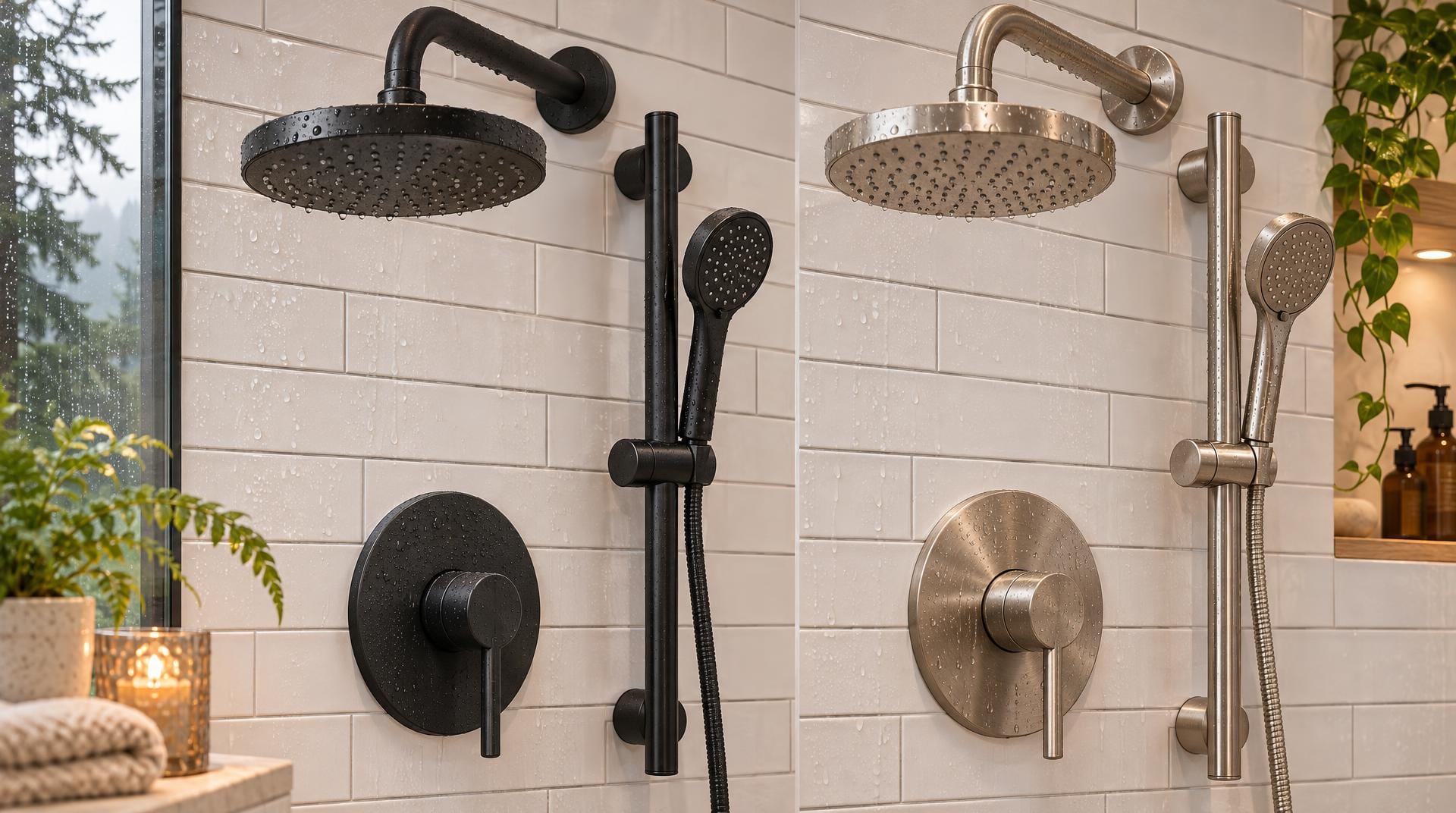
Matte black and brushed finishes hide water spots better than polished chrome. They also give the room a modern look without a big price jump.
A Handheld Shower on a Slide Bar
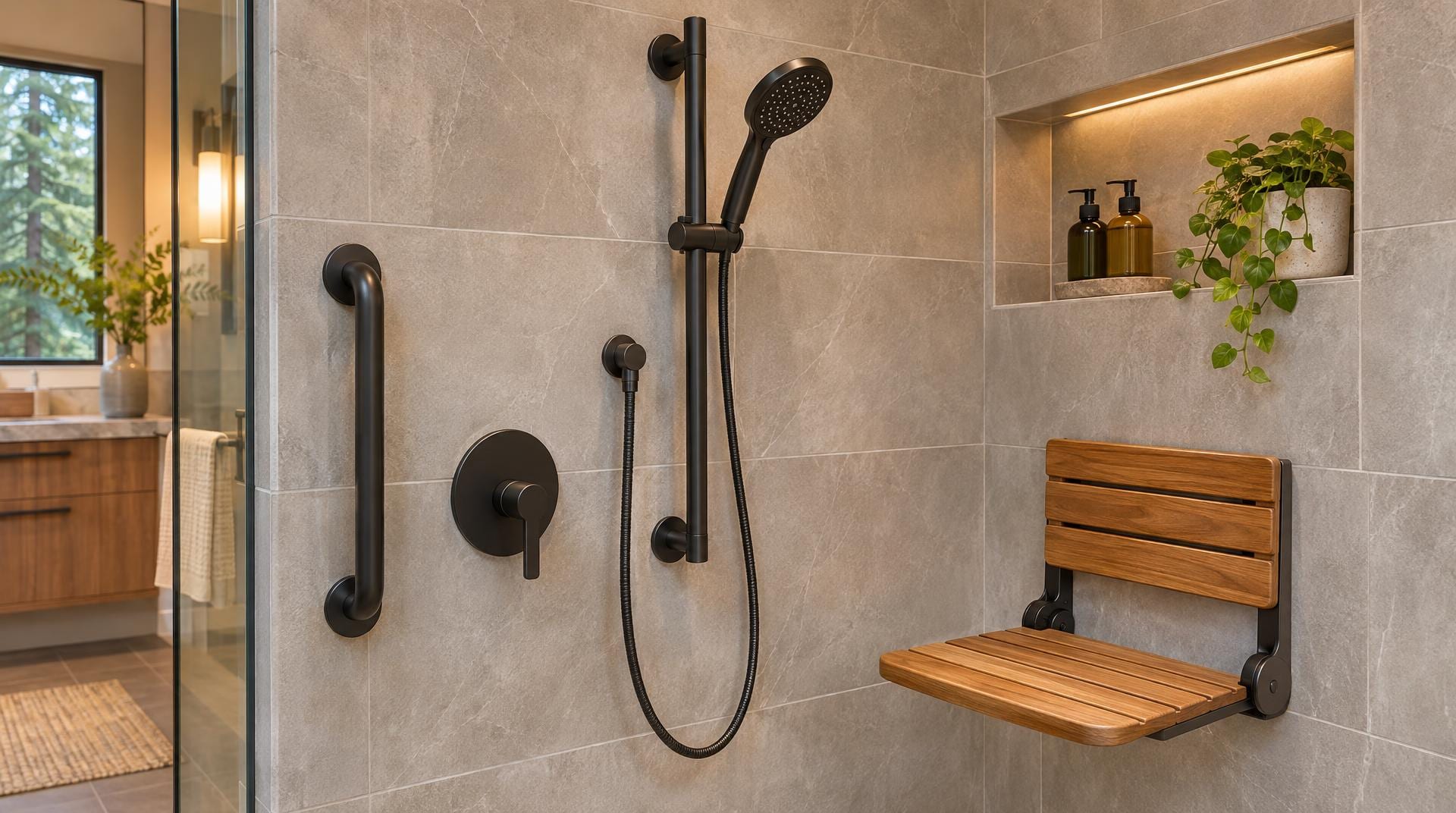
This one costs little and pays off every day. It makes cleaning the shower easier, rinsing the dog easier, and showering seated possible down the road.
Modern Green Tile Shower in Pierce County
This walk-in shower is one of my favorite tile jobs. It shows what custom tile can do once you stop thinking of a shower as a box with a drain in it.

The project included:
- Stacked green glass tile on the walls
- A frameless glass door
- A natural stone mosaic niche
- Matte black fixtures
You can see more photos on the Modern Green Tile Shower project page.
Tub to Shower Conversions for Seniors and Aging in Place
Stepping over a 15-inch tub wall gets harder every year. For a lot of my clients, safety drives the conversion more than looks.
Here’s what I recommend for an aging-in-place shower:
- A curbless or low-threshold entry. Curbless adds $1,000 to $2,000. It means no lip to catch a toe or a walker wheel.
- Solid blocking in the walls for grab bars. I add it while the studs are open. Adding it later means tearing out tile.
- A handheld shower on a slide bar. You can use it standing or seated.
- A built-in bench or a spot for a fold-down seat.
- Slip-resistant floor tile. Smaller tiles with more grout lines give your feet better grip.
Washington’s shower size rule also carries an exception for showers designed to the ICC/ANSI A117.1 accessibility standard. If you’re planning for a wheelchair or walker, bring that up early. My aging-in-place bathroom remodel guide goes deeper on layout and clearances.
Adding a Bench to Your Conversion
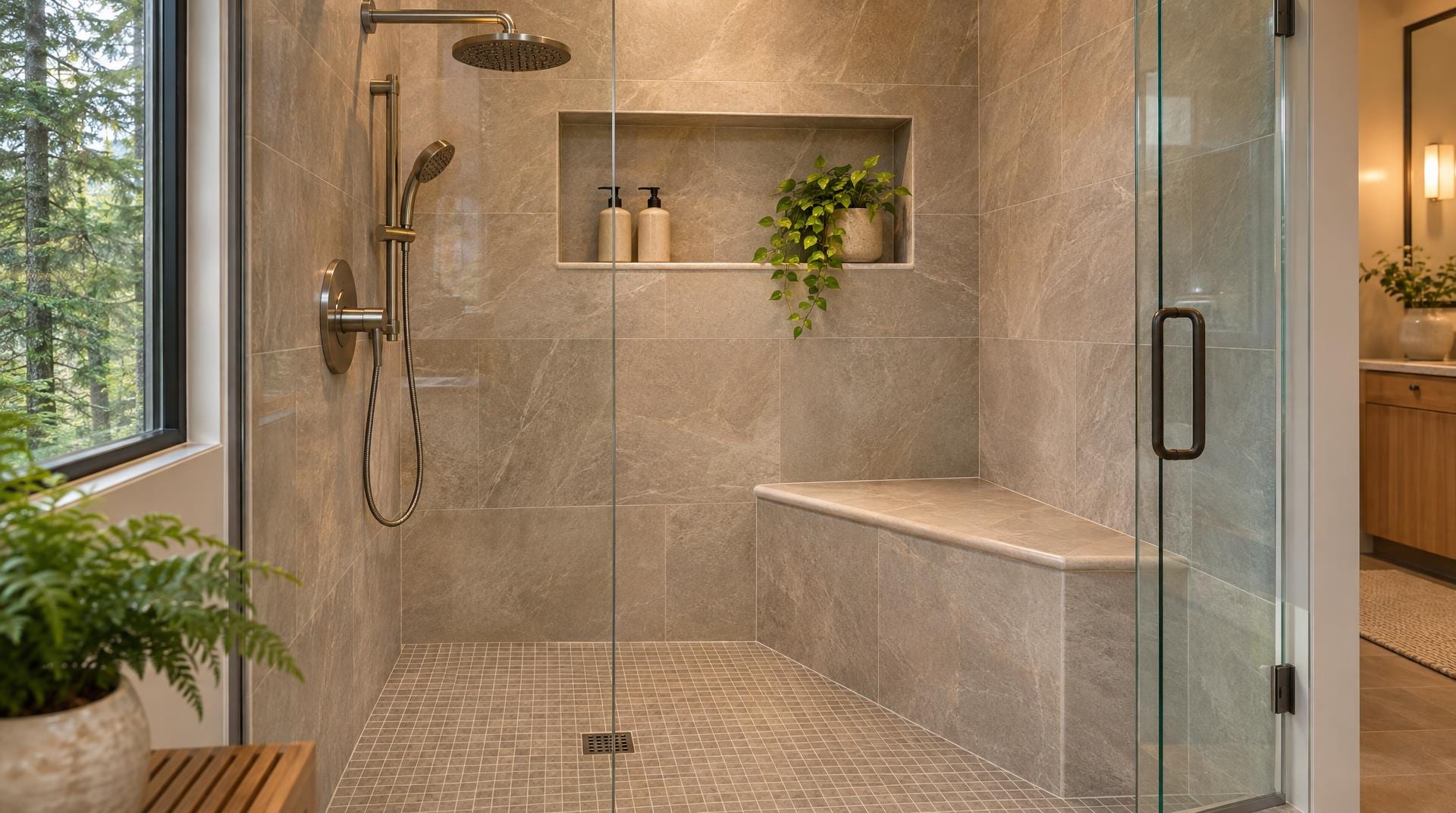
A bench is one of the most requested upgrades I see on conversions. It gives you a place to sit, shave your legs, or rest, and it doubles as a ledge for bottles.
The question is space. Washington code requires at least 900 square inches of finished shower floor area that can also fit a 30-inch circle. A 60” x 30” alcove gives you about 1,800 square inches before tile. A 15-inch-deep bench across the 30-inch end takes about 450 of those, which still leaves plenty of room, but I always check the math against finished wall thickness before I frame anything.
A bench adds framing, waterproofing, and extra tile at the same $34 to $55 per square foot rate. I price it as its own line on the estimate so you can see exactly what it costs.
Washington State Rules for a Tub to Shower Conversion
Washington adds its own amendments to the plumbing code. Here’s what affects your project.
Minimum Shower Size
The finished shower interior needs at least 900 square inches and room for a 30-inch circle. “Finished” is the word that trips people up. Backer board, membrane, mortar, and tile take roughly ½ inch to 1 inch off each wall, so a 31-inch framed opening can fail the circle test once the tile goes up.
Permits
You need a permit if the project modifies plumbing, and every conversion I build moves the drain. A plumbing or electrical permit runs $250 to $400 in my bids. A building permit for layout or structural changes runs $750 to $1,450.
Skipping the permit saves a few hundred dollars and can cost you far more at resale or on an insurance claim. My Puyallup remodeling permit guide covers what the city looks for. Rules vary between Puyallup, Tacoma, and unincorporated Pierce County, so confirm with the permit office that covers your address.
Moisture and Ventilation
Our wet climate punishes bad ventilation. A shower with a weak or missing exhaust fan will grow mold in the grout within a couple of winters. If your fan is old, loud, or doesn’t vent outside, replace it during the conversion while the ceiling is accessible. My bathroom exhaust fan replacement guide explains how to size one.
Backer and Waterproofing
- Drywall and paper-faced backer don’t belong behind shower tile.
- Cement board needs a waterproof membrane over it.
- The pan liner needs to run at least 3 inches above the threshold.
How Long You’ll Be Without a Shower
The build takes 7 to 10 business days. Total time runs about 2 weeks including glass fabrication. Here’s the typical sequence:
- Demo. Tub out, old surround out, damage assessed.
- Framing and repairs. Rot fixed, blocking added, niche and bench framed.
- Plumbing rough-in. Drain moved, new valve set, inspection if the permit requires it.
- Waterproofing. Membrane installed, then time to cure.
- Tile. Walls, floor, niche, and bench.
- Grout, fixtures, and trim.
- Glass measure and install. The glass company measures the finished tile, fabricates, then installs.
You don’t need to move out if you have a second bathroom. If the shower you’re converting is your only one, plan ahead for a gym membership or a family member’s guest bath. For a full week-by-week picture, see my bathroom remodel timeline guide.
Should You Remove Your Only Bathtub?
My advice: keep at least one tub in the house. Families with young kids want one, and plenty of buyers will walk away from a house without it.
The usual move is simple. Convert the primary bathroom tub into the shower you’ll actually use, and keep the tub in the hall bath. If you’re replacing that hall tub too, my bathtub replacement cost guide covers that side.
Resale note: Mid-range bathroom remodels return about 60% to 70% at resale. A well-built walk-in shower in the primary bath helps that number. Removing the only tub in a three-bedroom house can hurt it.
6 Mistakes That Blow Up a Conversion Budget
- Choosing on price alone. The lowest bid usually leaves out scope that shows up later as a change order.
- Skipping the contingency. Budget 15% to 20% extra. Old tub alcoves hide rot, bad framing, and plumbing that never met code.
- Treating cement board as waterproofing. It isn’t. You need a membrane system.
- Building a shower that’s too small. Measure for the 30-inch circle after tile, not before.
- Buying a wall kit with no pan. Panels don’t come with a base.
- Ignoring ventilation. A beautiful shower with a 20-year-old fan becomes a mold problem in our climate.
My bathroom remodel mistakes to avoid post covers a dozen more that I see on Pierce County jobs.
Questions to Ask Any Contractor Before You Sign
My dad drilled one thing into me: take pride in your work, even the parts nobody sees. In the Air Force, as a B-52 crew chief, I learned the other half of that: follow the checklist every time. Use this one when you compare bids.
- Does the bid include the drain relocation and a new valve?
- Which waterproofing system will you use, and do you flood-test the pan?
- Does the price include the permit?
- Is the glass enclosure in the bid, or a separate quote?
- How do you handle rot or damage you find after demo?
- How do you handle change orders, and how do you price them?
- Are you licensed, bonded, and insured? Can I see proof?
- What warranty do you offer on labor and waterproofing?
- Can I see photos of showers you’ve built and talk to past clients?
- Does the bid include ventilation or exhaust fan work?
If one bid has line items the others don’t, ask the other contractors why. Some contractors leave scope out on purpose so their number looks best.
Common Questions About Tub to Shower Conversion Cost
How do I get an accurate tub to shower conversion cost estimate? Get someone to look at the actual bathroom. A phone quote can’t tell whether your house sits on a slab or a crawlspace, how much rot sits behind the tub, or where your drain line runs. Before the visit, pick your tile style, glass type, and any extras like a bench or curbless entry, so every contractor bids the same scope. My free remodeling estimate guide walks through what a good walkthrough covers.
Can I convert a tub to a shower without changing the plumbing? Not really. The tub spout comes out, the valve usually moves up to shower height, and the drain almost always moves because a shower drain doesn’t line up with a tub drain. A prefab pan and panel system can keep the plumbing changes smaller, but expect some plumbing work and a permit on any real conversion.
Does a slab foundation cost more? Yes. Moving a drain in a slab means cutting concrete, rerouting the line, and patching it. That labor pushes a project toward the high end of its range compared with a home on a crawlspace.
How much does a curbless conversion cost? Plan on the standard or mid-range price plus $1,000 to $2,000. The floor has to drop so water flows to the drain without a curb, and the waterproofing has to extend farther into the room.
Is a tub to shower conversion worth it? If nobody in your house uses the tub, yes. You trade about 15 square feet of rarely used space for a shower you’ll use every day. Keep one tub somewhere in the house, and the conversion usually helps your home’s appeal. For a bigger picture of bath pricing, see my Puyallup bathroom remodel cost guide.
Do I need a permit for a tub to shower conversion in Washington State? In most cases, yes, because the project changes plumbing. Expect $250 to $400 for a plumbing permit, and more if the project changes the layout or structure.
Also Serving Homeowners Across Pierce County
I build tub to shower conversions in Puyallup, Graham, and the surrounding towns, including South Hill, Bonney Lake, Sumner, Edgewood, Tacoma, and Lakewood.
Get Your Free Tub to Shower Estimate
You’ve seen the numbers. The only way to know your number is for me to stand in your bathroom, look at the floor, check the drain, and hear what you want.
I’ll treat your bathroom the way I’d want someone to treat my mom’s house. You’ll get a clear, line-item bid that shows what’s included and what isn’t, even if you’re still shopping around. See more on my tub to shower conversion service page, then request your free estimate or call me at (253) 392-9266.
Brad Zemke, Owner Pacific Remodeling LLC Puyallup, WA